House Republicans Push for Amendment Against Court Expansion

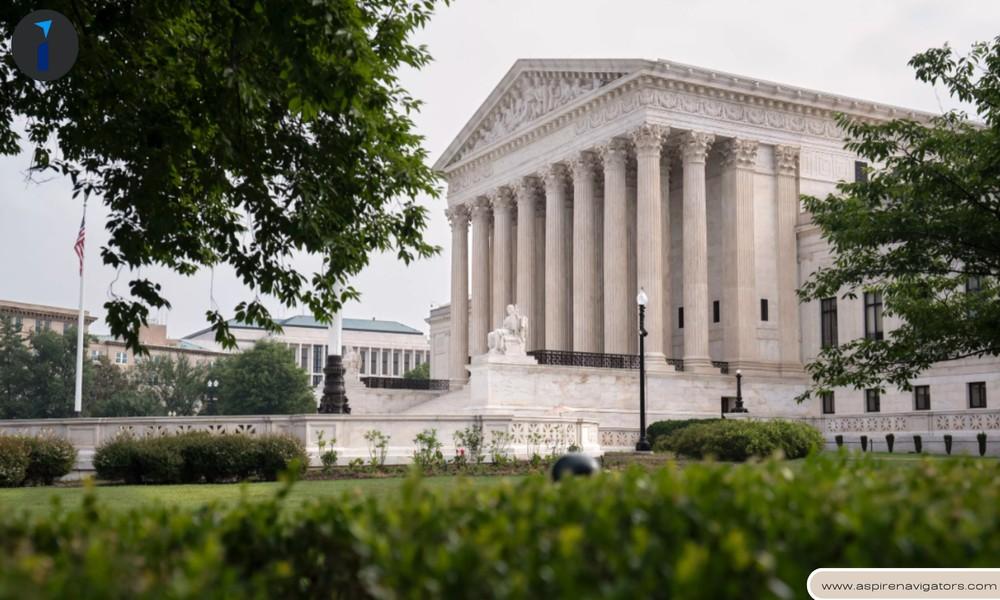
A long-running discussion about the composition, independence, and political power of the country’s highest court is being reignited by a group of House Republicans who are proposing a constitutional amendment to stop further expansions of the U.S. Supreme Court.
The proposal’s proponents contend that retaining the Supreme Court’s existing size is crucial to sustaining judicial stability and public trust. However, the measure’s opponents argue that it could worsen political conflicts surrounding the federal judiciary and restrict future congressional flexibility.
The proposition is made at a time when debates about constitutional governance, court legitimacy, and judicial reform are still influencing national politics.
The Legislative Initiative to Maintain the Nine-Justice Court
A Republican-backed resolution intended to keep the Supreme Court at nine justices indefinitely is at the center of the plan. One of the most enduring aspects of the American legal system is the Court’s size, which hasn’t altered since 1869.
The amendment’s proponents contend that by enshrining the Court’s size in the Constitution, subsequent political attempts to change its makeup for partisan advantage would be thwarted.
Important Aspects of the Resolution
- aims to establish a constitutional limit of nine justices for the Supreme Court.
- aims to stop attempts at judicial expansion in the future.
- passed by a House committee.
- emphasizes safeguarding judicial independence.
- aims to increase public confidence in the legal system.
Proponents contend that keeping a stable judicial system is essential to protecting the separation of powers and guaranteeing that judicial rulings are not influenced by politics.
Republicans’ Arguments Against Court Expansion
The main justification for the amendment is that the legitimacy of the Supreme Court could be damaged by its expansion for ideological or political reasons.
Republican lawmakers argue that changing the number of judges to affect court decisions would create a risky precedent that may result in recurring adjustments whenever political power switches between parties.
Proponents claim that doing so might erode public trust in the judiciary and make the Court a more obviously political organization.
Supporters’ Concerns
- Judicial independence may be compromised.
- greater political sway over court rulings.
- Public confidence in constitutional institutions is declining.
- Partisan disputes are getting worse.
- persistent instability in the legal system.
Supporters contend that constitutional protections are required to avoid future disagreements on the composition of the Court.
Comprehending the Supreme Court Expansion Debate
Court enlargement has long been a topic of discussion. Lawmakers have occasionally suggested altering the Supreme Court’s size throughout American history for a variety of reasons, including political and administrative demands.
The most well-known attempt took place in the 1930s under President Franklin D. Roosevelt, when a plan to increase the number of justices prompted heated national discussion.
As political figures, legal experts, and advocacy organizations consider the judiciary’s influence on important national policy, conversations over the Court’s expansion have reappeared in recent years.
Proponents of court expansion contend that reforms may be required to solve issues with representation and judicial balance and that Congress has the constitutional power to change the Court’s size.
Opponents argue that such modifications could weaken the judiciary’s status as an independent body of government and politicize it.
Constitutional Barriers Continue to Be Important
The amendment has made it through committee, but it still has a very long way to go before it is included in the U.S. Constitution.
One of the strictest legal requirements in American government applies to constitutional amendments.
Conditions for Ratification
For the amendment to become law, it would require:
- a two-thirds majority in the House of Representatives.
- a Senate majority vote of two thirds.
- approval by three-fourths of state legislatures in the United States.
In order to guarantee that constitutional amendments obtain widespread public support before to going into law, these conditions are purposefully strict.
Political observers point out that reaching an agreement at this level might be challenging, especially when it comes to matters concerning constitutional reform and the judiciary.
Possible Effects on the Legal System
The amendment would create a permanent constitutional cap on the Supreme Court’s size if it were to be approved.
Proponents contend that such a policy could:
- Preserve the independence of the judiciary.
- Maintain the stability of institutions.
- Minimize political disputes pertaining to court nominations.
- bolster trust in constitutional government.
However, detractors caution that establishing the Court’s size permanently would make it more difficult for future legislators to adapt to shifting social and legal conditions.
As a result, the plan brings up more general issues about democratic governance, constitutional flexibility, and striking a balance between stability and reform.
What Takes Place Next?
Although the amendment’s passage out of committee is a significant step, there are still substantial legislative and constitutional obstacles to overcome before it can be ratified.
It is anticipated that lawmakers from both parties will keep discussing the proposal’s merits, probably with an emphasis on constitutional authority, judicial independence, and the Supreme Court’s long-term place in the American political system.
Legal professionals, legislators, advocacy groups, and voters interested in the future composition of the country’s top court are anticipated to pay attention to the suggestion as the discussion progresses.
Regardless of whether the amendment is ultimately successful or not, it has already sparked a national discussion about constitutional governance, judicial reform, and the significance of preserving public confidence in democratic institutions.
Read our latest interview with Frederick J. Fisher