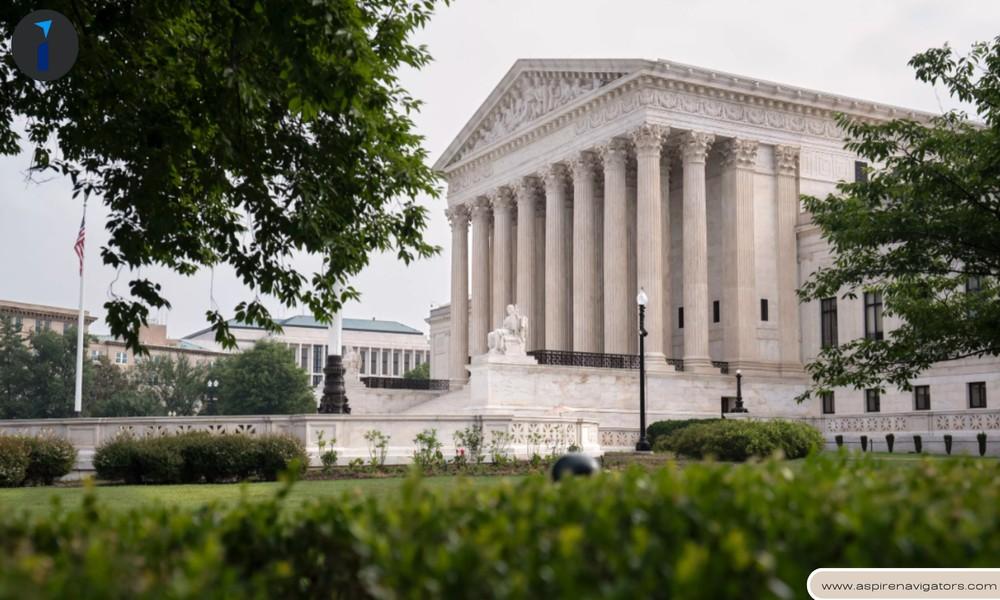
The Supreme Court Backs Parts of Trump’s Power Claims in a significant legal decision that could reshape the balance of power between the White House and independent federal agencies. In a temporary ruling, the U.S. Supreme Court allowed former President Donald Trump to move forward with the removal of members from two independent federal agencies while legal challenges continue in lower courts.
The decision is being viewed as another important victory for the executive branch’s authority over federal agencies. Although the case is not yet fully resolved, the ruling highlights the court’s willingness to reconsider long-standing limits on presidential power.
The latest Supreme Court Trump ruling today has drawn attention from legal experts, government officials, and political observers because it could influence how future presidents manage independent agencies.
Supreme Court Allows Trump to Fire FTC Officials
One of the biggest developments from the ruling is that the Supreme Court allows Trump to fire FTC Commissioner Rebecca Kelly Slaughter and National Labor Relations Board (NLRB) member Gwynne Wilcox while the broader legal battle continues.
The administration argued that the president must have greater control over executive branch officials to ensure federal agencies follow presidential policies.
Supporters of the decision believe independent agencies should remain accountable to the elected president, while critics warn that reducing their independence could increase political influence over regulatory decisions.
Why the Supreme Court Firing Case Matters
The Supreme Court firing case centers on whether presidents have constitutional authority to remove officials from independent agencies without proving misconduct or neglect.
For decades, a 1935 Supreme Court decision known as Humphrey’s Executor limited a president’s ability to dismiss members of independent commissions like the Federal Trade Commission (FTC).
The current ruling does not permanently overturn that precedent but temporarily permits the removals while the courts decide the larger constitutional question.
Legal experts believe the final outcome could significantly affect the independence of agencies responsible for:
- Consumer protection
- Competition enforcement
- Labor relations
- Financial regulation
- Federal oversight
Supreme Court Trump Ruling Today Strengthens Executive Authority
The latest Supreme Court Trump ruling today reflects the court’s growing interest in expanding presidential control over executive agencies.
The majority indicated that preventing the president from removing executive officials could interfere with constitutional executive powers.
Although the ruling is temporary, it signals that the court may be open to revisiting older decisions that limited presidential authority.
Many constitutional scholars say this could become one of the most important separation-of-powers cases in recent years.
Is This Connected to the Supreme Court 14th Amendment Trump Case?
Some readers have asked whether this decision is related to the Supreme Court 14th Amendment Trump case that addressed Trump’s eligibility for election ballots.
The answer is no.
The earlier case focused on whether states could remove Trump from presidential ballots under the 14th Amendment following the January 6 events.
The current decision instead focuses on presidential authority over independent federal agencies and executive appointments.
Although both involve Trump and the Supreme Court, they concern entirely different constitutional issues.
What About the Supreme Court Slaughter Case?
The Supreme Court Slaughter case refers to FTC Commissioner Rebecca Kelly Slaughter, whose removal became one of the central issues before the court.
Slaughter argued that federal law protects FTC commissioners from being removed without cause. The administration disagreed, saying those protections violate the president’s constitutional authority.
The Supreme Court’s temporary order allows the dismissal to remain in effect while litigation continues.
The final ruling could determine whether future presidents can replace commissioners whenever they choose.
Did Trump Go to Supreme Court Today?
Many people searched online asking, “Did Trump go to Supreme Court today?”
The answer is no.
Trump did not personally appear before the Supreme Court. Instead, the court issued its ruling through its normal legal process after reviewing emergency applications submitted by the administration.
Most Supreme Court decisions are released in written opinions rather than through courtroom appearances by the parties involved.
What Is Trump v. Slaughter?
Searches for Trump v. Slaughter Oyez have increased following the ruling.
Although many users are looking for case summaries, the dispute involves legal challenges surrounding Rebecca Kelly Slaughter’s removal from the Federal Trade Commission. The litigation is expected to continue before lower courts before any final constitutional ruling is issued.
If the Supreme Court later agrees to hear the full case, it could become one of the defining constitutional decisions regarding presidential removal authority.
What This Means for the Future
The decision marks another important chapter in the debate over presidential power and the independence of federal agencies.
Key Takeaways
- The Supreme Court Backs Parts of Trump’s Power Claims through a temporary ruling.
- The Supreme Court allows Trump to fire FTC Commissioner Rebecca Kelly Slaughter while litigation continues.
- The Supreme Court firing case could reshape presidential authority over independent agencies.
- The ruling is separate from the Supreme Court 14th Amendment Trump case.
- Trump did not personally appear before the court despite searches asking, “Did Trump go to Supreme Court today?”
- The final constitutional decision is still pending and could have lasting effects on executive power.
As the legal process moves forward, the U.S. Supreme Court latest news will continue to shape discussions about executive authority, agency independence, and the constitutional limits of presidential power.
Read our latest Interview with Jill Hudgel