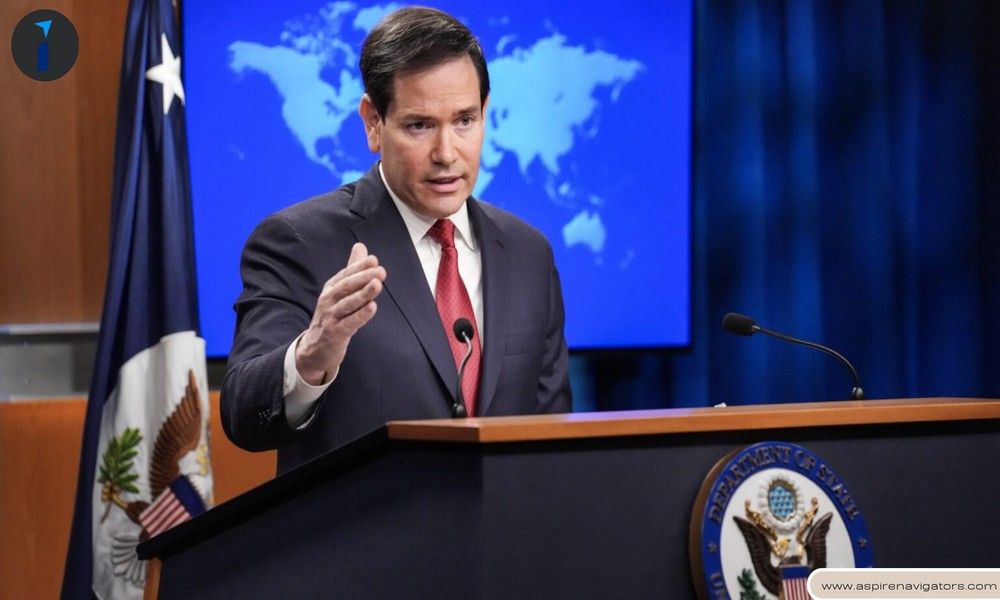
U.S. Secretary of State Marco Rubio outlined the Trump administration’s latest foreign policy priorities during recent press remarks, emphasizing regional security, diplomacy, and stronger partnerships with key allies. His comments focused on the United States’ approach toward Iran, stability in the Middle East, and expanding strategic cooperation across the Indo-Pacific.
Rubio said the administration remains committed to preventing threats to U.S. interests while continuing diplomatic engagement where possible. He stressed that the United States aims to strengthen alliances and support long-term regional stability through cooperation with partner nations.
US Policy Continues to Focus on Iran
A major part of Rubio’s remarks centered on Iran and its military capabilities.
He stated that the United States remains concerned about Iran’s ballistic missile program and its potential impact on American forces and regional allies. Rubio explained that Washington’s objective is to reduce security threats while encouraging diplomatic solutions whenever possible.
According to Rubio, the administration believes preventing Iran from expanding capabilities that threaten regional security remains a key foreign policy priority. He also noted that the United States remains open to discussions if diplomacy can produce meaningful results.
Middle East Stability Remains a Top Priority
Rubio emphasized that maintaining peace and stability across the Middle East continues to be one of Washington’s central goals.
He said the United States is working closely with regional partners to improve security and reduce the risk of future conflicts. The administration also continues to support diplomatic efforts designed to strengthen cooperation among allies.
According to Rubio, regional stability benefits both local countries and the broader international community by helping protect trade, energy security, and global economic growth.
Framework Agreement Between Lebanon and Israel
Rubio also highlighted progress in diplomatic efforts involving Lebanon and Israel.
He announced that the United States supported a framework agreement intended to begin a broader peace process between the two countries. The agreement includes plans for continued military coordination and cooperation aimed at reducing tensions along the border.
Officials said the United States will continue working with both governments while supporting mechanisms that monitor developments on the ground and encourage implementation of agreed measures.
Key Foreign Policy Priorities
Rubio’s remarks outlined several important objectives for U.S. foreign policy:
- Prevent security threats from expanding in the Middle East.
- Strengthen partnerships with regional allies.
- Support diplomatic engagement alongside national security efforts.
- Expand strategic cooperation across the Indo-Pacific.
- Promote regional stability through international partnerships.
- Continue monitoring security developments with allied governments.
These priorities reflect the administration’s broader strategy of combining diplomacy with security cooperation.
Indo-Pacific Partnerships Continue to Grow
Beyond the Middle East, Rubio reaffirmed the importance of strengthening relationships across the Indo-Pacific.
He described countries in the region as important strategic partners for the United States and said closer cooperation would help address shared economic and security challenges.
The administration continues to view the Indo-Pacific as a key region for long-term diplomatic engagement, trade cooperation, and regional security initiatives.
Diplomacy Remains Central to US Strategy
Although national security remains a priority, Rubio stressed that diplomacy continues to play an essential role in U.S. foreign policy.
He said the United States remains willing to engage with governments through dialogue whenever discussions can help reduce tensions and advance American interests. At the same time, Washington will continue working closely with allies to address emerging security challenges.
Rubio noted that diplomatic engagement and strong international partnerships remain important tools for maintaining peace and supporting global stability.
What These Remarks Mean
Rubio’s latest press briefing provides a clearer picture of the administration’s foreign policy direction. The focus remains on limiting regional security threats, strengthening alliances, supporting diplomatic solutions, and expanding cooperation with strategic partners.
As geopolitical developments continue to evolve, the United States is expected to maintain close coordination with allies while balancing diplomacy and security objectives. The remarks signal that Washington intends to remain actively engaged in both the Middle East and the Indo-Pacific as part of its broader international strategy.
Read full press release: Secretary of State Marco Rubio Remarks to the Press