Feature Now Aspire Higher, Dream Bigger — Experience Exclusive Offers Like Never Before in the New Edition of Aspire Navigators!

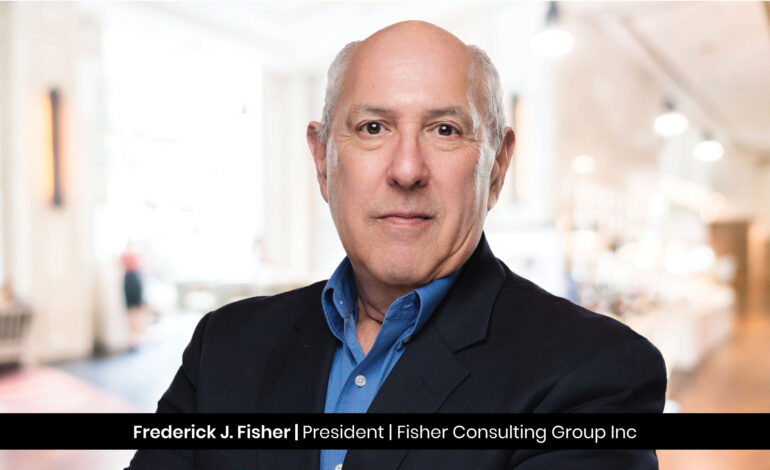
Frederick J. Fisher: In a World That Gets Harder to Read, He Reads Risk Clearly

Not every journey begins with clarity. Some begin with necessity, curiosity, and a willingness to step into the unknown and slowly, beautifully, they find their purpose.

For Frederick J. Fisher, the path into professional liability and risk management was never planned, it unfolded. Fresh out of college with a degree in social sciences, he stepped into the world of life insurance, not realizing that this practical beginning would shape a lifelong passion. After all, what else could one do with such an undergraduate degree in 1972? At the same time, he was attending Law School at night. What started as a job soon became something deeper: a lens into how risk, responsibility, and human decisions intersect once he left that industry and found another, Liability Insurance which was more compatible with the Study of Law. 

As the industry evolved, he witnessed a shift; the contract was becoming stricter, interpretations narrower, and the essence of insurance gradually drifting away from its original purpose. Questions became more complex: What truly constitutes risk? When does awareness become liability? And how does one protect without over-penalizing? These weren’t just technical dilemmas, they were philosophical ones.

While many saw complexity, he saw clarity in asking the right questions. His growing understanding of liability allowed him to analyse facts, anticipate challenges, and shape stronger defences. It wasn’t just about policies, it was about people, decisions, and consequences. The deeper he went, the more he realized that risk management wasn’t restrictive, it was empowering.

Though he never formally practiced law, his pursuit of knowledge led him to earn a JD, integrating legal insight into his everyday work. Over time, what began as an unexpected career evolved into a calling one that blended intellect, intuition, and integrity.

Today, as the President of Fisher Consulting Group Inc., his journey stands as a reminder that not all paths are chosen, some are discovered. And in that discovery lies something truly beautiful: the ability to find meaning in complexity, purpose in uncertainty, and passion in a place you never expected to belong.

A Journey of Conviction, Clarity, and Belief in the Insurance System

He eventually found his professional journey in 1975 as a professional liability claims adjuster, where he was first introduced to the world of claims-made policies and complex insurance structures. From the very beginning, he found the work both intellectually stimulating and deeply engaging. The intricacies of coverage interpretation, liability assessment, and claims resolution fascinated him, and he quickly developed a strong belief in the purpose and integrity of the insurance system. Over time, he became deeply committed to the profession, driven not just by duty, but by genuine interest and conviction.

As his career progressed, he observed a gradual but significant shift within the insurance industry. Increasingly, companies began to focus on financial optimization and return on capital, often at the expense of strengthening claims departments. He noted a growing tendency to treat claims handling as a cost center rather than recognizing it as a critical driver of value creation. In his view, this shift reflected a misunderstanding of the true function of insurance, where the strength of a company is ultimately measured by its ability to serve policyholders at the time of loss.

He recalls attending a more recent reception for a newly appointed U.S. President of a major insurance operation, who was touring multiple cities to engage with brokers and reinforce business relationships. However, what stood out to him was not a focus on product quality, claims service, or policyholder support. Instead, the discussion centered almost entirely on capital allocation, underwriting returns, surplus distribution, and shareholder expectations. He found it striking that very little attention, if any, was given to claims service or the insured experience of core elements that define the value of insurance. In his reflection, the tone resembled that of a financial institution more than an insurance provider, who was focused more on capital performance than on protection and service.

Ultimately, his expertise grew to the point that lawyers asked if he would act as an Expert Witness. Throughout his career as an expert in insurance and professional liability matters, he has maintained a consistent principle: he only accepts cases in which he believes the facts support his professional opinions. When he does, he approaches his work with conviction and clarity. He is known for his ability to translate highly technical insurance concepts into language that is accessible to laypersons, particularly juries, without being condescending or overly simplified.

He views his role not as an advocate for a predetermined outcome, but as an educator assisting the trier of fact in understanding complex insurance principles, including the responsibilities of producers and the interpretation of policy language. This expertise came as a result of his over 20 years a a Professional Liability Claims Adjuster, resulting in authoring over 80 Industry Articles and 180 live seminars, Webinars and Continuing Education Classes. He believes that credibility comes from intellectual honesty and alignment between opinion and fact. When he genuinely believes in a case, he finds that his testimony becomes more effective, as jurors are able to sense authenticity and clarity in his explanations.

Ultimately, he recognizes that outcomes can never be guaranteed. However, he remains committed to providing clear, fact-based, and principled analysis, with the hope that those listening are guided toward informed and fair conclusions.

The Hidden Complexities of Insurance Contracts, Disclosure Dilemmas, and the Risk of Coverage Gaps

He believes that the importance of contracts is increasingly being recognized within the insurance industry. In his view, the contract itself is the product because in the event of a claim, the service an insured receives is entirely determined by the contract’s language. However, with contracts now being more strictly enforced, attorneys often assist insurance companies in narrowing coverage by carefully defining what is and is not included.

He emphasizes that brokers who genuinely care about their clients’ financial security rather than merely selling policies must take the responsibility to thoroughly review contracts. It is essential to ensure that the coverage requested has actually been secured. Situations where coverage is assumed but later found to be excluded can lead to a growing number of Directors & Officers (D&O) lawsuits against brokers many of which could have been prevented with greater diligence.

From his perspective, the issue can be understood in two ways. On a broader level, he has observed over the years that many prominent law firms actively advise insurance companies on how to avoid paying claims they might traditionally have honored. By leveraging specific policy language, insurers can exclude coverage for scenarios that were once commonly covered. This creates a significant challenge for policyholders, who often remain unaware that their policies no longer provide the protection they expect. Courts, in some cases, have even placed the burden on policyholders to understand these complexities effectively requiring them to interpret contracts with the same expertise as legal professionals. Some rulings have gone so far as to state that if even a single type of claim is covered, the policy cannot be considered illusory.

He points out that even large corporate entities have fallen victim to such interpretations. In one instance, a company was forced to cover $47 million of a $207 million settlement because an excess insurer denied responsibility, citing technical conditions related to underlying insurers’ admission of liability. Who EVER admits liability in a Settlement?  

Within claims-made policies, sold to C-Suite Executives and all Professional lines, there has traditionally been a “safety net” provision designed to protect insured parties who become aware of circumstances that could lead to future claims. If properly disclosed and reported in accordance with policy requirements, such provisions can ensure coverage even after the policy has expired. However, he highlights a critical challenge: when an insured is aware of a potential issue but lacks sufficient information to meet the strict reporting criteria, it creates uncertainty about whether disclosure is required, something that could later become a trap.

If the insured chooses to disclose this incomplete information during renewal, future insurers may exclude coverage for that potential claim even though it has not materialized. Conversely, if the insured attempts to report it under the existing policy but fails to meet the reporting conditions, the current insurer may also deny coverage. This leaves the insured in a precarious position caught between disclosure obligations and technical requirements.

He describes this situation as a “trap,” where the insured may ultimately find themselves without coverage from either the expiring insurer or the new one. It is a complex and often overlooked risk, underscoring the critical importance of understanding policy language, obligations, and the broader implications of disclosure in the insurance process.

Realities of Modern Insurance Practice

He notes that in approximately 37 U.S. states, the “order taker” standard of care is followed for insurance producers. Under this standard, an insurance producer has no general duty to advise clients on insurance matters unless specific questions are asked. Their primary obligation is to obtain the coverage requested and inform the client if such coverage cannot be secured. However, this duty can be elevated if the producer holds themselves out as an expert, charges a fee for risk management services in addition to earning commissions, or misrepresents coverage.

Despite this relatively limited legal duty, he observes that the standard often does not protect producers in practice. Insurance producers may still face lawsuits regardless of their level of compliance, and historically, around 80% of claims tend to settle. This raises concerns about whether the current framework effectively achieves fairness or clarity in liability exposure.

He further emphasizes that when producers adopt strong professional practices such as proactively advising clients based on their expertise and thoroughly documenting all communications—the likelihood of litigation is significantly reduced. Even when claims arise, proper documentation often leads to quicker resolution. In this sense, while not legally required to go beyond the “order taker” role, best practices serve as a practical safeguard against litigation.

He also references financial disclosures from large publicly traded insurance brokerages, noting that some have set aside hundreds of millions of dollars in reserves for professional liability claims and defence costs. This, he suggests, raises broader questions about the effectiveness and sustainability of the current liability environment.

From his perspective, insurance fundamentally exists to restore the insured to their pre-loss position. However, he argues that this core principle has been increasingly diluted. With growing emphasis on profitability, accounting metrics, and investment income, claims handling is sometimes treated more as a cost center than a core function as the Profit Center. In his view, this shift can influence behavior within insurers, including delays in claims resolution as investment strategies seek to maximize returns on held premiums.

He also criticizes the increasing reliance on highly technical policy language that he describes as “Gotchya’s That’ll Getchya” ™ provisions drafted to limit or avoid coverage. He notes that courts often uphold such language when it is deemed clear and unambiguous, even in cases where policyholders may reasonably expect broader protection. In his view, this raises concerns about whether policies are becoming overly restrictive while still being marketed as comprehensive coverage.

He points to examples such as excess insurance structures requiring underlying insurers to admit liability before higher layers contribute to settlement payments. In one cited case involving Pharmacia Corp., this structure resulted in significant uncovered exposure due to policy wording that was ultimately enforced by the courts.

He also highlights the complexities of claims-made-and-reported policies, where coverage depends not only on when a claim fir arises, but also requires it be reported during the Policy term. Since “claims” may be triggered by lawsuits or written demand letters sometimes without the insured’s immediate awareness, this can create situations where reporting requirements are difficult or impossible to satisfy within the policy period. In his view, this further illustrates the structural challenges embedded within modern insurance contracts.

Overall, he suggests that while these mechanisms may be legally valid, they often create significant practical challenges for insureds and intermediaries alike, reinforcing the importance of clarity, documentation, and a deeper understanding of policy intent versus policy interpretation.

Reframing Claims as the True Engine of Insurance Profitability Through Data, Discipline, and Early Resolution

He emphasizes that well-functioning claims departments play a critical role in the overall efficiency and financial health of an insurance organization. When staffed with experienced and knowledgeable professionals, claims teams are able to properly investigate files, develop facts early, and resolve matters efficiently. This proactive approach not only improves outcomes for policyholders but also significantly reduces unnecessary litigation and associated costs.

In contrast, he notes that when claims departments are understaffed, they often lose the capacity to actively manage individual files. With excessive caseloads, claims personnel may not have sufficient time to properly review investigations, direct strategy, or closely supervise defense counsel. As a result, much of the work is outsourced to external attorneys, which increases expenses and can slow down resolution.

He points out that effective supervision becomes difficult when individual adjusters are responsible for an unmanageable volume of files such as 800 cases in a diary. In his view, meaningful oversight is only possible when workloads are reduced to a more manageable level, for example around 250 files, allowing adjusters to actively manage counsel and resolve claims more efficiently and cost-effectively.

He also references audit findings that demonstrated the financial impact of investing in claims staffing. In one example involving a transit district, increasing staffing costs by approximately $1 million annually resulted in savings of nearly $10 million per year through reduced settlement values and lower defense expenses illustrating a strong return on investment.

He further notes that similar findings have emerged across multiple studies and industry examples. A California-based study from the 1990s examining insurers in professional liability lines showed a significant difference in performance based on claims handling strategy. Traditional general liability insurers often maintained expense-to-loss ratios of around 25 cents in expense per dollar of indemnity. However, insurers in more complex lines such as lawyers’ professional liability experienced losses when attempting to maintain similar ratios, sometimes spending more on defense and adjustment than they recovered in premiums resulting in combined ratios exceeding 200%.

Conversely, insurers who invested more heavily in claims handling spending approximately 60 to 80 cents per dollar of indemnity achieved better overall performance, with loss ratios under 100%. He interprets this as evidence that early investigation, active claims management, and timely resolution lead to improved profitability, while delay-and-defend models may create short-term accounting advantages but long-term financial inefficiencies.

From his perspective, this demonstrates that the claims department should not be viewed as a cost center, but rather as a core profit-generating function within an insurance organization.

He also references his experience with an internally developed system, FORErisk™, created within his former claims adjusting organization in the 1980’s. The platform was designed to replicate mainframe-level functionality on a more cost-efficient PC network environment, eliminating the need for expensive infrastructure while maintaining robust data capabilities.

The system captured detailed claim data, including opening reserves, adjustments based on evolving facts, and payments made throughout the lifecycle of a claim. By tracking these variables in structured line items, it allowed real-time visibility into total incurred costs at any stage of a claim, from opening through resolution.

He explains that this type of structured claims data is highly valuable for actuarial analysis. It enables insurers, third-party administrators, and self-insured entities to apply actuarial models to predict future claim behavior, refine pricing strategies, and improve coverage design. By continuously analyzing claims trends and outcomes, organizations can make more informed financial and operational decisions.

Overall, he underscores that data-driven claims management combined with adequate staffing and analytical systems plays a decisive role in transforming insurance operations into more efficient, predictive, and financially sustainable enterprises.

The True Purpose of Insurance in a World of Emerging Exposures

He observes that it is still too early to fully understand how emerging risks will be reshaped by claims-made policy structures, particularly in rapidly evolving domains such as cyber risk and artificial intelligence. These areas, in his view, represent fundamentally new and expanding exposures that are still being defined in real time.

Cyber insurance, for example, has already begun to reflect the consequences of increased breach frequency and severity. As attacks become more sophisticated and more frequent, both pricing and underwriting requirements have tightened significantly. Insurers now demand stronger security controls, enhanced auditing standards, and more rigorous risk assessments from prospective policyholders. This has directly influenced both the cost and availability of coverage.

Artificial intelligence, however, remains even less mature from an insurance standpoint. He notes that AI-related risk is still poorly understood by many underwriters, and in some cases is explicitly excluded from traditional liability policies. In his view, it will take time and data accumulation before the industry can develop a clear framework for ensuring AI-related exposures. Only then will it be possible to design dedicated artificial intelligence liability products with appropriate coverage terms and pricing models.

He draws a parallel between AI today and cyber insurance in its early stages. While cyber coverage has existed for years, it only reached significant scale over the past decade as claim frequency increased and sufficient data became available to refine policy language and pricing. He expects a similar evolutionary process for AI insurance where early uncertainty gradually gives way to structured coverage as claims data accumulates and risk patterns become clearer.

However, he emphasizes that AI differs in one critical way: its pace of evolution and lack of regulatory consensus. Unlike cyber risk, which has developed more defined boundaries over time, artificial intelligence remains largely unstandardized and is often referred to as a “Wild West” environment. As a result, many liability policies currently exclude AI-related exposures altogether, pending greater clarity from both regulators and insurers.

He also reflects on the role of legal education in his professional development. While he does not view a JD degree as strictly essential for leadership in the insurance industry, he considers it highly valuable for understanding professional liability, particularly in cases involving attorneys and complex claims. Legal training, in his experience, provides a structured approach to analyzing facts, identifying liability issues, and evaluating potential defenses or damages.

He explains that law school fosters a disciplined method of problem-solving that is directly applicable to claims handling, policy interpretation, and litigation analysis. This structured thinking enables more efficient resolution of claims, often reducing both cost and time to settlement.

He further notes that a legal background enhances the ability to interpret insurance contracts and understand appellate court decisions, which can significantly impact professional liability exposures. Judicial rulings, in some cases, can create new causes of action or redefine defenses, directly influencing the volume and nature of future claims.

He emphasizes that although he has never formally practiced law, he applies the knowledge gained through his legal education in his daily work, particularly in analyzing liability, evaluating evidence, and supporting structured decision-making in claims environments.

Finally, he challenges a long-standing industry mindset that views the claims department as a cost center. In his view, this perception is fundamentally flawed. Claims handling is where the true function of insurance is realized, restoring policyholders to their pre-loss position. He argues that the claims function is not merely operational, but central to the value proposition of insurance itself.

He contrasts this with modern market behavior, where, in his view, insurance is sometimes reduced to a highly restricted financial product rather than a meaningful risk-transfer mechanism. He expresses concern that some policies have become so narrowly constructed that their real-world protection may not align with policyholder expectations.

He reiterates his belief that insurance should be based on accurately assessed risk, fair pricing, and prompt claims resolution that fulfills its fundamental purpose. While acknowledging that not all risks can be insured, he cautions against excessive restriction of coverage or over-reliance on legal interpretations that dilute the intent of protection.

In his perspective, a well-functioning insurance system balances discipline in underwriting with fairness in claims handling ensuring that the core promise of insurance remains intact.


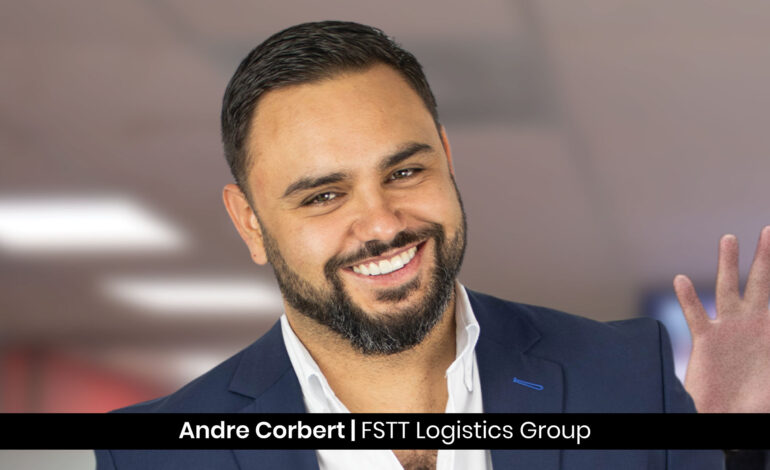
Andre Corbert: Redefining What Logistics Really Is

Every leadership journey begins with a moment of awareness and for Andre Corbert, it was the realization that logistics is not just about moving freight, but about moving lives, livelihoods, and dreams.

His path to leadership was anything but conventional. Andre began his career in a vehicle transport call center, learning the industry from the ground up one call, one challenge, one relationship at a time. Those early experiences revealed something most people never see: when logistics works seamlessly, it appears simple, but only because countless moving parts are being orchestrated behind the scenes with precision, responsibility, and trust.

Driven by curiosity and entrepreneurial instinct, Andre explored digital advertising before returning to logistics with fresh perspective. He recognized a critical gap in the heavy equipment freight space where service, transparency, and reliability often fell short. That insight became the foundation for STT Logistics Group, a company built to redefine standards in freight brokerage through accountability, innovation, and human-centered leadership.

Andre’s leadership philosophy became especially visible during one of the industry’s most challenging moments the return to on-site work after prolonged disruption. He understood that people are not “plug-and-play.” Fear, uncertainty, and psychological safety mattered as much as operational efficiency. Rebuilding trust and connection within teams was not an obstacle to overcome, but a responsibility to honor.

Under his guidance, STT Logistics Group integrates advanced technology without losing its human core. Innovations like the STT Driver App, powered by AI and biometric verification, enhance safety, prevent cargo theft, and protect the integrity of every shipment while ensuring drivers, partners, and clients feel secure and supported.

Today, Mr. Corbert leads with a vision that goes beyond logistics performance. He believes an organization’s true role is to safeguard the businesses it serves, the people who depend on it, and the futures being built with every delivery. His story is one of resilience, empathy, and innovation proof that leadership worth admiring is built not just on efficiency, but on trust, courage, and care.

From Ground-Level Experience to Redefining Freight Brokerage

Andre Corbert’s path to leadership has been unconventional, shaped by diverse hands-on experiences that instilled a strong work ethic early in his career. Before entering the logistics sector, he worked in gardening and construction, roles that grounded him in discipline, responsibility, and the value of hard work. His formal introduction to the industry began in a vehicle transport call center, where he gained firsthand insight into the operational realities of freight movement. This experience later led him to explore entrepreneurial ventures in digital advertising, broadening his understanding of business, technology, and market positioning.

Through this journey, Andre identified a critical gap in the heavy equipment logistics space where fragmented processes and inconsistent service were common. In response, he founded STT Logistics Group with a clear mission: to raise the standard of service in freight brokerage. Under his leadership, the company operates as a comprehensive one-stop shop for heavy hauling, machinery transport, and international freight, eliminating the inefficiencies and risks associated with multi-broker chains.

To support sustainable growth and operational excellence, Mr. Corbert has prioritized innovation through technology. The introduction of the STT Driver App, powered by artificial intelligence and biometric verification, enhances safety, strengthens accountability, and plays a key role in preventing cargo theft. This blend of practical experience, entrepreneurial vision, and technology-driven solutions defines Andre’s leadership and continues to shape STT Logistics Group’s evolution in the logistics industry.

Building a Technology-Driven Global Benchmark for Specialized Transport

Andre envisions STT Logistics Group becoming the definitive global benchmark for reliability in specialized transport. By 2030, the organization aims to evolve into a technology-driven powerhouse, investing heavily in artificial intelligence and real-time monitoring systems to deliver what he describes as a “masterclass” in logistics transparency. This outcome-focused approach ensures that clients can track every detail of their heavy hauls with complete confidence, clarity, and ease.

One of the most defining challenges of Mr. Corbert’s leadership journey was navigating the COVID-19 pandemic. Almost overnight, STT Logistics Group was required to shift all office operations to remote work, relying entirely on online messaging and digital collaboration. Maintaining a high-performance culture while teams worked from home proved demanding and required the management team to elevate their leadership approach.

Prior to the pandemic, the organization thrived on an energetic, highly collaborative office environment something that had to be intentionally recreated in a virtual setting. To preserve morale and connection, the team introduced a dedicated digital chat channel focused solely on culture. Achievements were shared and celebrated openly, colleagues congratulated one another, and even simple daily rituals such as greeting each other each morning were intentionally replicated online.

Morning meetings transitioned from in-person gatherings to virtual platforms, initially using Skype. As the company continued to grow, the limitations of the platform became apparent, prompting a shift to Zoom to support more effective communication and collaboration.

While the pandemic initially impacted sales during the first three months, the experience ultimately strengthened the organization. The disruption fostered resilience, creativity, and adaptability qualities that led to a rebound in performance by the fourth month and fueled significant growth thereafter.

Another major challenge emerged during the return to on-site operations. The psychological aspect of reintegration proved difficult, as many team members experienced anxiety about returning to shared physical spaces and close interaction. In many ways, this transition was nearly as challenging as the initial move to remote work. Today, STT Logistics Group continues to operate within a hybrid model, balancing on-site and remote work to support both performance and wellbeing.

Through these experiences, Mr. Corbert identified several key leadership lessons. He recognized the importance of radical clarity, learning that leading at scale especially in digital environments requires consistent and transparent communication to prevent misalignment. He also emphasized cultural resilience, acknowledging that people are not “plug-and-play” and that effective leadership must prioritize empathy during periods of significant change. Finally, he embraced empowered autonomy, shifting from close oversight to fostering independent leadership within departments, trusting teams to perform under pressure.

For Andre, resilience is not merely about surviving a crisis. It is about recalibrating culture, strengthening human connection, and leading with intention as the world continues to change.

People-Driven Leadership in an Automated World

Consistency and organizational alignment at STT Logistics Group are guided by the PPF framework—Professional, Personal, and Financial goals. This mechanism serves as a mentoring tool to support team development and cultivate a culture of empowerment. Within this philosophy, the CEO views his primary responsibility as ensuring the company functions as a platform for the growth, advancement, and success of its associates.

Beyond navigating financial and operational challenges, he has been equally focused on addressing the growing absence of human connection in an increasingly automated business landscape. By emphasizing authentic relationships and transparent communication, he has worked to stabilize and strengthen the organization’s culture.

At its core, STT Logistics Group sees its mission as extending beyond the movement of freight. The organization understands its role as safeguarding the livelihoods, ambitions, and long-term dreams of the businesses it serves recognizing that behind every shipment is a network of people depending on reliability, trust, and integrity.

Where Performance, Purpose, and People Move Forward Together

For Mr. Corbert, leadership is defined not by metrics alone but by the mindset and intention brought to positively transforming the lives of team members. He considers the most fulfilling aspect of his role to be witnessing individuals within the organization achieve personal and professional milestones made possible through structured internal support systems and a culture of encouragement.

STT Logistics Group’s one-stop-shop model further reflects this philosophy by delivering a seamless, single-provider solution that ensures consistency, reliability, and high-quality service across every engagement. Extending its commitment beyond operations, the group has also introduced educational webinars designed to demystify the complexities of the transport industry. These initiatives function as a curated, accessible knowledge platform often described as a “Wikipedia for transport”—aimed at sharing critical insights and empowering stakeholders worldwide.

Redefining Complex Logistics Through Innovation and Trust

Mr. Corbert emphasizes that a cross-disciplinary approach blending hands-on industry experience with emerging technologies such as programming and virtual reality enables leaders to bring modern solutions to long-standing logistics challenges. He believes this depth of experience allows the company to streamline even the most complex aspects of oversized cargo management for clients throughout North and Latin America.

He also highlights resilience, curiosity, and the “human touch” as essential yet often underestimated qualities in the industry. Mr. Corbert looks for team members who see themselves as logistics specialists, motivated to tackle complex problems and grow with the organization, noting that the ability to build authentic relationships is increasingly rare and highly valuable in today’s market.

A Philosophy Built on Accountability, Continuous Development & Operational Excellence

Mr. Corbert strongly believes in continuously developing his team consistently and without pause viewing growth as an ongoing responsibility rather than a one-time effort. He challenges the common misconception that logistics is “just booking trucks,” emphasizing that it actually encompasses risk management, problem-solving, relationship management, compliance, finance, and crisis control, often simultaneously. When logistics functions smoothly, he notes, it appears simple only because extensive coordination and expertise are operating behind the scenes.

He credits his early years of personally handling operational challenges as some of his most valuable learning experiences. Being directly accountable when things went wrong, he explains, instilled discipline, humility, and deep respect for those doing the work on the ground principles that ultimately shaped how he built STT.

Mr. Corbert adds that regardless of the industry, he would always gravitate toward operational, people-driven roles focused on building or scaling businesses. His passion lies in creating systems, developing teams, and solving real-world problems, with logistics standing out as one of the most effective industries in which to do so.

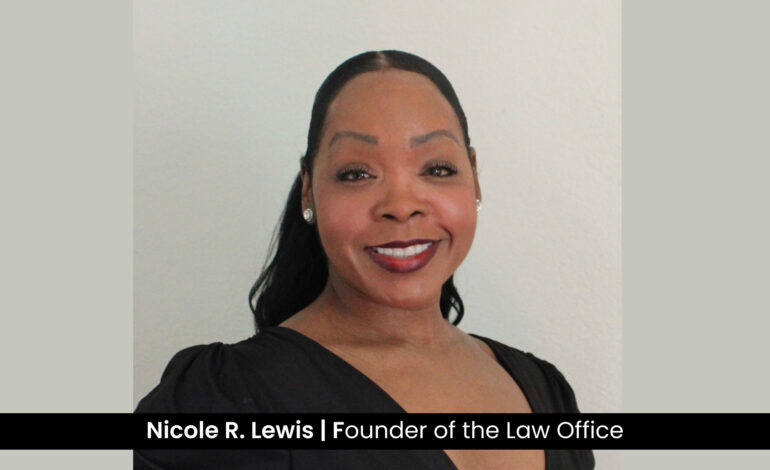
Nicole R. Lewis: Built by Lessons, Defined by Growth

Success did not arrive easily for Nicole R. Lewis. It arrived the hard way built through long nights, relentless discipline, and lessons learned when things did not go as planned.

Before she became the founder of the Law Office of Nicole R. Lewis, Nicole understood what it meant to carry responsibility without a safety net. She built systems. She created processes. She delegated. Yet she knew that true leadership was not proven when everything ran smoothly it was tested when pressure mounted and she still had to stand steady.

There were seasons when stepping away felt impossible. Seasons where she questioned whether the foundation was strong enough to hold without her constant presence. But instead of avoiding that discomfort, she leaned into it. She strengthened structures. She sharpened accountability. She faced the truth that growth is rarely convenient it demands refinement, recalibration, and resilience.

Nicole’s authenticity was not crafted for branding. It was forged in real life. Raised by parents who modeled character and integrity not as slogans but as daily practice, she learned early that reputation is built quietly through consistency when no one is watching. From them, she absorbed a principle that would later define her firm: integrity is not negotiable, and character is revealed in adversity.

As an attorney, she discovered something powerful clients are less concerned with how a problem is solved and more concerned that it is solved with clarity, confidence, and care. Law is rarely one-dimensional; every case can be viewed from multiple angles. Nicole encourages her team to trust their instincts, to examine issues deeply, and to respect the intuition that often signals where the real solution lies. Strategy matters. Precision matters. But so does perspective.

Her strength does not come from endless hustle. It comes from discipline the discipline to prioritize her mental and physical health so she can lead with clarity rather than exhaustion. She understands that maintaining sanity is not indulgence; it is strategy. A steady mind makes sound decisions.

The road to entrepreneurship taught her one essential truth: she does not lose. She either wins or she learns. Every setback became instruction. Every challenge became refinement. Every obstacle reinforced the foundation she was building.

Nicole’s journey is not a story of shortcuts or overnight victories. It is a story of choosing the hard way choosing growth over comfort, integrity over expedience, resilience over retreat. And in doing so, she did not just build a law firm.

She built a standard.

From Courtroom Observer to Client-Centered Strategist in Family Law

Nicole’s legal career began as a Staff Attorney for the County of Los Angeles Child Support Services Department. She regarded this role as the ideal first position serving in a government capacity while practicing within an area that fell under the broader umbrella of family law. The experience provided both structure and exposure, allowing her to build a strong procedural foundation early in her career.

As a child support attorney, she frequently appeared in hearings at the family law courthouse, where she gained insight into the full spectrum of family law proceedings. In many of those matters, her role was focused and specific addressing the court primarily on financial issues related to support. This unique vantage point allowed her to observe broader family law disputes as a spectator while participating when financial determinations were at issue. Through this exposure, she developed a deeper and more comprehensive interest in family law as a whole.

When she later established her own solo practice, transitioning into family law was a natural progression. The foundation she built during her early government service seamlessly aligned with her growing passion for guiding individuals and families through complex legal transitions.

Her approach to representation is highly client-centered and outcome-driven. She begins each engagement by investing time in meaningful communication, carefully identifying what matters most to her client. Once she understands the client’s primary desired outcome, she crafts a strategic plan designed to place them in the strongest possible position to achieve results aligned with their goals.

She views her role fundamentally as that of a problem solver. Clients seek solutions, not simply legal theory, and she prioritizes delivering clear, actionable paths forward. Over time, she has learned that clients are less concerned with the technical mechanics behind a solution and more focused on whether the solution effectively addresses their concerns. As long as her reasoning is communicated with clarity explaining why a particular strategy represents the best course of action under the circumstance’s clients feel reassured and confident in the process.

For her, clarity is not merely a communication style; it is a tool that reduces anxiety. By ensuring clients fully understand both the strategy and the reasoning behind it, she transforms uncertainty into confidence, reinforcing trust at every stage of representation.

Leading with Vision, Building with Intention, and Speaking Truth with Compassion

As Nicole continues to scale her practice, she recognizes that business ownership demands a fundamentally different mindset than practicing law on a case-by-case basis. Serving clients directly requires the focus and stamina of a dedicated practitioner working in the business, managing details, deadlines, and court appearances. In contrast, leading a growing firm requires a CEO’s perspective working on the business, building infrastructure, shaping vision, and making strategic decisions that extend beyond any single matter.

At present, she remains actively involved in managing individual cases. However, she is simultaneously building and strengthening her team with the intention of creating a firm that operates efficiently without her oversight of every detail. Her long-term objective is to concentrate on the areas that truly require her attention vision-setting, high-level decision-making, and strategic execution. She understands her role as the visionary and decision-maker, responsible for guiding the firm’s direction rather than being consumed by its daily mechanics.

She has already implemented systems, established processes, and delegated key responsibilities. Even so, she acknowledges that growth is an ongoing process. There is still refinement required before the firm reaches the level of autonomy that would allow her to step away for a well-earned vacation with complete confidence that operations will continue seamlessly.

Throughout this evolution, she remains anchored by a guiding principle: “Speak the truth in love.” This mantra shapes both her leadership style and her client relationships. Whether managing her team or advising clients, she believes in directness delivered with compassion ensuring honesty is never compromised, but always communicated with respect and care.

Rooted in Integrity, Empowering with Purpose

Nicole’s greatest source of inspiration has always been her parents. They created a strong and stable life for her and her brother, providing unwavering support and encouragement that became the foundation for her success. From them, she learned many lessons but none more important than the meaning of character and integrity. They did not simply speak about values; they modeled them daily. Through their example, she came to understand that integrity is not situational it is a constant, reflected in decisions made both publicly and privately.

Those early lessons now shape the culture of her firm. She believes balance is possible when a business is rooted in clearly defined values and upheld by people who genuinely embody them. As a leader, she places the highest value on honesty and doing what is right especially in the midst of problem-solving. Every member of her team is expected to share that same commitment to integrity. By intentionally hiring individuals who align with the firm’s principles, she fosters an environment where real-time, autonomous decision-making becomes both natural and effective.

Equally important is the way she leads. She is intentional about treating every person with respect, offering support, and creating a safe space where voices can be heard without fear. Empowerment, in her view, begins with care. When team members know they are valued not only for their performance but for who they are as individuals, they operate with greater confidence and ownership.

By combining strong values with compassionate leadership, she has cultivated a culture where integrity guides action, respect strengthens collaboration, and every team member feels both supported and empowered to contribute meaningfully.

Where Clarity Meets Compassion, and Integrity Shapes Every Strategy

Nicole’s firm stands apart because it rejects the notion of a one-size-fits-all approach. While many cases may share similar legal issues, she understands that no two clients experience those issues in the same way. Each matter is approached with intentionality and precision, tailored to the client’s specific goals, concerns, and circumstances. As a result, clients never feel like a file number or one of many they feel seen, heard, and understood.

The firm prioritizes building genuine relationships. From the outset, clients are welcomed into a space where they can speak openly and trust that their needs will be acknowledged without judgment. Responsiveness and proactivity are central to the firm’s operations. Rather than reacting to problems as they escalate, her team anticipates challenges, addresses them early, and works diligently to simplify situations that are already emotionally and legally complex.

One of the firm’s defining strengths is its ability to provide clarity under pressure. While no attorney can guarantee a specific outcome, she ensures that clients are never left guessing about strategy or direction. Through consistent and transparent communication, the firm minimizes surprises and reduces anxiety. Clients may not have certainty about the final result, but they consistently experience calm, steady execution throughout the process.

There was no single case or mentor that served as a “north star” for the firm’s values. Instead, those principles were shaped long before the firm was founded rooted in the lessons she learned from her parents about character, integrity, and authenticity. She leads and practices law in alignment with the same values that guide her personal life. That authenticity is not compartmentalized; it is consistent across her roles as attorney, business owner, and leader.

By remaining anchored to her core principles, she has built a firm defined not only by legal competence, but by integrity, clarity, and genuine human connection.

Redefining Success in Law Through Strength, Clarity, and Intentional Wellness

The impact Nicole hopes to leave on the legal industry centers on one critical priority: mental health and wellness. She recognizes that the legal profession is inherently adversarial and deeply demanding. The physical, mental, and emotional energy required to sustain excellence in such an environment is often immeasurable. Rather than accepting burnout as inevitable, she is committed to demonstrating that prioritizing self-care, mental clarity, and physical strength is not a luxury it is a professional advantage.

She believes there is transformative power in how legal professionals “show up.” When owners, attorneys, and legal teams operate at their best clear-minded, grounded, and physically well they are better positioned to serve clients who depend on them during some of the most difficult seasons of their lives. Wellness, in her view, is directly connected to performance, leadership, and ethical decision-making.

Her personal discipline reflects that philosophy. Each day begins with intentional “Quiet Time,” a period dedicated to centering her thoughts and establishing the mindset she needs before stepping into the demands of the day. This practice creates mental clarity and emotional steadiness. She typically follows it with strength training, reinforcing the connection between physical resilience and professional endurance.

Beyond fitness as a routine, she has taken her commitment to health to an elite level. She is a professional bodybuilder with the Professional Natural Bodybuilding Association (PNBA), a major international natural bodybuilding organization. As a PNBA athlete, she is also a proud member of Team USA. Since October 2022, she has trained under Coach Gaby Morrison (also known as Gaby Vega), whose guidance extends beyond physical conditioning to structured nutrition planning and performance discipline. This partnership has been instrumental not only in her athletic achievements but in maintaining the focus, structure, and mental clarity that strengthen her leadership in the legal arena.

Equally instrumental to her professional success is her paralegal, Mary Lou Floyd. Delegation, she understands, is not a weakness it is a strategy. Mary Lou’s ability to anticipate needs, resolve issues proactively, and manage administrative responsibilities with precision allows her to maximize her time and eliminate unnecessary frustration. The trust and efficiency within that partnership have significantly enhanced the way she practices law and operates her firm.

Together, disciplined self-care and strategic delegation form the foundation of her sustainability. By investing in her well-being and surrounding herself with strong support, she exemplifies a model of leadership that challenges the traditional narrative of exhaustion in the legal profession. Her message is clear: when wellness becomes a priority, excellence becomes sustainable.

Redefining Legal Strength Through Clarity, Instinct, and Alignment

One of the most common misconceptions Nicole encounters is the belief that litigation automatically means going to court. Many clients assume that once a legal matter begins, a courtroom appearance is inevitable. In reality, a significant number of cases can be resolved through negotiated settlements without ever stepping inside a courthouse. While resolution outside of court requires cooperation and agreement from all parties involved, the legal process often provides alternative paths that are less adversarial, more efficient, and less emotionally taxing. Educating clients about these options helps reduce unnecessary fear and allows them to approach their matter with greater confidence and clarity.

Beyond procedural misunderstandings, she also believes there is a powerful yet often overlooked skill within the legal profession: instinct. The law teaches analysis, argumentation, and technical proficiency. However, not every strategic decision is purely mechanical. A single case can be viewed from multiple angles, and sometimes the defining insight comes not solely from textbooks or precedent, but from intuition sharpened by experience. She consistently encourages those who work with her to pay attention to what their instincts are signaling about particular facts, personalities, or dynamics within a case.

While attorneys can be trained in countless technical skills, instinct and intuition require intentional awareness. In her experience, the willingness to trust that internal compass when grounded in preparation and integrity can be a game changer. It is often the subtle shift in perspective, the strategic pause, or the intuitive recalibration that changes the trajectory of a matter.

At the core of her philosophy is alignment alignment between beliefs, values, and action. Professional excellence, in her view, is unsustainable without personal congruence. When decisions reflect deeply held principles, clarity follows naturally.

Nicole guiding reflections capture this mindset:

  1. “I never lose. I either win or learn.”
  2. “The world asks you to be normal, but your soul asks you to be whole.”
  3. “Stagnation is a precursor to decay.”
  4. “There is no fear in love.”

Together, these beliefs shape not only how she practices law, but how Nicole leads, grows, and evolves continually learning, remaining authentic, and choosing courage over complacency.

Cindy Murray: A Life of Service and Innovation

Some careers are defined by titles. Others are defined by purpose. The path from public-sector leadership to private entrepreneurship is rarely linear, and it is never perfect. It requires courage to step into the unknown and conviction to carry one’s values forward into new spaces. For Cindy Murray, becoming a Licensed Insurance Agent at the The Murray Group was not about changing direction it was about deepening impact.

In her years of public service, she learned that real fulfillment does not come from flawless systems or ideal circumstances. Happiness is not perfected; it is built through service, through listening, and through standing beside people in moments that matter most. That understanding shaped her transition into the insurance field, where protection and planning are more than transactions they are acts of care.

Cindy views her role not simply as a career milestone, but as an evolving platform to continue learning, growing, and contributing meaningfully to her community. Each client conversation allows her to recommend solutions that are not only affordable today, but sustainable and beneficial in the long run. Her work reflects the same values that guided her in public leadership: responsibility, integrity, and a commitment to making a tangible difference in people’s lives.

Her journey reminds us that happiness is not about reaching a perfect endpoint. It is about aligning passion with purpose and choosing, every day, to serve with intention.

A Foundation Built on Purpose

An MBA and Certified Management Accountant (CMA), Cindy Murray has built her career on a foundation of passion, perseverance, and purpose. Her professional journey reflects steady growth, impactful leadership, and a deep commitment to serving others while helping shape healthcare and financial management systems in Kentucky and beyond. Throughout every stage of her career, she has remained focused on meaningful impact rather than titles alone.

Early Career in Public Service

Cindy began her career in Kentucky state government after earning her degree in Agribusiness and MBA. Starting as a data entry operator at the Board of Hairdressers, she quickly transformed what seemed like a modest beginning into a powerful learning opportunity. Working alongside seasoned professionals, she gained practical insight into government operations and developed strengths in adaptability and collaboration. Her dedication and work ethic led her to the Kentucky Cabinet for Human Resources (CHFS), where she advanced from accountant to health planner, immersing herself in the complexities of public service delivery.

Leadership in Healthcare Reform

Determined to strengthen her expertise, Cindy earned her CMA designation, reinforcing her financial and strategic leadership skills. In May 1995, she was appointed Health Planner at CHFS and tasked with supporting Governor Brereton Jones in healthcare reform initiatives. She played a central role in addressing public concerns, organizing statewide town forums, and responding to complex healthcare issues. Among her proudest accomplishments was helping remove unethical insurance providers from the state, protecting vulnerable populations, including individuals with pre-existing conditions. This period sharpened her leadership abilities and reinforced her commitment to ethical service.

Stewardship of a $13 Billion Budget

Cindy’s career progressed when she became lead analyst over the Health and Family Services Cabinet at the Kentucky Legislative Research Commission, overseeing a $13 billion budget. She later advanced to Chief Financial Officer for the same CHFS budget, demonstrating exceptional fiscal oversight and executive leadership. In these roles, she championed innovation, streamlined processes, and fostered a culture of trust and collaboration. Her introduction of rapid-review initiatives improved productivity while ensuring her team felt valued and empowered.

Transition to Insurance Entrepreneurship

In 2018, Cindy expanded her professional journey by becoming a licensed insurance agent. Bringing decades of public-sector leadership into private enterprise, she has since provided home, Medicare, and life insurance services across the United States. As a Licensed Insurance Agent at The Murray Group, she continues to serve with expertise, empathy, and dedication. She views this role not as a culmination, but as a continuation of her lifelong commitment to helping individuals and families secure sustainable, long-term solutions.

An Ongoing Journey of Growth

Cindy remains deeply committed to professional development and staying ahead of industry trends. She aspires to mentor others, lead larger initiatives, and continue refining her skills. Her career from state government to billion-dollar fiscal oversight to private insurance leadership reflects resilience, adaptability, and an enduring commitment to making a difference. For Cindy Murray, success is not a fixed destination but an evolving journey defined by service, integrity, and meaningful impact.

Foundations in Public Service

Murray began her career in Kentucky state government after earning her degree in Agribusiness and an MBA. She started modestly as a data entry operator at the Board of Hairdressers, turning an entry-level position into an invaluable opportunity to learn practical applications of her academic training. Her drive and curiosity led her to the Kentucky Cabinet for Human Resources (CHFS), where she progressed from accountant to health planner. Immersed in the complexities of government operations and service delivery, she honed skills in collaboration, adaptability, and strategic problem-solving.

Impact Through Healthcare Reform

In May 1995, Murray was appointed Health Planner at CHFS and tasked with supporting Governor Brereton Jones’s healthcare reform initiatives. In this role, she managed public inquiries, organized statewide town forums, and addressed pressing healthcare challenges. One of her proudest achievements during this time was helping remove unethical insurance companies from the state marketplace, safeguarding vulnerable populations, including those with pre-existing conditions. These experiences strengthened her leadership, advocacy, and problem-solving skills, reinforcing her belief in perseverance, ethical action, and service-driven impact.

Mastering Financial Leadership

Murray’s analytical expertise deepened as she advanced to lead analyst and later Chief Financial Officer over the $13 billion Health and Family Services Cabinet budget. These roles demanded fiscal precision, strategic oversight, and empathetic leadership. She championed process improvements, implemented rapid-review initiatives to streamline decision-making, and fostered a workplace culture built on trust and collaboration. Her ability to combine financial discipline with people-centered leadership became a hallmark of her professional approach.

Bringing Service to Private Enterprise

In 2018, Murray transitioned into private enterprise as a licensed insurance agent and founder of The Murray Group. Drawing on decades of public-sector experience, she now helps individuals and families navigate complex insurance decisions, applying the same principles of integrity, transparency, and long-term planning. Her CMA background informs every recommendation, ensuring that solutions are not only cost-effective today but sustainable and beneficial over time. Each client relationship reflects her commitment to clear communication, trust, and accountability.

Leadership With Empathy and Impact

Throughout her career, Murray has demonstrated that leadership is more than titles or responsibilities it is empathy, accountability, and listening first. Whether overseeing multibillion-dollar budgets or guiding clients through insurance choices, she remains focused on serving others and creating lasting impact. Her approach blends analytical rigor with compassion, ensuring that every decision she makes strengthens both individuals and the broader community.

A Continuing Journey

From her early days in state government to financial stewardship at the highest levels and now to private-sector entrepreneurship, Cindy Murray’s career exemplifies purposeful growth, adaptability, and unwavering dedication. For her, success is not a perfected endpoint but an ongoing journey one measured by integrity, meaningful impact, and the ability to empower others along the way.

Innovation Through Empathy and Expertise

Murray attributes her continued relevance in the ever-evolving insurance industry to a combination of curiosity, education, and active listening. By understanding the unique challenges of her clients, she creates tailored solutions that go beyond standard offerings. She is particularly committed to serving seniors and individuals with disabilities, ensuring they receive maximum benefits while minimizing unnecessary costs. This integration of expertise and empathy keeps her work impactful and meaningful.

Balancing Passion, Community, and Leadership

For Murray, fulfillment comes from the opportunity to make a real difference in people’s lives. She balances her professional responsibilities with community service and equestrian pursuits, which provide perspective, energy, and grounding. These personal passions enrich her leadership style, enabling her to serve clients with authenticity, patience, and insight.

A Legacy of Continuous Impact

Cindy Murray’s career is a testament to the power of purpose-driven leadership. From public-sector budget oversight to private entrepreneurship, she has consistently applied principles of integrity, discipline, and empathy. Her journey demonstrates that meaningful success is not defined by titles or milestones, but by trust earned, communities strengthened, and lives positively impacted.

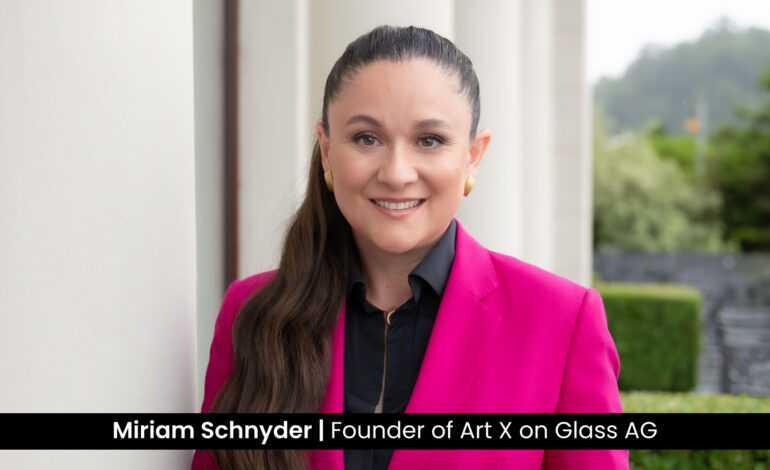
Miriam Schnyder: Illuminating Hope Through the Art of Glass

There are moments in life when vision is not born from ambition but from conviction. For Miriam Schnyder, Founder of Art X on Glass AG and CEO of SCHNYDER Group Holding, that conviction was simple yet profound: art should not be distant. It should live with us. Breathe with us. Reflect us. While many see glass as transparent, fragile, or purely functional, Miriam saw possibility. She saw surfaces waiting to tell stories. She saw walls that could hold emotion. She saw everyday spaces longing for transformation.

Art X on Glass was founded in 2024, but the vision behind it was years in the making. It emerged from her refusal to accept that art must be confined to galleries, protected by frames, or admired from a distance. Instead, she imagined art as a presence integrated into architecture, embedded in daily life, quietly elevating the spaces we move through. Yet beyond innovation and leadership, the most precious thing about Miriam is not her strategy. It is her authenticity.

In an era increasingly shaped by automation and artificial intelligence, she stands firmly in defense of human creativity. While she acknowledges that technology can enhance efficiency, she believes the soul of art cannot be replicated. The brushstroke, the instinct, the imperfection these are human signatures. And to her, they are sacred. Building something original is never without resistance. Markets question. Systems challenge. Obstacles test resolve. 

For Miriam, the greatest challenge has not been competition or complexity it has been staying true to her purpose when compromise would have been easier. But integrity, for her, is non-negotiable. She believes the most precious thing a leader possesses is not power or profit it is clarity of passion. The courage to remain aligned with one’s vision. The discipline to protect it. And the wisdom to surround oneself with a committed, purpose-driven team who believes in it just as deeply.

Under her leadership, Art X on Glass is more than a company. It is a movement redefining how the world experiences art not as decoration, but as transformation. Because for Miriam art is not something we look at. It is something we live with. And perhaps that unwavering devotion to human creativity that refusal to dilute vision in a world of shortcuts is the most precious thing about her.

Driven by Heart, Defined by Vision

Miriam stands at the intersection of artistic vision and entrepreneurial strength, guided by a revving heart that beats for both creativity and leadership. As the founder, she channels her deep passion for glass and art into works that go beyond aesthetics. For Miriam, art is not decoration it is emotion, reflection, and hope made visible.

While collaborating with skilled artists, she serves as the bridge between technical mastery and emotional resonance, ensuring each piece uplifts and inspires. Her belief is simple yet powerful: creativity can heal, connect, and give something meaningful back to people.

Alongside her artistic mission, Miriam is a seasoned executive. As CEO, she leads with clarity and strategic discipline, drawing from years of experience in design, construction, and corporate leadership, including her tenure at Roche. Her academic foundation and multicultural perspective further strengthen her global outlook.

Yet beyond titles and achievements, it is her hopefulness that defines her. Miriam leads with intention, resilience, and an unwavering belief that art and business can coexist beautifully. She is not just building a brand she is building meaning, driven by a heart that never stops moving forward.

The Art of Staying True

After completing her degree, Miriam Schnyder built her career across several Swiss companies, gaining diverse business experience before discovering her true passion glass as an artistic medium. Driven by vision and purpose, she founded Art X on Glass AG, blending behind-glass painting with entrepreneurship while creating opportunities for young talents to thrive in this unique craft.

Today, as CEO of SCHNYDER Group Holding and Founder of Art X on Glass AG, she merges creativity with strategic leadership. Her company focuses exclusively on individually handmade pieces, intentionally distancing itself from automated mass production to preserve authenticity and human craftsmanship.

Miriam acknowledges that entrepreneurship comes with challenges, yet she refuses to see obstacles as limitations. For her, the greatest test is staying committed to one’s vision despite uncertainty. By remaining true to her passion and surrounding herself with a dedicated team, she continues to move forward with resilience.

While she closely observes technological advancements, including AI, she firmly believes that human artistry remains irreplaceable. Technology may enhance processes, but the soul of her work lies in creativity, gratitude, and unity. Her message to aspiring leaders is simple: stay connected to your passion, remain determined, and never give up on your dream.

Kicking Into a New Gear

In a world driven by speed and automation, Miriam Schnyder has kicked her vision into a new gear, transforming Art X on Glass AG into a bold artistic force. Her leadership moves beyond traditional corporate structures, blending creative instinct with sharp business strategy. She operates at the intersection of executive and artist, guiding with both empathy and precision.

Founded in 2024, the company began with one daring idea: to turn glass into a canvas of emotion. What started as an experiment quickly evolved into a growing international venture known for bespoke glass artworks that merge storytelling, symbolism, and striking visual impact. Her mission is clear art should not remain confined to galleries but live within everyday spaces, from homes to offices and public venues.

Glass itself reflects her mindset. Painted in reverse and resistant to absorption, it demands foresight, courage, and acceptance of uncertainty. Each piece carries an element of surprise an approach that mirrors her leadership philosophy of embracing the unknown and transforming risk into innovation.

Under her renewed momentum, Schnyder has expanded Art X on Glass into a collaborative platform featuring artists from diverse cultural backgrounds. Their contrasting techniques from delicate floral elegance to bold, glitter-infused expression create a dynamic creative identity rooted in global unity.

More than a company, Art X on Glass is becoming a movement one that challenges conventional art boundaries and reconnects people with emotion. Miriam Schnyder stands not just as a CEO, but as a visionary driving creativity forward with clarity, courage, and purpose.

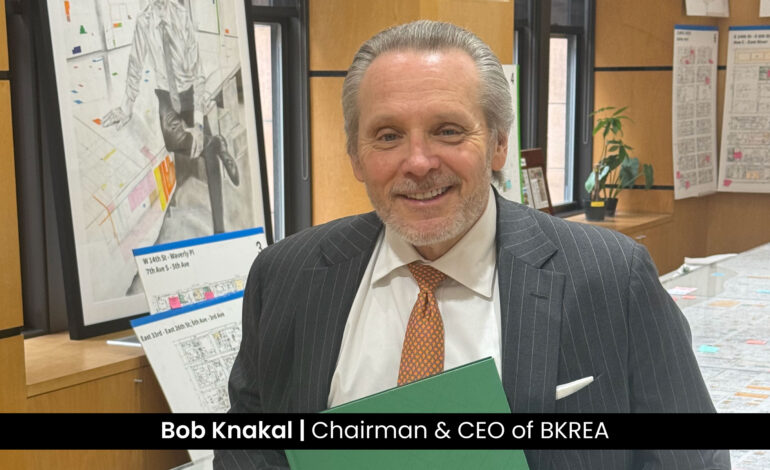
Bob Knakal: Leading with Clarity in a Reset Market

Some leaders don’t just follow markets, they understand cycles, people, and timing. They believe that doing the right thing for clients never goes out of style, and that excellence only comes from going all-in, every single time. Over decades, this philosophy has reshaped how relationships are built, how information is valued, and how firms grow from the inside out.

That mindset belongs to Bob Knakal, Chairman & CEO of BKREA, who is someone who transformed the old “mile wide, inch deep” approach into a focused, relationship-driven model rooted in trust, discipline, and long-term vision. Known for redefining how real estate advisory truly works, he emphasizes that the business is not about property alone, but about information, relationships, and understanding who the real buyers are in every cycle.

At the core of his leadership is a simple but powerful goal: to build an environment where professionals grow faster than anywhere else not because they are managed, but because they are supported, encouraged, and inspired to outperform even their own expectations.

From Accidental Beginnings to Enduring Leadership Across Every Market Cycle

One of the most enduring lessons Bob has carried on throughout his career is that doing the right thing for the client, never goes out of style, is always the correct course of action. His entry into real estate itself was unexpected. When he first encountered Coldwell Banker, he mistakenly assumed it was a bank. There was no master plan, no family legacy in the industry, and no predefined roadmap, only curiosity and a willingness to say yes before fully understanding where the path might lead. That accidental beginning shaped a core belief early on: success is not about having all the answers, but about asking better questions, listening intentionally, and committing fully once something worth building reveals itself.

From the very start, Bob embraced an “all-in” approach. He learned that if something is worth doing, it is worth doing well. That philosophy guided his journey from co-founding Massey Knakal in 1988 to launching BKREA in 2024. Focus has been a constant thread throughout. At Massey Knakal, the firm avoided being everything to everyone. Instead, it specialized relentlessly, built scalable systems, and fostered a culture where brokers were acknowledged, trained, inspired, and empowered to grow. At BKREA, the same principle remains but with even sharper intent and refinement.

Underlying this approach is Bob’s clear understanding that real estate is not merely about building; it is fundamentally an information and relationship business. Having the best information and protecting relationships is non-negotiable. Markets evolve, cycles shift, and participants change, but trusted relationships and disciplined insight endure.

One of the most defining chapters of Bob’s career came during the Global Financial Crisis. Fully negotiated deals suddenly became impossible to finance. Buyers vanished, capital structures collapsed, and uncertainty dominated the market. Yet, transactions still had to occur. That period crystallized a critical insight: liquidity is cyclical, but value, though volatile, is permanent. New York City has a unique resilience. Capital always returns, but it returns differently in each cycle.

This experience reinforced the importance of identifying who the real buyers are in every market phase, not who they were in the past. It also shaped Bob’s belief that the best brokers do not wait for markets to recover; they adapt faster than the market itself. That ability to adjust, refocus, and move decisively has defined his leadership across every cycle since.

Redefining How Brokers and Clients Win

For Bob, servant leadership is not a slogan; it is a daily discipline. Throughout his career, he has believed that brokers perform at their highest level when they feel genuinely seen, heard, and supported. At Massey Knakal, acknowledgment was never about empty praise; it was about recognizing effort, progress, and discipline. It was about building confidence, reinforcing self-belief and self-esteem, and creating an environment where individuals could consistently do better than their best.

That philosophy has evolved and sharpened at BKREA, adapted for a modern, entrepreneurial landscape. Today, Bob defines servant leadership as the act of removing friction. It means equipping brokers with superior data, advanced technology, effective marketing, and meaningful mentorship so their focus remains where it belongs: advising clients, not navigating broken systems. It also means encouraging specialization and intellectual honesty. When a broker doesn’t know an answer, the expectation is not perfect, but transparency and speed in finding the right solution.

The objective is clear and uncompromising: to build a firm where brokers grow faster than they could anywhere else, not because they are managed, but because they are supported, encouraged, and inspired to exceed their own expectations. Under Bob’s leadership, the traditional model of going a mile wide and an inch deep has been replaced with a more intentional approach, going an inch wide and a mile deep with clients, staying present at every step, and building relationships that endure beyond individual transactions.

Delivering Clarity Where Complexity Creates Opportunity

For Bob, the market gap was unmistakable. The development, redevelopment, and user-property sectors in New York City were consistently underserved by firms attempting to be all things to all people. At the same time, increasing government regulation around new development had created significant opacity in an environment where deep expertise could create real advantage. Bob saw an opportunity to go granular in a space where scale offered diminishing returns, and returning to his entrepreneurial roots became the natural next step.

While large brokerages excel at scale, Bob recognized that scale often comes at the expense of specialization and senior-level attention. BKREA was founded with a clear and deliberate focus: to concentrate exclusively on development, redevelopment, and user-building transactions in New York City. The firm is structured around professionals who are deeply embedded within specific verticals and submarkets, rather than spread thin across asset classes.

At the core of BKREA’s strategy are three highly correlated and synergistic verticals, all centered around vacant buildings. In New York City, every vacant building presents a fundamental question: do you demolish and build anew, renovate and convert the use, or sell to an end user who will occupy the property? BKREA spends most of its time answering that question with precision, insight, and execution.

The firm’s mission is simple but exacting: to deliver clarity in complexity. That means fewer listings, deeper analysis, and more thoughtful execution. BKREA does not chase volume, it pursues relevance and excellence. This distinction becomes especially critical in volatile or uncertain markets, where informed decision-making matters most. Where the industry once favored generalists, Bob has intentionally built a hyper-specialized platform. Supported by superior data and focused expertise, BKREA provides clients with advantages that were previously unattainable, enabling more informed decisions and consistently better outcomes.

Bob firmly believes that specialization transforms uncertainty into opportunity and that it remains the most effective way to differentiate in a competitive market. That differentiation, in turn, creates a durable competitive advantage.

Office-to-residential conversions exemplify this philosophy. These transactions are not theoretical exercises; they are highly technical, capital-intensive undertakings requiring zoning expertise, construction knowledge, capital markets insight, political awareness, and—particularly in New York City a granular understanding of the 467-M tax abatement program. A generalist, Bob contends, cannot effectively advise on assets of this complexity.

By focusing deeply on specific property types and geographies, BKREA can identify value where others see risk. The firm understands which buildings work, which do not, and most importantly, why. This depth allows BKREA to guide both buyers and sellers toward realistic pricing and executable strategies.

In today’s market, Bob is clear in his conviction: depth beats breadth.

Using Technology to See What Others Can’t

One clear example of Bob’s forward-looking approach is how BKREA analyzes buyer behavior and pricing sensitivity. While the firm continues to rely on timeless fundamental relationships, property tours, and direct conversations, advanced AI tools now allow BKREA to process thousands of historical transactions, zoning variables, financing structures, and buyer profiles simultaneously. This level of analysis reveals patterns that would be virtually impossible to identify manually.

When bringing a new asset to market, the firm can instantly review thousands of past records to understand precisely what percentage of the asking price each potential buyer has historically offered across prior transactions. This capability delivers a significant advantage to every new client. As a result, BKREA advises sellers not only on valuation, but on who is most likely to purchase the asset, at what price, and under which conditions.

Bob is clear that AI does not replace judgment, it sharpens it. By combining human insight with data-driven intelligence, BKREA remains well ahead of the curve in an industry undergoing rapid transformation.

At the same time, Bob is realistic about the structural challenges facing the market, particularly in conversion projects. The greatest hurdles remain cost, time, expertise, and regulatory uncertainty. Conversions are capital-intensive, financing structures are complex, and zoning approvals can be unpredictable.

In Bob’s view, the most effective solutions lie in targeted tax abatements, expedited approval processes, and zoning flexibility for buildings that meet clearly defined criteria. If New York City wants conversions to occur on a large scale, friction must be reduced and certainly increased. Capital, Bob emphasizes, moves quickly when rules are clear.

Lessons on Market Cycles, Decision-Making, and Staying Curious in Complex Times

According to Bob, today’s buyers are markedly more disciplined, more equity-focused, and significantly more patient than in prior cycles. Sellers, meanwhile, are increasingly bifurcated: those who must transact and those who can afford to wait. In evaluating any opportunity, Bob believes two factors matter most: how realistic a seller is relative to current market pricing, and how genuinely motivated that seller is. With no expectation of dramatic interest rate changes in the short to medium term, decisions must be grounded in present market realities rather than speculative assumptions.

The result is a market driven by necessity rather than exuberance. Transactions are occurring where motivation and realism intersect. While the pace may be slower, Bob views this as a healthy dynamic and one that, in many ways, has always defined durable markets.

He characterizes the current environment as transitional. Pricing is adjusting, capital is recalibrating, and opportunity is emerging quietly rather than loudly. Bob believes the last few years will ultimately be remembered as “the great pricing reset” in New York City. While most sectors are showing improvement, rent-stabilized housing continues to deteriorate, an outcome he attributes to political decisions rather than underlying market forces.

Bob’s advice is straightforward: do not wait for certainty, wait for alignment. When pricing, capital, and strategy align, action should be decisive. The best opportunities, he notes, are rarely obvious when they are created. In fact, Bob considers the current moment one of the strongest buying opportunities of the past four decades. In certain sectors, pricing per square foot has reverted to levels last seen thirty years ago, a rarity in New York City’s history.

Underlying Bob’s perspective is a deep commitment to intellectual humility and curiosity. He believes the New York market is far too complex for arrogance. The most effective brokers are confident but never complacent. They listen more than they speak, adapt faster than others, and remain lifelong students of the market. That mindset, constant improvement paired with curiosity about what else can be done better, is what sustains long-term success across cycles.

5 Ways AI Outpaces Current Network Technologies

Artificial Intelligence (AI) is advancing significantly in today’s quickly changing tech environment, particularly in networking technologies. Five AI technologies are poised to completely transform network management and optimization, vastly outperforming conventional techniques as businesses and industries depend more and more on AI. In this piece, we examine how artificial intelligence (AI) surpasses existing network technologies and why it is the networking of the future.

1. AI-Powered Automation Increases Productivity

Automation is now possible like never before because to AI technologies. AI can automate procedures that have historically required human interaction by evaluating enormous volumes of data in real-time. AI can manage networks far more accurately and efficiently than current technologies, from real-time troubleshooting to predictive maintenance.

2. Enhanced Security via AI-Powered Monitoring

AI can improve network security by offering quick threat detection and ongoing monitoring. AI can spot trends and abnormalities in behavior that can indicate security breaches, whereas traditional systems rely on pre-programmed algorithms. Compared to conventional network security procedures, AI-driven security protects networks against new threats considerably more quickly.

3. Adaptive Networks with Machine Learning

AI technologies, particularly machine learning, can continuously learn from network traffic and adapt network configurations automatically. This self-optimization makes it easier to manage traffic flow, prioritize bandwidth, and improve network performance without human intervention. Traditional networking technologies often struggle to keep up with real-time demands, but AI’s adaptive learning helps ensure that networks are always optimized.

4. Using Predictive Analytics to Make Better Decisions

Currently, AI can provide predicted insights by analyzing data streams from many network sources. AI enables network administrators to take preventive measures by predicting possible network disturbances. AI predicts problems, decreasing downtime and improving overall network reliability, in contrast to older systems that might respond after problems occur.

5. Flexibility and Scalability in Network Architecture

The capacity of AI to grow networks effectively is one of its biggest benefits. While AI can assess consumption patterns, automatically change resources, and grow networks with little input, traditional networks require manual scaling and adjustments. This guarantees that companies can expand without having to worry about infrastructure management.

AI is the Future of Networking

AI is a revolutionary technology that is already changing network administration; it is no longer merely a futuristic idea. It is evident that AI offers unparalleled benefits over conventional network technology, from AI-driven automation to predictive analytics. As we move to the future, networking will continue to include AI, making systems faster, smarter, and more secure.

Visit: Leaders Spotlight


Rakesh Bhalla: Steering Progress, Shaping What Comes Next

There comes a moment in every leader’s life when the road behind becomes a teacher, and the road ahead becomes a testament. For Rakesh Bhalla, that moment arrives not with nostalgia, but with clarity. After decades of steering financial strategy, stabilizing risk, and guiding transformation as CFO , Chief Risk Officer & Sourcing head , he steps into his pre retirement advisory role as  his path was never meant to be linear; it was shaped by cycles of learning, unlearning, and courageous reinvention. Each role sharpened his understanding that leadership is not about hierarchy, but humanity. He learned that numbers tell stories, but people write them. And in boardrooms filled with ambition, he chose the quieter, steadier language of ethics, discipline, and integrity.

Rakesh’s journey has been marked by resilience, including a turnaround that earned him the CFO of the Year 2024–25 – Excellence in Turnaround (CII). Yet he carries that recognition with humility, believing that true success is measured not by awards, but by the values one refuses to compromise. For him, ethical leadership is not optional it is the only path that stands the test of time. As he transitions into an advisory role, he sees the next chapter as one of contribution: giving back to the ecosystem that shaped him, sharing the lessons forged through crisis and growth, and guiding new leaders who will define India’s next economic wave. He believes that a career is not defined by titles, but by the opportunities embraced, the people learned from, and the principles upheld with conviction. And so, as he steps into this new season, he does so with gratitude, purpose, and a steady voice that reminds us all: Success is not about where you start, but how consistently and how courageously you walk the path.

From Humble Beginnings to Strategic Leadership

Rakesh’s professional journey began with a simple yet powerful aspiration to build a life of purpose grounded in discipline, integrity, and continuous learning. He started his career at SML Isuzu Ltd. (then Swaraj Mazda) more than 36 years ago, equipped with the technical foundation of a Cost Accountant and the determination to prove his capabilities through hard work rather than words. When he joined the organisation in 1989, he had no grand title and no predefined leadership trajectory. What he did have was curiosity and a deep desire to understand the business end-to-end. This mindset propelled him across multiple functions Internal Audit, Taxation, Finance, Accounts, IT, Procurement, and Vendor Development each role exposing him to new challenges and expanding his understanding of how organisations truly operate.

His journey was far from linear; it was a continuous cycle of learning, unlearning, and reinventing himself. Leading the IT Department from 2007 to 2012 gave him a new lens, revealing technology as the backbone of organisational transformation. Later, heading Procurement and Vendor Development between 2019 and 2025 taught him the strategic importance of collaboration, negotiation, and cultivating long-term trust with partners.

A pivotal moment arrived in February 2021, when he stepped into the dual role of Chief Financial Officer and Chief Risk Officer, in addition to his Procurement and Vendor Development responsibilities at a time when SML was navigating one of the most turbulent periods in its history. The pandemic had severely impacted the commercial vehicle industry, placing immense financial strain on the organisation. During those months, every decision carried weight, every hour demanded clarity, and every step required courage.

What began as a crisis soon transformed into one of the most meaningful chapters of his career. Through resilience, disciplined execution, and unwavering teamwork, he helped steer SML through one of the most remarkable financial turnarounds the industry has witnessed.

Today, as he transitions into the advisory role , he reflects on his journey with deep gratitude. What began as the dream of a young professional has grown into a lifetime of meaningful contributions shaped by perseverance, humility, and a profound sense of responsibility toward the organisation, its people, and the industry it serves.

Rakesh Bhalla’s Leadership Principles and Guiding Ideals (Rephrased in Third Person)

  • Courage to Take Difficult Decisions” Throughout his career especially during periods of crisis Rakesh demonstrated a willingness to make tough decisions in the best interest of the company. From cost restructuring to strategic investments and challenging established processes, his courage to act decisively became a defining aspect of his leadership.
  • Ability to Build Relationships: Across roles in finance, IT, procurement, and risk management, Rakesh considered people his strongest asset. He invested intentionally in relationships with colleagues, suppliers, industry bodies, and public institutions. These connections formed the foundation for collaboration, trust, and shared success.

Guiding Ideals

  • Integrity Above Everything: Rakesh holds an unwavering belief that integrity is the cornerstone of effective leadership. No financial strategy or business decision can succeed without ethical grounding, and he views ethical leadership not as an option, but as the only sustainable path.
  • Nation-Building Through Professional Excellence: Through contributions to ASSOCHAM, ICMAI, IIMM, and public responsibilities through the BJP platform, Rakesh maintains that professionals must actively support India’s economic and developmental priorities. His involvement in policy forums and industry bodies reflects this commitment.
  • Continuous Learning and Reinvention: Even after 36 years, Rakesh sees himself as a lifelong student. From digital transformation to next-generation GST reforms, he continually pushes himself to stay informed, relevant, and capable of leading in an evolving landscape.
  • Empathy in Leadership: Rakesh believes that behind every meeting, every KPI, and every report is a human being. Understanding people not just processes is, in his view, essential for any leader who wants to create meaningful and lasting impact.

SML and the Leadership Challenges That Shaped Rakesh

SML Isuzu Ltd. stands among India’s most trusted commercial vehicle manufacturers, known for reliability, durability, and value-driven engineering. Its diverse product portfolio includes Light and Intermediate Commercial Vehicles, buses and special application vehicles, school and staff transportation solutions, fully built and customised bodies, and a robust pan-India after-sales service and parts network. The company’s mission extends beyond manufacturing vehicles it is committed to enabling mobility, supporting livelihoods, and strengthening economic activity across the nation. Throughout his long tenure, several defining challenges shaped Rakesh as a leader:

  • Navigating the COVID-19 Financial Crisis at SML: Stepping into the role of CFO in February 2021, at the height of the pandemic, marked one of the greatest challenges of his career. The commercial vehicle industry faced unprecedented disruption—losses, volatile demand cycles, broken supply chains, and urgent liquidity pressures. Leading the financial turnaround required strategic clarity, calm decision-making, and a sense of collective optimism at a time when uncertainty was overwhelming.
  • Managing Multi-Department Leadership Roles: Transitioning across Finance, IT, Procurement, and Vendor Development demanded different skill sets and perspectives. Each role pushed him beyond familiar expertise and required reinvention. While challenging, these transitions accelerated his growth and broadened his understanding of the organisation’s operational ecosystem.
  • Transforming Organisational Mindsets: Driving digital transformation, reworking cost structures, and redesigning supplier strategies required more than technical implementation—it demanded a cultural shift. Convincing teams, overcoming resistance, and aligning diverse stakeholders were complex but ultimately rewarding responsibilities that strengthened organisational resilience.
  • Balancing Corporate Duties with Public Responsibilities: His involvement with ASSOCHAM, ICMAI, BJP professional cells, and various advisory committees added another layer of responsibility. Balancing corporate leadership with public and industry engagements required discipline, commitment, and meticulous time management reinforcing his belief that professionals play a critical role in advancing India’s broader developmental goals.

Awards, Recognitions, and Guiding Principles

Over the years, Rakesh has been humbled to receive several recognitions that reflect both his professional impact and his commitment to organisational excellence.

Professional Awards:


• CFO of the Year 2024–25 – Excellence in Turnaround, CII
• CFO Outstanding Performer Award 2024, ICMAI
• Distinguished Supply Chain Management & Outstanding CFO Award, IIMM
• India CFO Award 2024, Biz Integration
• CMA Achiever Award 2016, ICMAI

Special Assignments

  • Member of the Business Delegation accompanying Hon’ble Prime Minister Shri Narendra Modi for the BRICS Summit in Rio, Brazil

Accreditations

  • Lifetime Registration in the Independent Directors’ Data Bank (IICA)

To him, these recognitions are not milestones of personal achievement but reminders of the responsibility to continue contributing meaningfully to the profession, to industry, and to the nation. Rakesh has lived his life by the principle that “Discipline creates destiny.” For him, titles may change and responsibilities may evolve, but the discipline with which one approaches life is what ultimately shapes long-term success. Consistency, honesty, and self-discipline have remained the bedrock of his journey values that continue to guide him as he steps into his advisory role and supports the next chapter of growth and transformation.

Inspiration, Transition, and Future Priorities

Rakesh draws inspiration from many sources throughout his life and career. He credits his parents for instilling in him the foundational values of integrity, humility, and hard work principles that shaped every decision he made. He also finds motivation in his colleagues and teams, whose resilience and optimism remained unwavering even in the most challenging periods. Leaders like Hon’ble Prime Minister Shri Narendra Modi inspire him deeply through their discipline, vision, and commitment to nation-building. Additionally, the professionals he engages with through ASSOCHAM, ICMAI, and various public forums continually reinforce his confidence that India’s future lies in capable and responsible hands.

For Rakesh, inspiration is not a rare event it is present everywhere, every day, for those willing to observe, listen, and absorb. As of 1st October 2025, he has transitioned into the role of Advisor to the CEO of SML Isuzu / SML Mahindra, where he now focuses on need based strategic guidance . This shift marks a new chapter one defined not by titles, but by legacy and contribution. His future priorities reflect his enduring commitment to national and professional development:

  • Contributing to national-level policy and economic reforms, particularly in GST, taxation, and industry growth
  • Mentoring the next generation of finance and supply chain professionals
  • Serving the nation through public governance roles and professional bodies
  • Supporting MSMEs in strengthening financial discipline and operational resilience
  • Participating in board roles and strategic committees as an Independent Director

Rakesh firmly believes that the coming years will be dedicated to giving back sharing the wisdom accumulated over decades and using it to strengthen India’s growth story. For him, impact is not measured in awards or positions, but in the value, one creates for people, organisations, and the nation.

Advice for Aspiring Leaders

Rakesh offers simple yet powerful guidance for emerging leaders wisdom shaped by decades of experience, resilience, and continuous learning.

  • Never stop learning: He believes that industries evolve, technologies change, and leaders must evolve with them. Growth is a lifelong commitment.
  • Lead with honesty and empathy: According to him, people remember how you treat them not the position you hold. Respect and empathy build lasting influence.
  • Take responsibility, not credit: Rakesh emphasizes that true leaders focus on outcomes rather than applause. Accountability defines character.
  • Embrace challenges—they are your greatest teachers: Every setback, in his view, carries the seed of a stronger comeback. Challenges are catalysts for reinvention.
  • Stay grounded: No matter how high one rises, he believes humility keeps leaders connected to their purpose and to the people they serve.
  • Build relationships based on trust: He stresses that a strong network is invaluable—but only when built with sincerity, respect, and mutual reliance.
  • Create impact, not noise: For Rakesh, meaningful work speaks louder than ambition. Substance will always outlast showmanship.

Rakesh reflects that his career was never defined by designations, but by the opportunities he embraced, the people he learned from, and the values he upheld. His involvement with ASSOCHAM, ICMAI, IIMM, the BJP professional cell, and various Chandigarh administration committees has allowed him to contribute far beyond the corporate world. He also believes deeply in giving back to society. In the years ahead, his focus is on mentoring young professionals, supporting policy reforms, and using his experience to strengthen India’s industrial and economic landscape.

Ultimately, Rakesh’s journey stands as a reminder that success is not determined by where one begins, but by how consistently and how courageously one chooses to walk the path.

Now streaming in the minds of changemakers

As Wealthier Americans Continue to Spend, the U.S. Economy Expands at the Quickest Rate in Two Years

Thanks to ongoing spending by wealthy Americans, the U.S. economy has grown at its strongest rate in two years. The most recent U.S. GDP data indicates that consumer spending continues to be a significant engine of economic expansion, assisting in mitigating inflationary pressures and uncertainty surrounding the world economy. As we approach 2025, experts are keeping a careful eye on the U.S. economy’s growth prospects as the country’s GDP growth exhibits resiliency.

What’s Driving U.S. Economic Expansion

Richer Customers Take the Lead: High-income households contribute significantly to economic growth by continuing to spend more on goods and services in spite of inflation.

Strong GDP Growth: The U.S. GDP is growing year over year and reached a two-year high in the most recent quarter at a growth rate of X%.

Strong Consumer Confidence: Despite obstacles, consumer confidence is growing, and the largest contributors to overall expenditure are Americans who are wealthier.

U.S. GDP Growth’s Effect on Economic Projections

U.S. GDP per capita: As the economy expands, the country’s GDP per capita is also rising, indicating that many Americans’ income levels are rising.

Growth vs. Inflation: Although inflation is still a worry, the U.S. GDP is growing faster than anticipated, which supports a strong economy.

2025 Outlook: According to experts, the U.S. GDP will continue to increase steadily in 2025, with wealthy Americans continuing to be a major force behind economic expansion.

Final Thought

The latest data on U.S. economic growth shows a promising future despite challenges. Wealthier Americans remain at the heart of the GDP growth, and with projections for U.S. GDP growth continuing to rise in the next few years, the economy is set to maintain its upward trajectory. As we head into 2025, economic stability is expected, provided consumer spending remains strong.

E-commerce and Electronics Drive 4.2% Increase in Holiday Retail Spending in 2025: Visa Report

Holiday retail spending is showing a strong boost this season, rising 4.2% compared to last year, according to Visa’s latest report. Analysts attribute the growth to robust e-commerce sales and the popularity of electronics gifts. As shoppers embrace online convenience and tech-savvy purchases, businesses are seeing record seasonal revenue, but experts caution that consumers may need to manage finances carefully to avoid overspending.

Holiday Spending Trends in 2025

Visa’s report highlights key holiday retail trends for 2025:

E-commerce Leads Growth: Online shopping continues to dominate, with shoppers opting for digital convenience and doorstep delivery.

Electronics in Demand: Smartphones, smartwatches, gaming consoles, and other gadgets are driving significant sales growth.

Shoppers Advised to Budget: Experts warn that while spending is up, consumers should monitor expenses to avoid debt.

Shoppers’ finances may need a cutback on holiday spending if trends continue,” says a Visa spokesperson, emphasizing responsible budgeting even during the festive season.

Holiday Sales Forecast 2025

Analysts also note that holiday spending predictions indicate steady growth across multiple sectors:

  • Apparel and footwear remain strong but face slower growth than electronics.
  • Grocery and food delivery spikes continue as families plan celebrations at home.
  • PwC’s holiday outlook suggests retailers focusing on personalized online experiences will capture more consumer interest.

Holiday retail spending is showing a strong boost this season, rising 4.2% compared to last year, according to visa’s latest holiday.

The Role of Technology in Retail Growth

Digital wallets, contactless payments, and advanced e-commerce platforms are shaping how consumers shop this holiday season. Retailers offering seamless online experiences are seeing higher engagement and conversion rates, making technology a crucial driver of holiday sales success.

Key Takeaways

Holiday retail spending is on the rise, with e-commerce and electronics leading the charge. While growth is promising for businesses, shoppers are encouraged to plan budgets wisely. Keeping an eye on spending trends and using digital tools for smart shopping can help ensure a joyful and financially responsible holiday season.

For more insights on holiday retail trends 2025