Feature Now Aspire Higher, Dream Bigger — Experience Exclusive Offers Like Never Before in the New Edition of Aspire Navigators!

U.S. Warns Peru: The Risks of a Chinese Port Investment

The Chancay Port project in Peru, a multibillion-dollar undertaking headed by a Chinese state-affiliated corporation, has drawn particular attention from the United States, which has expressed new concerns about China’s expanding influence in South America. Questions regarding why the United States is concerned about China’s problematic US $3.6 billion port project in Peru and how this development could change influence in the region are becoming more pressing on a global scale as Washington warns Lima of the geopolitical and economic ramifications.

Large-scale infrastructure projects under strict foreign supervision, according to the United States, might restrict Peru’s sovereignty, alter regional trade patterns, and heighten tensions in the already precarious competitive environment between the United States and China.

A Strategic Footprint of China’s Ambitious Chancay Port Project

One of South America’s most significant commerce routes to Asia is expected to be Peru’s Chancay Port. With strong Chinese support, the port’s construction promises improved logistics, quicker cargo routes across the Pacific, and deeper shipping channels. These benefits do, however, come with growing controversy, with many people doubting if China’s port in Peru serves the country’s long-term interests.

International analysts claim that internal conflicts have already arisen in the project. Tensions pertaining to environmental effect, economic control, and regulatory compliance are highlighted by headlines such as “Peru port conflict escalates as Chinese firm insists on original terms.”

Why China’s Growing Power Concerns the U.S.

Washington thinks China might have a stronger operational presence in Latin America as a result of the port’s advantageous position. “US raises concern with Peru over Chinese control of infrastructure,” according to U.S. officials on multiple occasions, highlighting the dangers associated with:

National security: The port’s size may allow for data access, logistics, or commercial supervision that affects local government.

Economic leverage: Peru’s trade, debt, and foreign policy decisions may be impacted by China’s long-term investment.

Shift in regional influence: The United States is concerned about Beijing’s increasing sway over the Western Hemisphere.

Global tensions over US-China danger and their rivalry for resources, supply chains, and vital shipping lanes are linked to this circumstance.

Business Model Difficulties: A Stressed Port Project

Experts are wondering if the project can live up to its initial promise as work moves forward. Concerns about demand forecasts, cost overruns, and changing market dynamics are revealed by reports like “Chinese port in Peru faces surprise challenge to business model.”

Important concerns include:

  • Community and environmental opposition
  • Commercial rights negotiations
  • Conflicts between the Chinese developer and Peruvian officials
  • Future profitability is impacted by operational hazards.

A project that was first presented as a clean, successful venture has come under further scrutiny as a result of these reasons.

Infrastructure and Sovereignty: The Two Main U.S. Concerns

The sovereignty debate is at the center of the issue. Large, foreign-controlled infrastructure, according to critics, fosters long-term dependency and leaves domestic policies open to outside interference. Proponents of the investment think that in order to modernize logistics and strengthen its economy, Peru needs important partners.

“Peru’s Chancay Port project will bring controversies” sums up the conflicting feelings around the port:

  • It is a chance for Peru to develop.
  • It is a strategic challenge for the United States.
  • It is a gateway to further influence for China.
  • Peru Is Trapped in a World of Competition

Peru Caught in the Middle of Global Competition

Peru is sandwiched between two superpowers in the ongoing conflict. The United States continues to be a significant political and commercial ally in the region, even as China offers significant financial support and infrastructure expertise. Peru now has to strike a balance between geopolitical prudence and economic potential.

A pivotal moment in U.S.-Latin America relations, Washington’s warning—encapsulated in the title “why is the US uneasy about China’s troubled US $3.6 billion port project in Peru?”—indicates that infrastructure is now about more than just development; it’s about global power.

A Contentious Port with Worldwide Effects

The Chancay project will keep influencing conversations about regional leadership, national security, and foreign investment. The port represents changing international alliances and the intricate power struggle between China and the United States as Peru negotiates these difficulties.

Read more: Oklahoma Joins Forces with Turning Point USA to Empower Students

Alphabet’s Bold Move: Funding Record Spending with Bonds

Google’s parent company, Alphabet Inc., has made a daring move into the global financial markets by issuing a number of significant corporate bonds to finance its unprecedented investments in infrastructure development and artificial intelligence (AI). This calculated debt-funding move demonstrates how Alphabet’s financial strategy is changing in tandem with its bold initiatives, generating a lot of market interest and changing the discourse on long-term financing, bond yields, and tech corporate bonds.

A Corporate Bond Program with Multiple Tranche

In its most recent entry into the debt markets, Alphabet is offering bonds in the U.S. dollar market with maturities ranging from one to seven tranches, with aspirations to expand into the euro and other international markets. Due to high investor interest, the business is raising almost $20 billion through this dollar bond issue, far more than the initial projection of about $15 billion.

Despite high spending, investors showed strong trust in Alphabet’s credit profile by placing orders totaling more than $100 billion.

As part of Alphabet’s larger effort to obtain funding at competitive bond yields while locking in cash for long-term initiatives, these issuances include bonds with maturities spanning decades into the future, some of which go as far as 2066.

What Can Investors Learn From Bond Yields?

The return that investors get from owning a debt product, such as a corporate bond, is reflected in the bond yield. Alphabet bond yield and Google bond yield measurements indicate two important elements for multinational giants like Alphabet:

Market confidence: Strong market faith in the issuer’s reliability is sometimes indicated by lower yields as compared to treasury benchmarks.

Cost of capital: As Alphabet spends billions on servers, data centers, AI chips, and cloud infrastructure, competitive yields help down financing costs.

The longest maturities in this most recent auction were priced at a little premium above US Treasuries, demonstrating robust institutional demand and advantageous financing circumstances.

Euro, Dollar, and Uncommon Long-Dated Bonds

Alphabet’s debt strategy covers a variety of currency markets, including U.S. dollar notes and anticipated European issuances that would include euro-denominated bonds, sometimes known as alphabet dollar euro bonds in the market.

Perhaps most striking is the company’s exploration of ultra-long maturities: planning a rare 100-year bond in the UK or sterling market. In the technology industry, such centennial notes are practically unheard of, making this a significant time for corporate borrowing.

The Debt Drive: Why? Recognizing Alphabet’s Needs for Spending

This borrowing binge is by no means an indication of financial fragility. Instead, it mirrors Alphabet’s historic capital expenditure intentions for 2026, which are anticipated to reach a potential total of over $185 billion and are mostly focused on futurist technologies, Google Cloud expansion, and AI infrastructure.

Even when businesses have substantial cash reserves, investors and analysts view this as part of a larger trend in which Big Tech uses the debt markets to support next-generation AI systems, create data centers, and spur innovation.

Corporate ties in the age of technology

In the current market, corporate bonds such as these, including alphabet corporate bonds, have grown in appeal:

  • Consistent returns in contrast to the volatility of stocks
  • Consistent revenue from recurring interest payments
  • Diversification away from just stocks

Tech issuers with high credit ratings frequently obtain favorable bond yields when compared to other businesses, according to indexes that monitor investment-grade debt. These instruments are becoming more and more attractive to investors who are balancing risk and return.

Alphabet’s actions also show how businesses position themselves when long-term debt funding is advantageous for projects with extensive durations (such as the build-out of AI infrastructure).

How to Purchase Google Stocks

“How to buy Google bonds?” is a question that may be asked by individual investors who are interested in corporate fixed-income instruments such as Alphabet’s paper. Here’s a quick summary:

Brokerage Account: Usually, full-service brokers or internet trading platforms are used to buy bonds.

Primary vs. Secondary Market: Investors can purchase new corporate bonds at the time of issuance (primary) or trade them later (secondary).

Minimum Investment: Compared to stocks, corporate bonds frequently have greater minimums.

Bond rates and credit ratings should always be compared. Alphabet bonds are investment-grade, but yields change in response to market conditions.

Before making an investment in corporate bonds, you should speak with a financial advisor to learn about risk profiles and suitability.

Trends in Tech Debt

Alphabet’s audacious bond offering reveals a major structural change:

  • Due to infrastructure requirements and AI capital expenditures, corporate debt markets are growing.
  • More than ever, tech companies are using long-term loan solutions.
  • Investor confidence in the tech sector’s growth trajectory is indicated by record demand.

Alphabet’s debt issuance approach could serve as a model for how the largest tech companies in the world fund innovation in the ensuing decades as artificial intelligence continues to transform technology landscapes.

Read more: E-commerce and Electronics Drive 4.2% Increase in Holiday Retail Spending in 2025

UPS Uses RFID Technology to Attract a Growing Number of Shippers

By increasing its usage of Radio Frequency Identification (RFID) technology, UPS is improving its logistics network and changing the way parcels are monitored throughout its operations. UPS is increasing visibility, accuracy, and efficiency by switching from a conventional “scanning-based” system to a contemporary “sensing-based” network. An increasing number of shippers seeking quicker, more dependable tracking and improved operational transparency have been drawn to the company thanks to this update.

All 5,500 UPS Store locations in the US have implemented RFID systems as of early 2026. With this expansion, UPS now processes over 1.3 million parcels per day with RFID-enabled tracking, boosting customer and company confidence in UPS’s delivery capabilities.  The company’s new strategy advances its overarching objective of creating an automated, intelligent logistics environment fit for the future of international trade.

RFID: Converting UPS from Scanning to Sensing

Conventional barcode systems necessitate human scanning; every package must be examined separately at several points. This is entirely altered by RFID. Every product has a tiny RFID label that transmits a radio signal, enabling the system to monitor, read, and identify the item without the need for physical scanning. This decreases delays, lowers the possibility of human error, and offers a constant flow of real-time data.

Packages pass through facilities with less human intervention thanks to UPS’s emphasis on UPS RFID labeling, UPS RFID tracking, and its smart package smart facility strategy. Packages are automatically detected and validated by conveyor belts, trucks, and equipment to guarantee proper placement and routing.

Why UPS’s RFID Network Is Being Selected by More Shippers

Because this technology provides accurate, reliable tracking updates, shippers—particularly retailers, e-commerce firms, and supply chain partners—are increasingly selecting UPS. RFID guarantees more efficient package circulation within warehouses, lowers misloads, and increases sorting accuracy.

Customers receive immediate acknowledgment when their delivery enters the UPS system thanks to the extra benefit of RFID-confirmed UPS pickup. The pickup confirmation is quicker and more automatic since there is no need for manual scanning, which raises client satisfaction.

Another important benefit is increased transparency. Shippers may be confident that their items are traveling via the UPS network quickly thanks to RFID. In order to handle inventory, client deliveries, and return logistics, retailers in particular depend on this real-time visibility.

Increasing Output With More Intelligent Operations

In addition to drawing in more shippers, UPS is reaping major internal rewards. By alerting staff members right away when a product is placed incorrectly, RFID technology helps lower the amount of misloads. This increases overall accuracy and avoids expensive sorting errors.

Because the sensing-based technology accelerates processing, productivity is also rising. Packages get through facilities faster, which eliminates bottlenecks and enables UPS to handle larger quantities without sacrificing quality.

A More Intelligent Logistics Future

A significant step toward a more automated and effective logistics infrastructure is UPS’s adoption of RFID technology. Businesses are looking for speed, visibility, and dependability as the need for international transportation increases. UPS is establishing itself as a pioneer in next-generation logistics by investing in sophisticated sensing technology and providing the cutting-edge tracking experience that modern shippers need.

Read more: 7 Steps to Enhance Preparedness Against AI Identity Threats

Universal Robots: 4 Key Physical AI Predictions for 2026

Universal Robots has identified four key physical AI themes for 2026 that will revolutionize automation, workplace productivity, and human-machine cooperation as robots continue to advance at an astounding rate. These insights come at a critical moment as companies embrace smart robotics more quickly than ever before. These forecasts show how physical AI is moving from concept to everyday reality, from robotics trends to the most recent developments in robot research.

1. Workplace Collaborative Robots Will Become Commonplace

The quick uptake of cobots—collaborative robots made to operate securely alongside people—is one of Universal Robots’ most significant predictions. Businesses are switching from traditional robots to more flexible, adaptive systems for production, shipping, and packaging.

Physical AI features like movement learning, real-time environment sensing, and enhanced safety algorithms are what are driving this evolution. Cobots are predicted to rise by double digits through 2026, according to recent published reports from industry research organizations.

2. Robots Will Acquire Skills More Quickly Thanks to Physical AI

According to Universal Robots, physical AI will enable machines to learn operational duties more quickly than ever before in 2026, marking a significant turning point. Robots will rely on the following in place of lengthy programming sessions:

  • intelligent sensors
  • Self-correction
  • control that adapts

Modeling behavior in the real world

This change not only expedites deployment but also increases the accessibility of robots for small and medium-sized enterprises.

This is consistent with more recent robotics findings that indicate businesses favor plug-and-play automation over intricate industrial systems.

3. Collaboration Between Humans and Robots Will Become More Natural

According to Universal Robots, AI-driven perception will enable machines to decipher human intent, gestures, and contextual clues, resulting in safer and more organic collaboration. Current robot research, particularly in the areas of vision systems and tactile feedback technology, substantially supports this prediction.

This advancement will allow robots to enter:

  • assistance with healthcare
  • activities in warehouses
  • sophisticated assembly lines
  • field services

Industries will see a new level of efficiency and comfort in shared workspaces as robots “understand” people better.

4. Robotics Will Enter New Industries Outside of Factories

Robotics will become a major industry in retail, construction, agriculture, and hospitality by 2026. Machines with physical AI skills can navigate unexpected situations, carry out multi-step activities, and make decisions on their own.

Due to manpower constraints and the growing need for operational precision, Universal Robots predicts that this “beyond-the-factory” development will be one of the biggest trends in robotics.

The Future of Robotics is Here

Universal Robots’ forecasts point to an exciting new frontier for the physical AI revolution as 2026 draws near. The next few years promise to change sectors in ways we never could have predicted, from collaborative robots that are revolutionizing workplaces to hyper-adaptive learning systems that enable faster, more efficient automation. The way people and machines interact will be redefined when robot research is combined with real-world, everyday applications, transforming them from mere tools into intelligent collaborators in advancement.

Robots’ capacity to learn and adapt will enable industries to reach previously unheard-of levels of productivity, safety, and flexibility as they develop into self-sustaining ecosystems and decision-making allies. The future holds limitless opportunities as robotics and artificial intelligence continue to advance beyond previous limits. With the help of next-generation physical AI and Universal Robots, the future of work is not just on the horizon but has already begun.

Read more: Samsung Profit Triples, but Chip Crisis Slows Mobile Growth

EU–India Deal Unlocks Access to $750B Electronics Market

A new trade agreement between the EU and India is expected to provide access to the $750 billion electronics market in the EU, which will significantly boost India’s rapidly expanding electronics industry. The pact seeks to improve export prospects for Indian firms, increase semiconductor cooperation, and simplify standards. This agreement is a significant step in strengthening economic ties, advancing the objectives of the Europe-India deal, and expanding India’s manufacturing presence internationally as the country strives to produce $500 billion worth of electronics by 2030.

India-EU Agreement Boosts Semiconductor Cooperation

The inclusion of a key EU-India semiconductor Memorandum of Understanding is one of the deal’s most important features. By supporting cooperative research, talent mobility, and supply chain diversification, this collaboration will lessen reliance on individual markets for both regions.

India is establishing itself as a major location for semiconductor design and manufacture worldwide. The EU-India semiconductor partnership benefits both parties in the long run as the EU looks for reliable semiconductor supply lines.

Electronics Exports Surge: iPhone Manufacturing Leads the Way

The timing of this deal matches with India’s strong export momentum. India recently exported more than $20 billion worth of electronics, with iPhone assembly accounting for the majority of this growth. Access to the EU market is anticipated to significantly drive export growth as more multinational tech businesses expand their production operations in India.

The arrangement also allows India a platform to grow export share across consumer electronics, telecom equipment, vehicle electronics, and new technologies.

By 2030, India hopes to have a $500 billion electronics industry

The objective of creating a $500 billion electronics industry by 2030 has been stressed by Prime Minister Narendra Modi on numerous occasions. This mission is supported by the EU collaboration through:

  • establishing new trading routes
  • coordinating product standards
  • encouraging high-value production
  • encouraging European capital to be invested in India’s IT sector.

The new deal enhances investor trust and promotes cross-border innovation, as the Indian vehicle electronics market is expected to reach $70 billion by 2032.

Indian Consumer Electronics Break Boundaries

India’s exports to other countries are already gaining significant traction. Shipments of Indian consumer electronics to markets like the US and Europe are increasing dramatically, pushing restrictions. The new EU access will support:

  • diversity of product categories
  • expansion of Indian brands
  • creation of superior devices that are suitable for export.

As a result, India’s reputation as a reliable global manufacturing powerhouse is enhanced.

How Indian Manufacturers Gain from the Agreement

Benefits of tariffs on essential parts and completed items

  • streamlined adherence to EU regulations
  • Quicker market entrance for Indian goods
  • Collaborative innovation in semiconductor technology and electronics
  • Increased awareness of Indian brands in Europe

Both established and up-and-coming manufacturers will be encouraged to increase their global presence as a result.

Read more: Manufacturing Momentum: Innovations Driving Industry Evolution

Samsung Profit Triples, but Chip Crisis Slows Mobile Growth

Due mostly to a recovery in memory chip prices and an increase in demand for AI-enabled technology, Samsung reported another impressive quarter, with its profit tripling year over year. But the company has made it quite obvious that there is still a severe scarcity of semiconductors worldwide. Future AI-powered gadgets, the Samsung Galaxy series, and the smartphone industry as a whole may face difficulties due to this persistent supply issue.

Samsung’s leadership stressed that ongoing chip scarcity may put strain on manufacturing schedules, component availability, and market expansion for future Samsung phones and AI-powered gadgets, even in spite of record performance.

What Caused the Increase in Samsung’s Earnings?

Samsung’s semiconductor sector has made significant progress, according to the company’s most recent financial report. The earnings tripled this quarter due to rising memory costs, increasing demand for high-performance chips, and higher corporate orders.

Additionally, investor interest in Samsung shares increased, in part due to hopes that the company’s innovation pipeline will be redefined by AI-enabled goods, such as developments surrounding the reported Samsung AI assistant and a potential new Samsung AI moniker.

Chronic Chip Scarcity Remains a Serious Danger

Samsung claimed that the global semiconductor supply chain is still fragile despite significant financial impetus. There are few components required for 5G, sophisticated cameras, CPUs, and AI functions.
This implies that production of upcoming Samsung Galaxy smartphones and other flagship gadgets may see production delays or lower productivity.

According to the business, production capacity is unable to keep up with the exponential growth in demand for AI chips across all industries. For Samsung phones in the upcoming quarters, this is one of the biggest threats.

Samsung’s AI Future: A Crucial Factor in Development

The business is deliberately concentrating on incorporating cutting-edge AI capabilities into its ecosystem, which includes wearables, appliances, smartphones, and retail through the network of Samsung stores.
The Samsung AI assistant’s ongoing development may have a significant impact on customer engagement by producing a more customized and user-friendly gadget experience.

What’s Next for Samsung

Strong growth in its semiconductor and AI-driven divisions is highlighted by Samsung’s remarkable earnings increase. However, the ongoing global chip scarcity is still a major problem that might impede the growth of mobile devices, have an impact on supply chains, and postpone the release of next-generation Samsung Galaxy handsets. Samsung’s upcoming tactics will determine how well it handles the ongoing component shortage as the world delves deeper into AI-powered consumer technology.

Visit: Latest News

How to Leverage Computing Power in Spatial Filmmaking

The creation of immersive virtual reality, mixed reality, and 360° environments is being rapidly transformed by spatial filmmaking. Filmmakers can now create 3D scenes more quickly and convincingly thanks to powerful computers, sophisticated graphics processors, and AI-driven tools. Gaining an understanding of leverage in computer science, leverage in computing, and the fundamentals of spatial computing enables creators to explore new avenues for digital storytelling. Here’s how spatial filmmaking is changing due to modern computing power and what artists need to know to keep up.

Why Does Spatial Filmmaking Require High Processing Power?

Similar to VR films or Apple Vision Pro spatial videos, spatial filmmaking is producing sceneries or videos that viewers can walk into, move around, and see from various perspectives.
This process requires:

  • Excellent GPU performance
  • Quick rendering processors
  • large amount of memory
  • AI technologies for scene stitching and motion tracking

In order to process frames, create scenes, and effectively edit 3D footage, artists require powerful gear because spatial content is heavier than regular video. This is where “leverage in computing”—using the appropriate tools to manage complicated computations more quickly and effectively—becomes crucial.

The Operation of Spatial Computing

The real world and digital components are combined in spatial computing through the use of:

  • Sensors
  • Cameras
  • AI processing
  • 3D engines

It maps your environment and inserts virtual items into it. The same idea holds true for cinema, as scenes are made or recorded in three dimensions and then analyzed utilizing artificial intelligence and computer vision.

Enhancing SFM (Structure From Motion) with Computing Power

“SFM in computer vision” refers to a method where software creates a 3D model from 2D photos. Strong GPUs and processors are needed for this.
SFM aids in the following aspects of spatial filmmaking:

  • Replicating authentic settings
  • Constructing digital twins
  • Increasing the precision of 3D
  • Minimizing the effort required for manual animation

This process is accelerated by powerful computation, resulting in more rapid and accurate output.

How to Acquire Knowledge of Virtual Production for Spatial Films

Real-time graphics and filmmaking are combined in virtual production for XR, VR, and AR. You can discover it by:

  • Tutorials for Unreal Engine
  • Online classes for VR filmmaking
  • AI-powered editing software
  • Practical experience using 360° cameras

Filmmakers can save time and money by using modern technology to immediately preview sequences.

Why the Foundation of Spatial Filmmaking Is Computing Power

With high-performance computers, artists can:

  • Faster rendering of immersive scenarios
  • Real-time editing of 3D environments
  • Utilize AI technologies for stitching, color grading, and stabilization.
  • Create video for mixed-reality devices, smart glasses, and VR headsets.

Spatial cinematography becomes slow and constrained in the absence of powerful processing power.

Read more: Why Did Revolut Abandon Its US Merger Plans?

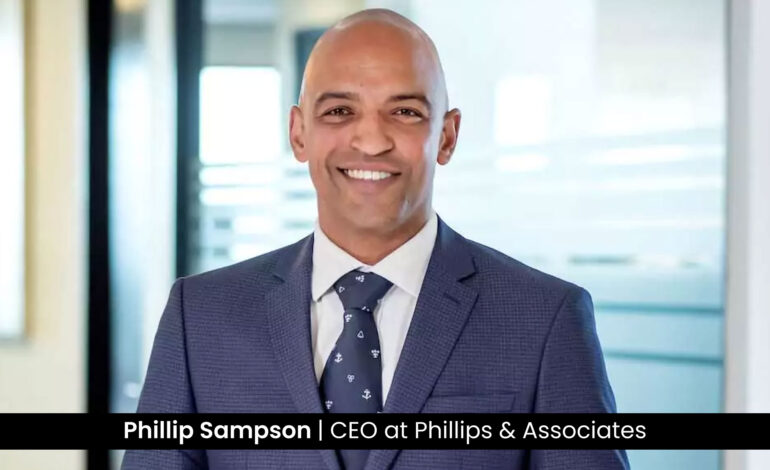
Phillips & Associates: Your Trusted Partner in the Fight Against Workplace Sexual Harassment

In every corner of the workplace, a silent struggle often goes unnoticed, the quiet toll of harassment and intimidation that chips away at dignity and well-being. No one is exempt from paying the debt of nature when it comes to respect and fairness. For those caught in this invisible battle, the path to justice can seem daunting and unclear. That’s where Phillips & Associates steps in. With a steadfast commitment to victims across industries, from executive assistants working for CEOs to hospitality staff in Miami, and junior lawyers facing pressure in Manhattan, this firm offers free consultations and works on a contingency fee basis, meaning you don’t pay unless they recover for you. They understand the complexities of sexual harassment and are relentless in pursuing justice, ensuring that even the smallest violations are taken seriously, supporting clients every step of the way toward healing and resolution.

Combating Misconceptions and Building Strong Cases

When clients first reach out to Phillips & Associates for help with sexual harassment, they often don’t fully understand their rights. They might express concerns like, “I didn’t want to rock the boat,” or, “I felt pressured into going out with him, he was my boss, how could I say no?” Another frequent misconception is that harassment doesn’t count if it happened offsite at an office party or conference. Phillips & Associates makes clear that the law protects individuals even when harassment occurs during work-related events outside the office.

Phillips & Associates also encounters common misunderstandings about what constitutes harassment. Many believe that only physical touching qualifies, but in fact, repeated inappropriate comments, unwanted texts, sexual jokes, or pressure to date a supervisor can all be considered harassment, especially if they negatively impact the work environment. Another myth is that having a relationship with a supervisor disqualifies someone from suing. The firm clarifies that they investigate whether such relationships were genuinely consensual or if power dynamics were abused through coercion or grooming. Retaliation, such as demotion or firing after rejecting advances or ending a relationship, is also illegal.

The firm firmly rejects the notion that high-profile individuals are untouchable. They have successfully held CEOs, business owners, and law firm partners accountable, emphasizing that abuse of power is unacceptable regardless of title.

Phillips & Associates understands that the biggest challenge in proving a hostile work environment is demonstrating a consistent pattern of harassment. Harassers rarely leave obvious evidence; instead, they wear down victims over time through crude comments, “accidental” touches, grooming tactics, or threatening messages. To build strong cases, the firm assists clients in meticulously documenting incidents including saving texts and emails, recording dates and times, and identifying witnesses. Through these efforts, they have won cases based on details victims once thought were “too small to matter.” In many workplace relationship cases, this documentation exposes quid pro quo harassment, where favors are exchanged for job benefits.

Harnessing Digital Evidence to Secure Justice

The rise of social media, Slack, Zoom, and messaging apps has transformed the landscape of workplace harassment cases. For Phillips & Associates, these platforms offer a valuable source of evidence ranging from late-night text messages from supervisors and Slack threads containing sexist jokes to even deleted photos. However, the firm is equally aware of the risks these digital channels pose, such as exposing victims to public shaming and gossip, and works diligently to safeguard their clients’ privacy throughout the process.

Phillips & Associates’ employment lawyers across New York, New Jersey, and Miami are skilled in gathering, preserving, and effectively using this digital evidence while maintaining strict privacy protections. In one notable New York hospitality case, private text messages from a manager became the pivotal evidence that led to a six-figure settlement. In another instance, deleted texts helped the firm prove retaliation against a paralegal who was terminated after ending an affair.

One of Phillips & Associates’ most significant victories involved representing a Fortune 500 executive assistant in New York. The assistant had been pressured by her CEO into a relationship with promises of career advancement. After she ended the relationship, the promised promotions ceased, her projects were reassigned, and she was eventually fired. The firm meticulously built a compelling timeline using messages, company calendars, and witness testimonies, culminating in a confidential seven-figure settlement. This outcome sent a strong message to employers that retaliation carries costly consequences.

Advocating Justice with Compassion

Laws are gradually evolving to address the complex realities of power imbalances in the workplace. For instance, in New York, recent legislative changes have removed the requirement for employees to prove that harassment was “severe or pervasive” in order to bring a claim, recognizing that even less extreme conduct can have devastating impacts on careers and mental health. Under the New York City Human Rights Law (NYCHRL), supervisors are held strictly liable for harassment, offering robust protections to workers across Manhattan, Brooklyn, Queens, the Bronx, and Staten Island. In New Jersey, anti-retaliation protections continue to strengthen, while in Miami, both state and federal laws safeguard employees in industries such as hospitality, healthcare, and entertainment. Phillips & Associates believes that the next critical legal advancement should explicitly recognize coercive relationships where someone feels pressured into intimacy due to the other person’s control over their job as a distinct form of sexual harassment.

Phillips & Associates approaches workplace sexual harassment and discrimination cases with a balance of relentless legal expertise and heartfelt compassion. Understanding that these experiences are deeply personal and often overwhelming, the firm offers unwavering support to clients navigating the emotional and legal challenges. Known as tenacious litigators, Phillips & Associates has earned a reputation that makes defense attorneys wary, often securing confidential settlements and positive resolutions without subjecting clients to the public exposure of a trial.

Compassion, for Phillips & Associates, is integral to building a strong case. They listen without judgment, creating a safe space for clients to share their full stories. The firm explains clients’ rights and options clearly, ensuring they are informed at every stage. They carefully guide clients through decisions, whether that involves filing a complaint, negotiating a settlement, or pursuing litigation. Additionally, they advocate for protective settlement terms such as neutral references and non-disparagement clauses to preserve clients’ future career prospects. Recognizing the importance of holistic recovery, the firm also connects clients with trusted therapists and coaches to support personal and professional rebuilding.

Phillips & Associates knows that when clients feel heard and supported, they are better able to share crucial details and maintain resilience throughout the process. This compassionate approach contributes to larger recoveries and lasting victories—not only in court but also in clients’ lives.

Empowering Victims and Innovating Legal Support

Facing workplace harassment can be overwhelming and may sometimes make victims feel like giving up. Phillips & Associates advises clients to keep a journal of incidents and their emotional impact, preserve all evidence, and seek support from friends, family, or confidential helplines. They also encourage consulting doctors, therapists, or other trusted professionals for emotional and physical well-being. Through this comprehensive approach, the firm has helped clients recover over $300 million, not just financially, but also in regaining their confidence, dignity, and hope.

Recognizing that most employees cannot depend on HR, especially when the harasser holds a high-level position, plaintiff-side law firms like Phillips & Associates are innovating to level the playing field. Understanding that HR departments primarily protect the company, they leverage technology, national networks, and advocacy to create new pathways for justice. The firm launched HarassmentHelp.org, a platform designed to help people across the nation learn their rights, explore their options, ask confidential questions, and connect with a sexual harassment lawyer from the privacy of their home. In addition, Phillips & Associates is introducing the Harassment Help Podcast and will host the National Sexual Harassment Conference in Miami in Spring 2026, bringing together experts, advocates, and survivors to advance the cause of workplace equity and safety.

Strategies for Justice and Change

Companies should prioritize comprehensive harassment prevention by training all employees, from interns to executives on recognizing and addressing harassment and retaliation. They must provide multiple safe and confidential reporting channels and respond promptly and seriously to complaints. Unfortunately, some companies protect high earners or “rainmakers” over victims, treat training as a mere checkbox exercise, and even retaliate against those who speak up. For example, in a New York security industry case, a woman who reported sexual comments from her supervisor was punished by being moved to a worse location and assigned unfavorable hours instead of having the harasser disciplined.

Phillips & Associates advises young lawyers entering this field to first listen carefully, as this work centers on people, not just laws. They encourage developing a deep understanding of workplace power dynamics including who holds power, how it is used, and how to demonstrate it legally. Additionally, mastering digital evidence is essential, since today’s key proof often comes from texts, Slack messages, or deleted photos. This strategic approach has helped Phillips & Associates recover $27 million in just the first seven months of 2025 alone.

Proven Advocacy with Compassion

When seeking a sexual harassment lawyer in New York, New Jersey, or Miami, it’s important to choose a firm that combines courtroom expertise with genuine compassion. With a proven track record of recovering over $300 million, Phillips & Associates doesn’t just take cases, they win them. Whether confronting CEOs, law firm partners, business owners, or facing retaliation after reporting misconduct, the firm’s extensive experience ensures results.

For example, in a New Jersey case, Phillips & Associates secured a seven-figure settlement for an administrative assistant who was coerced into a sexual relationship with a senior executive at an out-of-state office retreat. Beyond compensation, the firm compelled the company to implement new training programs to prevent future abuse.

If you are in New York, New Jersey, or Miami and need an experienced sexual harassment, employment, or discrimination lawyer, contact Phillips & Associates today. They offer free consultations and work on a contingency fee basis meaning you don’t pay attorney fees unless they recover compensation for you. Your job, your dignity, and your future are worth fighting for.

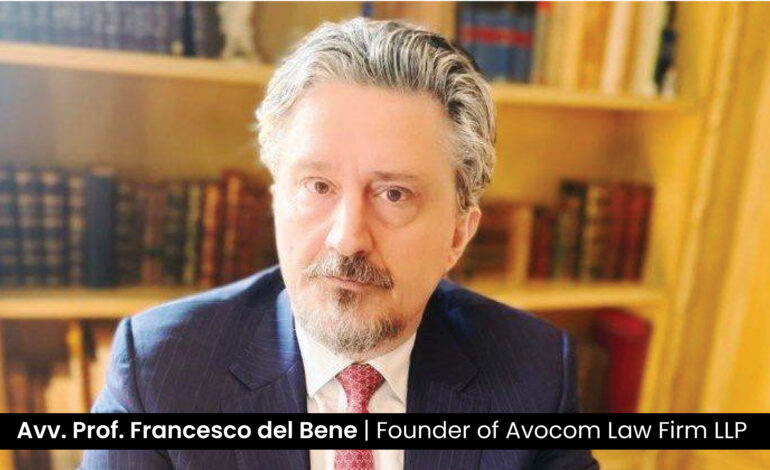
Avv. Prof. Francesco del Bene: A Visionary in Restructuring, Corporate Finance, and Legal Excellence

For years, a dedicated professional has balanced an impressive legal career with a profound commitment to academia, philanthropy, and community service. This individual, Francesco del Bene, has built a distinguished legacy, offering his expertise across several fields while simultaneously contributing to the greater good.

Del Bene’s journey began in the halls of the University of Rome “La Sapienza,” where he earned his Law degree, followed by a Master’s in Banking and Financial Law. His legal career took flight after being admitted to the Register of Italian Lawyers in 1993. Over the years, he became a key player in some of Italy’s most prestigious law firms, including those of Avv. Franco Musco and Professor Avv. Giulio Prosperetti, before founding Avocom Law Firm LLP in 2019. But his path was not confined to the legal world alone.

Beyond the courtroom, Del Bene found purpose in education, becoming a professor at leading Italian and international universities, imparting knowledge to the next generation. Yet, his academic work was always intertwined with his philanthropic activities. Del Bene has actively supported initiatives of great religious significance, such as the canonical recognition of the Relics of St. Charles Borromeo, housed at the Zaccaria Dei Padri Barnabiti Institute in Milan.

He also used his professional expertise to advocate for the continuous improvement of services, emphasizing efficiency and quality through ISO certification in his firm. As an influential voice in corporate, banking, and financial law, he has shared his insights at global congresses, symposia, and workshops. Since September 2022, he has further expanded his academic contributions as the Scientific Director of the “Collana di Studi Giuridici” published by Key Editore in Italy.

Throughout his career, Del Bene’s blend of legal prowess, teaching, and philanthropy has shaped his reputation, marking him as a figure of inspiration and a leader in his field.

A Distinguished Career in Law, Academia, and Global Leadership

Avv. Prof. Francesco del Bene (born in Lecce on July 31, 1964) is an esteemed Italian lawyer and professor, specializing in banking and financial law.

Del Bene began his legal and academic career after earning a degree in Law from the University of Rome “La Sapienza” in 1990, followed by a Master’s degree in Banking and Financial Law in Lecce (1990-1991). He was admitted to the Register of Italian Lawyers in 1993. His career began with a traineeship at the Law Firm of Avv. Antonio del Bene in Lecce, and he later progressed to collaborate as an Associate at the Law Firm of the Grand Officer Avv. Franco Musco, Honorary Consul of Malawi and son of the former Quaestor of Rome. From 1994 to 1998, he worked at the law firm of Professor Avv. Giulio Prosperetti & Associati in Rome, ultimately becoming a Partner. In 2005, Del Bene joined Pirola Pennuto Zei & Associati in Milan and went on to hold counsel roles at renowned law firms such as BBLP Pavia, Ansaldo, and Eversheds PB. In 2019, he founded Avocom Law Firm LLP, an internationally recognized law firm with offices across four continents. The firm is particularly renowned in the sectors of Energy, Real Estate, M&A, and Project deals, using cutting-edge communication and interaction technologies, digitization, and the development of the Metaverse.

A key milestone in Del Bene’s career is his strategic alliance with the prestigious Estudio Flint Abogados, a global law firm headquartered in Peru, which operates through multiple legal entities, including Flint Consulting Group – FCG.

In addition to his legal practice, Del Bene has made significant contributions to academia. He has taught at various Italian and international universities, including the University of Cassino, the University of Insubria, and Scuola Superiore Sant’Anna in Pisa. He also served as a Visiting Professor at the Helsinki School of Economics and Business Law in Finland. In 2024, he was appointed Lead Faculty Full Professor at Blackwell Global University in Orlando, Florida (USA).

Del Bene has received numerous accolades for his research and contributions to banking and financial law. He served as research and study coordinator for the Scientific Committee of the Institute of Parliamentary Studies in Rome and as a member of the Committee of Experts on banking and financial contracts at the Libera International University of Social Studies Guido Carli in Rome.

Throughout his career, Del Bene has published extensively, participated in global conferences, and been honored with multiple awards and recognitions. He was named Knight of the Order of the Holy Sepulchre of Jerusalem in 1999, among other accolades for his professional excellence.

Academic Leadership, Corporate Expertise, and Legal Innovation

Del Bene has held prominent academic and managerial roles throughout his career. He served as a Professor of Banking Law and Fundamentals of Private Law at the University of Cassino from 1996 to 2000 and has since been a Visiting Professor at several renowned institutions, including the Helsinki School of Economics and Business Law (2000), the University of Insubria in Varese (2003-2005), Scuola Superiore Sant’Anna in Pisa (2007-2008), and, as of 2024, Blackwell Global University in Orlando, Florida.

From 2000 to 2002, Del Bene was a top manager in charge of the Legal Advisory Group within the Merchant Bank Division at Big Leading Corporate, IntesaBCI, where he played a pivotal role after the merger between Banca Commerciale Italiana, Cariplo, and Banca Intesa. He has also held key positions as Of Counsel and Partner at distinguished international law firms such as BBLP Pavia, Ansaldo, Eversheds, and Pirola Pennuto Zei & Associates.

PriceWaterhouseCoopers. Del Bene co-founded the law firm Del Bene De Vitis & Associati and was a co-founder of the Independent Legal Network AVOCOM, initially composed of several firms, before establishing Avocom Law Firm LLP in 2019. Under his leadership, Avocom has quickly risen to prominence, securing a top rank (Rank 1) for Project Finance in Italy and the UK for three consecutive years.

Avocom has earned numerous accolades, including being named Law Firm of the Year in 2024 by the Scientific Committee of Ranking Professions and Corriere della Sera for its exceptional response to innovation and market needs. The firm also earned ISO 9001:2015 certification in 2021 for its Integrated Quality Management System and received an “A” corporate rating from ICRA Rating in 2023.

Del Bene’s leadership extends beyond the legal realm, having forged a Corporate Partnership with the prestigious Fondazione del Teatro alla Scala di Milano in 2021, supporting both its artistic and charitable initiatives. His philanthropic efforts also include supporting significant religious and cultural projects, such as the canonical recognition of the Relics of St. Charles Borromeo in Milan and the establishment of the N.H. Prize Prof. Renzo d’Andrea. In 2024, Del Bene initiated the Avv. Antonio del Bene Prize in collaboration with the Ministry of Justice and the Order of Lawyers of Lecce, aimed at recognizing distinguished young lawyers in the field of Forensic Ethics.

Scholarly Contributions in Banking and Financial Law

Del Bene specializes in a wide range of areas, including financial intermediation, banking, structured finance (such as Deteriorated Credits, CLOs, CDOs, CMBS, and CLNs), corporate financing, working capital operations, medium- and long-term debt restructuring, securitization, M&A, and real estate finance. His extensive expertise covers complex financial instruments and strategies that are vital in today’s financial and corporate landscapes.

In addition to his practical legal work, Del Bene has made significant contributions to legal scholarship, authoring numerous essays, articles, treatise sections, collective works, and monographs. These works showcase his expertise and thought leadership in the evolving areas of finance and corporate law.

Contributions, and Leadership in Corporate Law

Del Bene has made significant contributions to the legal field through his extensive work on case notes in civil, bankruptcy, and banking law. His expertise has led him to speak at numerous national and international congresses, workshops, symposia, conferences, and seminars on corporate law, finance, and banking law issues.

In 1993-1994, he coordinated research and study for the Scientific Committee of the Institute of Parliamentary Studies in Rome, focusing on legal and socio-economic matters. He also collaborated with the Institute of Monetary, Banking and Financial Studies “Luigi Einaudi,” which was founded by the Bank of Italy and the ABI (Italian Banking Association) in 1965. From 1997 to 1999, he was a full member of the editorial committee of Giurisprudenza di Merito, published by Giuffrè. Del Bene remains an active collaborator with numerous national and international legal journals.

In March 2001, he was suggested by the General Directorate of the Italian Commercial Bank S.p.A. as a member of the Technical Committee at the LUISS-Guido Carli University for a three-year project on research related to banking and financial contracts. He also served as a legal advisor for the VI Permanent Finance and Treasury Committee of the Italian Senate, focusing on corporate governance and savings protection under the leadership of Sen. Giorgio Benvenuto.

Del Bene played a key role in drafting the bill on “Family Acts” in collaboration with Sen. Giorgio Benvenuto and prominent academic and notarial figures, including the National Council of Notaries and the Italian Notary Foundation.

In 2010, he was appointed by Unipol Banca SpA as a member of the Board of Directors of Nuova Pansac S.p.A., a company admitted to Extraordinary Administration under Italian law (D.lgs. 270/1999). His career continued with rapid success, and he was appointed General Counsel of the Framingham Fund (Asset Management) in 2012, and later, General Counsel at Citic Holding IF Group LLC (2016), an investment and private equity firm.

Since September 2022, Del Bene has served as the Scientific Director of the “Collana di Studi Giuridici” published by Key Editore, Italy, further solidifying his role as a thought leader in the legal and academic communities.

A Year of Strategic Growth, Innovation, and Excellence

Avv. Prof. Francesco del Bene and his team at Avocom Law Firm experienced a year of remarkable growth and strategic achievements in 2021, solidifying their position as one of the leading law firms on both national and international levels. This success was bolstered by strategic alliances with entities such as Coral International Commercial Agency (CICA) and Estudio Pinkas Abogados, enabling the Firm to expand its team to 65 members, including partners, associates, and trainees, while achieving a significant 34% increase in turnover compared to the previous year.

Notable milestones included the addition of Giorgio Benvenuto as Senior of Counsel, contributing expertise in institutional relations at domestic and international levels, and Federico Michele Sorrentino, who joined as an equity partner and head of the Corporate M&A department at the Firm’s London office. The Firm also achieved recognition as a partner of AIFI and The Adam Smith Society, underlining its commitment to fostering market economy principles.

A testament to its dedication to quality, Avocom Law Firm obtained the ISO 9001:2015 certification for its Integrated Management System, demonstrating adherence to the highest standards of quality management. These accomplishments reflect the Firm’s focus on innovative growth areas such as Web3 and the metaverse, as well as its ongoing projects across key sectors, including infrastructure, digitalization, healthcare, the circular economy, and renewable energy.

Positioning for Growth

With the arrival of Recovery Plan funds, Avv. Prof. Francesco del Bene and his team at Avocom Law Firm have proactively focused on preparing for the opportunities and challenges presented by the 200 billion euros allocated to Italy under the Next Generation EU initiative. The Firm has been strategically enhancing its teams, fostering interdisciplinary collaboration, and engaging with European projects to align with the transformative impact of these funds.

Key sectors set to benefit from these investments include infrastructure, digitalization, healthcare, and the circular economy. The substantial funding directed toward infrastructure—encompassing roads, highways, and railways—is expected to attract significant private capital. This will likely drive an increase in project financing and project bond operations, alongside mergers and acquisitions (M&A) related to infrastructure projects.

In the realm of renewable energy, another high-priority area under the European Green New Deal, Avocom Law Firm is preparing to support clients navigating investment opportunities in the green economy and energy transition. Renewable energy, particularly green hydrogen, is anticipated to draw over 10 billion euros in investments by 2050, thanks to the financial backing provided by the Italian Recovery Plan. These developments present compelling opportunities for both European and overseas capital, reinforcing the Firm’s commitment to being at the forefront of innovation and growth in these transformative sectors.

Pioneering Legal Consultancy in the Metaverse and Web3

Avv. Prof. Francesco del Bene and his team at Avocom Law Firm are strong proponents of the metaverse and Web3, having invested significant time and resources to position themselves as pioneers in these innovative fields. Drawing inspiration from groundbreaking pilot projects like the One Upland initiative by the Canadian law firm Renno & Co., which enables clients to interact with a virtual foreign office, Avocom is at the forefront of exploring and developing these transformative technologies.

The Firm is witnessing a growing influx of domestic and international clients from sectors such as emerging technology, blockchain, cryptocurrencies, artificial intelligence, and clean tech. With a steadfast commitment to building deep expertise in these rapidly evolving yet largely uncharted areas, Avocom is helping clients navigate opportunities within the metaverse. By encouraging businesses to rethink their strategies, property concepts, and resource utilization in virtual spaces, the Firm fosters synergies that enable cost optimization, value creation, and innovative uses of resources previously considered unimaginable.

In a further step toward embracing the future, Avocom offers its lawyers and staff the option to receive part or all of their income—salaries and fees—in bitcoin. This progressive initiative underscores the Firm’s commitment to instilling confidence in clients exploring these emerging markets and technologies while reinforcing its reputation as a trailblazer in legal consultancy for the Web3 era.

Leadership in Legal Scholarship

Avv. Prof. Francesco del Bene specializes in financial intermediation, banking, and structured finance, with expertise in non-performing credit, CLOs, CDOs, CMBS, CLNs, corporate financing, debt restructuring, securitization, M&A, and real estate finance. He has authored numerous scholarly works, including books, articles, and case notes on civil, bankruptcy, and banking law. A frequent speaker at national and international conferences, he has also contributed to the Parliamentary Studies Institute’s research on legal and socio-economic issues.


Carina Wessels: A Visionary in Law and Sustainability

Carina Wessels is an accomplished legal and governance expert who has built a diverse career by embracing new challenges and expanding her expertise beyond traditional legal roles. Currently, she is a senior executive at Alexforbes, where she leads the company’s governance, legal, compliance, and sustainability initiatives. Her journey is a testament to the power of continuous learning and hard work.

Wessels’ career path began with law, but it was far from linear. After an early foray into software sales and a brief stint as a client services manager, she returned to the legal field with a broader perspective. She gained extensive experience in areas like labor law, corporate governance, and commercial law, while also taking on roles in Human Resources, Finance, and Risk Management. Her impressive background includes a nine-year tenure at De Beers and a year at Investec, culminating in her first executive role at Exxaro at the age of 33.

A Commitment to Purpose and Impact

Wessels believes her success is rooted in her passion for making a difference and her consistent ability to “get things done.” This drive extends beyond her corporate responsibilities; she is also a passionate advocate for charitable causes. She actively supports the Change a Life Cycle Tour, an annual fundraising event that has raised over R80 million for crime prevention and youth development in South Africa.

Wessels’ dedication to creating a positive impact is particularly evident in her focus on sustainability at Alexforbes. She sees a great responsibility and privilege in helping businesses and retirement funds become more resilient and sustainable, noting that steering pension funds toward sustainable investments can have a significant positive effect on cutting carbon footprints.

Key Leadership Insights

Wessels offers valuable advice for aspiring leaders, emphasizing that leadership is a privilege and a tremendous responsibility. She urges new leaders to reflect on their purpose and what kind of difference they want to make. She also stresses the importance of learning from others through reading and mentorship, both what to do and what not to do.

Central to her philosophy is the belief that hard work is non-negotiable.

’The harder you work, the luckier you get. I honestly believe there is no substitute for hard work. It looks different as you progress through your career, but ultimately being the hardest worker (and this means outcomes, not just inputs) in the room or the one that gets things done (big or small), no matter what, creates trust and credibility. This in turn leads to greater opportunities and exposure. For youngsters, volunteer to get involved – in anything – it all creates depth and breadth of experience’’