
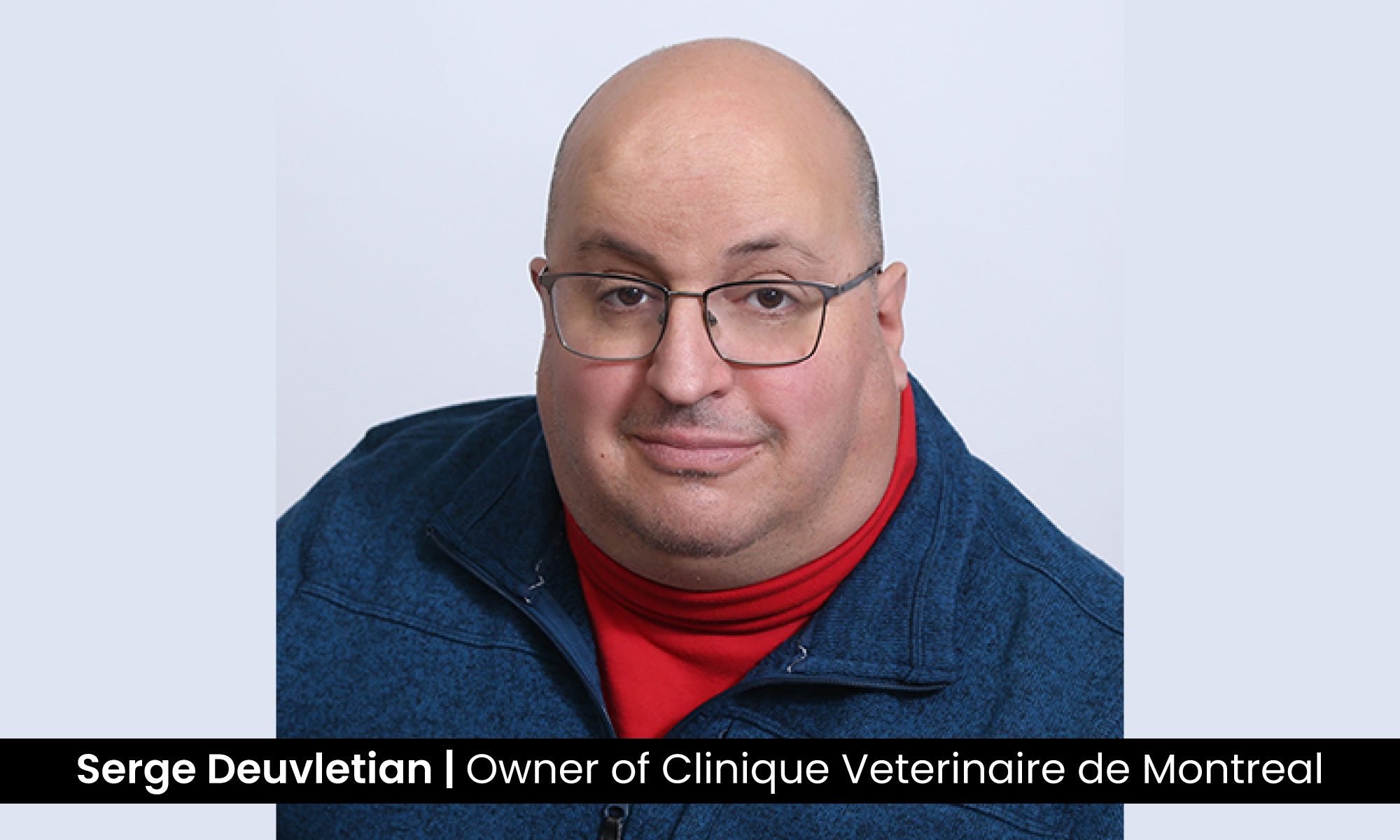
Some lives are not built through perfect victories. They are shaped through survival through strange moments, painful lessons, impossible decisions, and the quiet realization that even failure can become a teacher. Serge Deuvletian’s story reflects this truth with remarkable honesty. It is not the story of a flawless veterinarian or a man untouched by hardship. It is the story of someone who learned to appreciate life precisely because so much of it felt unpredictable, fragile, and difficult to carry.
Over the years, he witnessed countless moments that would have broken most people. There was the small dog who lived an entire lifetime with almost no white blood cells, a medical impossibility that somehow survived against expectation. There were cats suffering from fatty liver disease during a time when treatment options were uncertain and outcomes rarely guaranteed. There were surgeries, anesthesia risks, emergency decisions, and the constant emotional weight of knowing that even when every effort is made, not every life can be saved.
For Serge, veterinary medicine was never simply about procedures or textbooks. It became a deeper lesson about resilience, imperfection, and acceptance. He came to understand that bad things often arrive no matter how carefully one tries to prevent them. Instead of pretending suffering could always be avoided, he learned how to face it, adapt to it, and continue moving forward through it.
Some of his greatest lessons emerged from moments that initially looked like failures. Unexpected complications, difficult clients, emotional confrontations, and professional criticism slowly shaped his understanding of both people and animals. He often felt that kindness alone was not enough to survive in a demanding profession. There were moments when he felt forced to stop being the “babyface” the endlessly accommodating figure and instead become tougher, more guarded, and more resilient in order to endure.
Yet hidden beneath the exhaustion was something transformative. Every painful experience seemed to uncover a deeper understanding of human behavior, emotional survival, and personal growth. Even seemingly random events led to unexpected breakthroughs including discoveries about himself that changed the way he connected with people and understood communication. What once felt like personal weaknesses eventually became sources of awareness and strength.
Looking back, he sees a life filled with difficult events that somehow produced positive outcomes. His clinic survived inspections, impossible cases taught new methods, failures led to growth, and setbacks forced reinvention. There were countless moments when he wanted to walk away from everything, yet he stayed because life kept demanding another attempt, another lesson, another chance to evolve.
Perhaps that is the deeper meaning within Serge Deuvletian’s journey: appreciation is not born from an easy life. It comes from surviving enough storms to recognize the value hidden inside every ordinary day. The painful moments, the disappointments, the misunderstandings, and even the failures all became part of a larger lesson that life is not about escaping struggle, but about learning how to live meaningfully through it.
And in the end, that may be the greatest form of healing of all.
A Journey of Resilience, Meaning, and Life Beyond Failure
Serge’s journey toward veterinary medicine was far from straightforward. After leaving College Stanislas, he did not have the grades required for veterinary school and was instead accepted into physiotherapy, a path that failed to inspire him at the time. Rather than pursuing it, he chose to study animal science at MacDonald College’s agricultural program, where working with farm animals awakened a sense of familiarity and purpose within him. Immersed in the care of chickens, pigs, goats, beef cattle, and dairy cattle, he began to envision a future in agriculture and considered completing his Bachelor of Science in Agriculture if veterinary medicine did not work out.
Academically, he quickly improved enough to qualify for veterinary school after his first year, but his interview performance proved disastrous. Determined not to give up, his father arranged interview coaching, and by the following year he transformed from having the lowest interview score to achieving one of the highest. He often reflected humorously that he remained the same person only now wearing a suit instead of a mullet.
During veterinary school, he initially focused on farm animals, but after two years realized the physically demanding nature of the work was not suited to him long term. Although he gained as much experience as possible with large animals, including horses, he eventually shifted toward companion animal medicine, one of the most competitive areas of the profession.
After graduation, he applied across North America for internships and faced repeated rejection before finally securing a position at his own university through a waiting list program. Following several years of working in different clinics, frustration and exhaustion nearly pushed him to leave the profession altogether. As a final attempt to make his career work, he and his team opened a small animal clinic, believing that if the venture failed, at least they would know they had tried.
His guiding philosophy at the time was simple: never let anything bad happen. Yet veterinary medicine quickly taught him that such a goal was impossible. Animals were unpredictable, complications occurred, and painful experiences became unavoidable. Over time, however, he noticed a pattern: many difficult or tragic events unexpectedly led to positive outcomes, growth, or opportunities that would never have existed otherwise.
This realization shaped the way he approached life. Instead of becoming consumed by hardship, he began viewing adversity as the beginning of a new path rather than the end of one. Every setback forced action, adaptation, and ultimately a deeper understanding of purpose.
Eventually, he discovered that the philosophy he believed he had invented already had a name: teleology, derived from the Greek word “telos,” meaning purpose or end. He became fascinated by the idea that painful events can create outcomes and futures that otherwise would never exist. Personal family tragedies reinforced this belief, leading him to reflect deeply on destiny, meaning, and the unseen connections shaping human lives.
Though he acknowledged that science offers no definitive proof for such beliefs, he found comfort in the idea that loss, suffering, and unexpected turns may still carry hidden purpose. His journey ultimately became not just a story about veterinary medicine, but about resilience, meaning, and learning to find value even within life’s most difficult moments.
Finding Purpose Through Pain, Imperfection, and Unexpected Healing
After stepping away from active veterinary work, Serge entered a deeply uncertain period of his life. Disillusioned with the profession and not yet ready to tell his father about his growing doubts, he spent his days helping at the family pharmacy, reading extensively, and retreating into personal interests that offered comfort and escape. He began learning Japanese after rediscovering childhood memories connected to the anime Gatchaman, known in North America as Battle of the Planets. Nostalgia, sports, books, and quiet routines became temporary anchors while he struggled internally with disappointment and direction.
At the center of this emotional turbulence was a complicated relationship with his aunt, who carried the same name as a young relative who had died tragically years earlier in a bus accident. That legacy had always weighed heavily on her. Following an intense confrontation during the holiday season triggered unexpectedly over something as trivial as chocolates left on a table years of emotional strain erupted. The conflict left him shaken, angry, and emotionally fractured, eventually leading to a year-long silence between them.
Around the same time, life seemed to push him toward an unexpected new beginning. A neighboring storefront beside his father’s pharmacy suddenly became available, and what appeared coincidental at the time slowly evolved into another turning point in his journey.
Professionally, he increasingly recognized his limitations and chose not to pursue highly specialized veterinary procedures or complex surgeries. Instead, he focused on practical, first-line medicine and built a philosophy centered on simplicity, honesty, and knowing when to refer to difficult cases elsewhere. He believed results mattered more than appearances and often relied on instinct, observation, and straightforward diagnostics rather than dramatic interventions.
Over time, repeated exposure to difficult experiences, patient losses, anesthesia risks, lawsuits, toxic personalities, professional disappointments, and emotional exhaustion profoundly changed him. Veterinary medicine had once appeared to be the perfect profession, but beneath its surface he discovered a world filled with pressure, ego, burnout, and hidden suffering. Yet despite the pain, every setback seemed to teach him something essential about people, resilience, and himself.
Ironically, the very hardships that nearly broke him also transformed him. The struggles forced him to confront fears, develop confidence, and overcome personal insecurities, including difficulties with eye contact and communication. Looking back, he no longer viewed the wounds of his past as meaningless betrayals, but as experiences that shaped his understanding of purpose and survival.
In the end, his journey became less about becoming the perfect veterinarian and more about learning how to live with imperfection, accepting that suffering, disappointment, and failure often carry lessons that only become visible much later in life.
Where Compassion, Survival, and Self-Discovery Intersected
For much of his life, Asperger’s shaped the way he experienced the world at times becoming both a gift and a burden. Serge often compared himself to Clark Kent: outwardly quiet, reserved, and socially disconnected during the day, while privately finding confidence, identity, and escape through sports and personal passions. Growing up isolated allowed him to focus intensely on studying and caring for animals, often finding it easier to connect emotionally with pets than with people.
Over time, however, the very challenges that once limited him became the force that transformed him. Veterinary medicine, sports, and years of difficult human experiences gradually pushed him beyond the boundaries he once thought impossible to cross. Looking back, he came to realize that his life’s deeper purpose may never have been about building a clinic or becoming a successful veterinarian alone; it was about understanding himself and learning how to connect with the world around him.
He often described his personal foundation as a trinity: “autism, pets, and sports.” Pets gave him empathy, sports gave him emotional release and structure, and together they became the tools through which he slowly overcame lifelong social barriers. What once felt like weakness eventually became a source of resilience and insight.
Professionally, he avoided becoming a dramatic or highly specialized veterinarian. Instead, he focused on practical medicine, unusual cases, and helping clients through straightforward care. Over the years, he treated countless memorable patients from a small dog who somehow lived a full life despite having almost no white blood cells, to cats battling fatty liver disease, bladder stones, vaccine reactions, and dangerous intestinal thread ingestion. Many cases required instinct, patience, and creativity rather than complexity.
Despite the emotional and financial toll of complications, emergencies, and occasional tragic outcomes, he continued forward with humility and realism. He accepted that veterinary medicine was unpredictable and that perfection was impossible. Yet he found satisfaction in small victories: diagnosing illness early, saving animals others thought hopeless, and giving owners reassurance during difficult moments.
As life unfolded, he increasingly believed that every painful experience carried a hidden purpose. The stress, setbacks, emotional betrayals, and years of internal struggle gradually changed him in ways he never expected. Even his long battle with eye contact and social discomfort eventually eased after decades of pressure, growth, and self-discovery.
Sports remained one of the defining constants throughout his journey. Childhood memories of football broadcasts, hockey comebacks, and championship moments became deeply intertwined with his personal milestones and emotional evolution. He viewed these moments not simply as entertainment, but as symbolic markers in a much larger story about perseverance, identity, and transformation.
Looking back now, he no longer sees his life as accidental. Though he once wished for an ordinary path, he believes he was pushed toward experiences that forced him to evolve. His journey became less about escaping autism and more about understanding how adversity, passion, animals, family, and human connection together shaped the person he ultimately became.
A Life Built Through Adversity
Serge often described veterinary medicine as a profession far more demanding than most people realize. In his view, passion alone was no longer enough to survive it. The path required enduring intense academic pressure, emotional exhaustion, financial uncertainty, and the harsh realities that come after entering practice. Looking back, he admitted that if he were starting over today, he might have chosen an entirely different direction, perhaps sports management, another lifelong passion that gave him structure, identity, and escape.
Unlike many veterinarians, he never grew up idolizing famous figures within the profession. Instead, inspiration came from unexpected places, including the James Herriot books that helped him persevere during the most difficult years of veterinary school. Later in life, he began comparing veterinary medicine to professional wrestling, a world divided into “babyfaces” and “heels,” heroes and villains, where performance, perception, and emotional endurance mattered just as much as technical skill.
He believed the profession had become too serious and emotionally consuming, forgetting that pets are also companions who bring joy, comfort, and entertainment into people’s lives. His own clinic evolved into something symbolic: an unlikely institution that survived far longer than anyone expected, despite setbacks, criticism, inspections, and professional battles. In many ways, he saw himself as an imperfect underdog who adapted not by becoming idealized, but by becoming resilient.
Over a career spanning decades, he underwent repeated inspections and periods of scrutiny, especially after personal struggles became more visible. Yet despite the pressure, complaints remained relatively few. The hardest moments were not dealing with openly difficult clients, but coping with betrayal from people he had trusted and helped for years. Those emotional wounds affected him more deeply than professional criticism ever could.
Through it all, he developed a philosophy centered not on perfection, prestige, or flawless diagnostics, but on outcomes. To him, value was ultimately measured by whether people and pets found relief, reassurance, or a path forward. He believed success meant transforming “no-win” situations into moments where everyone could still walk away with dignity and hope.
His attachment to animals always remained deeply personal. Pets represented far more than patients or business; they became emotional anchors, teachers, and companions throughout his battle with isolation, anxiety, and self-doubt. That connection was one reason his father continued believing in him even during the hardest periods of his career.
Looking back now, he views his clinic almost as if it possessed a life and identity of its own, something that carried him forward even when he wanted to quit. Despite setbacks, failures, and emotional scars, it endured alongside him. In his mind, every painful experience, every difficult client, every unexpected survival, and every personal struggle became part of a larger purpose.
Though he once questioned whether he belonged in the profession at all, he eventually came to believe that his journey was never simply about veterinary medicine. It was about survival, transformation, and leaving behind a quiet but lasting impact on the lives he touched both human and animal alike.

