
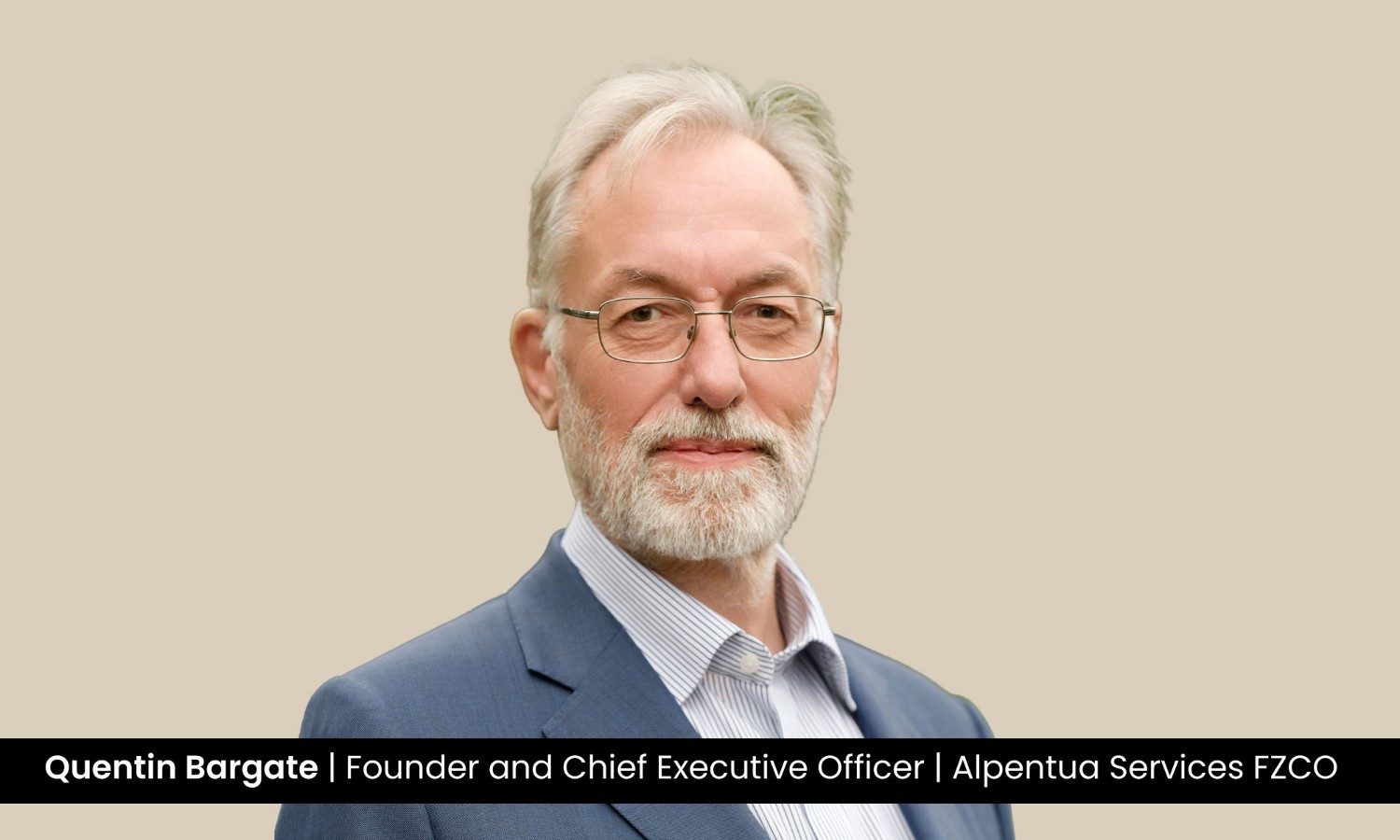
In international business, success is often measured by the scale of transactions, the value of assets, or the speed at which an organisation expands. Yet, in industries where a single disagreement can put millions of dollars at risk, another quality matters just as much: the ability to build trust, anticipate problems, and resolve disputes with clarity and conviction.
Quentin Bargate’s professional journey reflects the importance of these qualities. With more than four decades of experience in commercial law, maritime transactions, arbitration, and luxury assets, he has built a career around helping clients navigate complex commercial relationships and high-value disputes. His work has taken him into the specialised world of superyachts, international shipping, asset finance, aviation, and cross-border transactions, where legal precision must be matched by commercial understanding.
For Quentin, the practice of law has never been limited to interpreting contracts or arguing a case. It involves understanding the people behind the businesses, recognising risks before they become crises, and developing solutions that protect clients’ long-term interests. His journey offers valuable lessons for entrepreneurs, corporate leaders, and decision-makers in the United Arab Emirates, where international commerce, investment, and cross-border partnerships create an increasing need for effective dispute-resolution strategies.
The Foundations of a Career Built on Experience
Quentin qualified as a solicitor in 1981 and began developing his expertise within leading City of London law firms. His early professional experience in commercial shipping and maritime law gave him a practical understanding of how international business operates when goods, money, contracts, and multiple jurisdictions intersect.
One of the defining influences on his early career was his experience within the Shipping Group at Lovell, White and King, now part of Hogan Lovells. The environment offered more than technical legal training. It exposed him to the responsibility of advising clients during urgent and commercially significant situations, where decisions could have immediate financial consequences.
An early incident left a particularly lasting impression. On the day of his wedding, approximately an hour before the ceremony, an oil-trading client contacted him in distress after millions of dollars’ worth of oil products held in shore tanks had been arrested following a claim. Bargate urgently contacted his senior colleague, who personally guaranteed the cargo’s release and helped resolve the immediate crisis.
When Quentin arrived at his wedding, his boss was there too, with the problem already addressed.
The experience demonstrated the meaning of professional responsibility in a way that no textbook could. It showed him that clients remember not only the advice they receive but also the commitment demonstrated when circumstances become difficult.
That early lesson helped shape his approach to legal practice: remain dependable, understand the urgency of the situation, and recognise that behind every commercial dispute are people whose businesses and livelihoods may be affected.
Following Opportunity and Building a Specialised Practice
Quentin’s professional direction evolved through his relationships with clients. His involvement in superyacht-related work grew organically as existing clients began acquiring luxury vessels and required legal advice on their purchases, construction, ownership, financing, and operation.
Rather than treating this development as a departure from his maritime background, he recognised the opportunity to apply his commercial shipping expertise to a specialised international market.
In 2004, he founded Bargate Murray, a boutique law firm focused on luxury assets and superyachts. Establishing a specialised practice meant building an organisation around depth of expertise, personalised service, and a clear understanding of a particular client community.
The firm advises on matters ranging from new-build yacht construction contracts to sale-and-purchase transactions, financing arrangements, insurance, crew agreements, taxation, flagging, litigation, and arbitration. Its work also extends to private aviation and other high-value assets.
Quentin’s entrepreneurial philosophy can be captured in a simple principle: back yourself. The confidence to build a business around specialised knowledge, make independent decisions, and accept responsibility for the outcome has been central to his leadership approach.
His experience also demonstrates that a business does not necessarily need to become larger to become more influential. A focused organisation with the right expertise, strong relationships, and the ability to respond quickly can create significant value in a highly specialised market.
The Challenges Behind High-Value International Transactions
The world of luxury assets can appear glamorous from the outside. Behind the scenes, however, transactions involving superyachts and private aircraft require careful coordination across legal, financial, technical, and regulatory systems.
A vessel may be built in one country, owned through an international corporate structure, financed in another jurisdiction, registered under a particular flag, and operated across multiple territories. Each stage introduces contractual obligations, regulatory considerations, tax implications, and potential disagreements.
Quentin’s experience highlights how seemingly minor details can create major commercial consequences. An agreement that fails to specify the appropriate governing law or an effective dispute-resolution mechanism can leave parties facing uncertainty about where a dispute should be heard, which rules should apply, and how an eventual decision can be enforced.
For businesses, this uncertainty can mean increased legal costs, delays, disrupted operations, and damaged commercial relationships.
Cross-border taxation presents another challenge. Different jurisdictions may apply different approaches to value-added tax and other domestic tax obligations. Without appropriate advice at the beginning of a transaction, businesses and asset owners may face avoidable costs or compliance complications later.
Regulatory developments and sanctions have also created challenges in the yacht and aviation sectors. Bargate’s approach, as reflected in his professional experience, has involved careful compliance, ongoing engagement with regulators, and attention to the wider implications of international transactions.
These experiences reinforce a central lesson: risk management should begin before a contract is signed, not after a disagreement emerges.
Dispute Resolution: Finding Clarity Before Conflict Escalates
A defining aspect of Quentin’s career is his work in dispute resolution. He has experience both representing parties in disputes and serving as an arbitrator, bringing two different perspectives to the process.
As a legal representative, he advocates for a client’s interests, develops arguments, assesses evidence, and works towards an appropriate outcome. As an arbitrator, he must approach the matter impartially, evaluate the competing positions, and reach a decision based on the applicable framework and evidence.
This dual experience offers a valuable understanding of how disputes develop, how arguments are presented, and why clear contractual drafting matters long before a disagreement occurs.
Quentin is a Fellow of the Chartered Institute of Arbitrators and has experience in maritime arbitration, including proceedings conducted under London Maritime Arbitrators Association terms. His professional affiliations also include the Baltic Exchange and the Nautical Institute.
Effective dispute resolution, in this context, is not simply about winning an argument. It is about establishing a fair, workable process through which disagreements can be addressed without allowing uncertainty to overwhelm the underlying commercial objective.
For business leaders, the lesson is straightforward: a contract should not merely record what the parties intend to do when everything goes well. It should also establish what happens when expectations differ, circumstances change, or obligations are not fulfilled.
A Leadership Philosophy Rooted in Trust
Quentin’s approach to leadership places considerable importance on relationships. In the high-value advisory sector, clients are not simply looking for technical knowledge; they are entrusting an adviser with sensitive commercial information, complex assets, and decisions that may have long-term consequences.
He has emphasised the importance of knowing clients personally, understanding their families and professional networks, and building relationships that extend beyond individual transactions.
This relationship-led approach helps explain the importance of discretion in specialised advisory work. Trust is developed through consistent performance, sound judgment, confidentiality, and the ability to remain dependable when circumstances become difficult.
His leadership philosophy also challenges conventional assumptions about workplace management. He favours a more flexible environment in which unnecessary rules do not overshadow performance, provided client needs and professional responsibilities are met.
At the same time, he recognises that modern digital working arrangements can make it harder for younger professionals to receive the informal guidance and direct exposure that once came naturally through daily office interactions.
To address this challenge, he prioritises communication with colleagues, frequent in-person meetings, and a supportive professional culture. For him, leadership includes creating opportunities for the next generation to develop through practical experience, not merely through formal instruction.
The lesson extends beyond the legal profession: an organisation’s culture is shaped not only by what its leaders say but by how they mentor, support, and trust the people around them.
Lessons for CEOs and Business Leaders in the UAE
The UAE occupies an important position in international trade, finance, logistics, aviation, real estate, and investment. Businesses operating in this environment often work with partners, customers, suppliers, and investors across different legal systems.
Quentin’s experience offers several lessons for CEOs and senior decision-makers seeking to manage commercial risk and build resilient organisations.
1. Make dispute prevention part of business strategy.
Disputes should not be treated solely as legal problems. They can affect cash flow, customer relationships, operational continuity, and business reputation. Leaders should involve qualified legal advisers early, particularly when entering unfamiliar markets, negotiating substantial contracts, or structuring international transactions.
2. Never underestimate the importance of contractual clarity.
A carefully negotiated agreement should define responsibilities, payment terms, performance expectations, governing law, jurisdiction, and the dispute-resolution process. Arbitration clauses and court jurisdiction provisions should be selected with the transaction, applicable law, and enforceability of outcomes in mind.
3. Understand the commercial consequences of legal decisions.
The best legal strategy is not necessarily the most aggressive one. Leaders should assess the financial cost, time, reputational impact, and commercial consequences of each available option. Mediation, negotiation, arbitration, and litigation each have a place, depending on the circumstances.
4. Build relationships before you need them.
Strong professional networks can help businesses find suitable advisers, understand unfamiliar jurisdictions, and respond more effectively when difficulties arise. Relationships built during periods of stability can become particularly valuable during a crisis.
5. Treat compliance as a leadership responsibility.
International operations can involve complex regulatory requirements, sanctions considerations, tax obligations, and contractual commitments. CEOs should ensure that compliance is embedded in decision-making and supported by appropriate expertise rather than addressed only when a problem emerges.
6. Protect confidentiality and reputation.
Commercial disputes can expose sensitive information and affect stakeholder confidence. Where appropriate and legally available, confidential dispute-resolution mechanisms may help protect legitimate business interests. Leaders should nevertheless understand the specific confidentiality rules and exceptions that apply to each process.
7. Invest in people, not just systems.
Technology can improve document management, communication, and operational efficiency. However, sound judgment, professional mentorship, and direct engagement remain essential. Sustainable leadership requires both modern systems and capable people who understand how to use them.
For UAE business leaders, the broader message is that dispute resolution should form part of a company’s governance and risk-management framework. The objective is not to eliminate every disagreement, which is unrealistic, but to ensure that disagreements do not become unnecessary threats to the business.
The Human Side of Professional Success
Behind Quentin’s technical expertise is a consistent emphasis on responsibility and personal credibility. His early professional experiences taught him the value of dependable colleagues, while his later entrepreneurial journey reinforced the importance of confidence, adaptability, and long-term relationships.
His career also illustrates the value of staying close to one’s area of expertise while remaining open to new opportunities. The move from commercial shipping into superyacht law was driven by client demand and the recognition that existing knowledge could be applied to a specialised market.
Rather than pursuing growth for its own sake, he developed a focused practice that draws on a network of international professionals and serves clients whose requirements demand a high degree of personal attention.
For aspiring entrepreneurs and executives, this offers a practical perspective on professional growth: success often comes from identifying a genuine need, developing the capabilities to address it, and earning the confidence of clients through consistent performance.
Looking Ahead: Strengthening International Connections
Quentin’s professional outlook reflects the continuing evolution of international luxury-asset markets and the legal frameworks surrounding them. Digital documentation and improved document-management systems have made international collaboration more efficient, while cross-border transactions continue to demand careful coordination between legal, tax, financial, and technical specialists.
His work also reflects the importance of adapting to changes in regulation, arbitration frameworks, and international enforcement arrangements. For businesses engaged in global commerce, understanding these developments can help inform contract design and dispute-resolution planning.
A particularly relevant development in his firm’s stated direction is the planned establishment of a representative office in Dubai. With clients relocating to the UAE and the region becoming increasingly relevant to international luxury-asset activity, a local presence could help strengthen relationships and improve access to specialised advice.
This prospective expansion represents an opportunity to connect established international expertise with a market in which cross-border business relationships are increasingly important. Its longer-term value will depend on how effectively the presence serves clients, develops professional partnerships, and responds to the region’s legal and commercial requirements.
For UAE leaders, the wider significance lies in the growing importance of international collaboration. As businesses expand across borders, the ability to combine local knowledge with global experience can become a strategic advantage.
Advice to the Next Generation of Leaders
Quentin’s professional journey brings together several principles that remain relevant across industries: trust, preparation, expertise, adaptability, and the confidence to take responsibility.
His advice to entrepreneurs and business leaders can be distilled into three practical ideas.
First, build your expertise and have the confidence to act on it. His principle of backing yourself is a reminder that leadership requires considered decisions and a willingness to accept responsibility for their consequences.
Second, invest in the right professional relationships. Complex transactions rarely depend on one individual alone. Lawyers, financial advisers, technical specialists, brokers, and other professionals can provide essential perspectives when their roles are clearly understood and their advice is coordinated.
Finally, think beyond the immediate transaction. Strong businesses are built by protecting long-term interests, treating people fairly, anticipating risks, and maintaining credibility when challenges arise.
These principles are particularly valuable in dispute resolution, where the quality of decisions often depends on preparation undertaken long before a conflict becomes visible.

