Feature Now Aspire Higher, Dream Bigger — Experience Exclusive Offers Like Never Before in the New Edition of Aspire Navigators!

7 Steps to Enhance Preparedness Against AI Identity Threats

Identity-related hazards are becoming a major worry for leaders and companies as artificial intelligence develops. A developing issue that requires immediate attention is AI’s capacity to steal, distort, or misrepresent identities. Although executives rate identity issues associated to AI as their top concern, a startling 97% of them acknowledge companies are ill-prepared to counter these dangers, according to a new research. Given the speed at which AI is advancing, it is imperative that companies strengthen their defenses against these threats.

To strengthen your company’s security against AI-driven identity attacks, follow these seven crucial measures.

1. Evaluate Your Present AI Risks

Assess your current AI systems to find any weaknesses. A comprehensive risk assessment is the first step in bolstering your defenses, whether it involves machine learning algorithms for consumer identification or AI-driven authentication procedures.

2. Put Strict Authentication Procedures in Place

Traditional password-based systems are vulnerable to AI threats. Use biometric verification and multi-factor authentication (MFA) to give your identity management systems an extra degree of protection. These precautions make identity manipulation by AI systems much more difficult.

3. Remain Current on AI Frameworks and Regulations

Keeping abreast of frameworks like the OECD AI Risk Framework is crucial as AI policies change globally. These guidelines provide suggestions for reducing the hazards associated with AI and guaranteeing its ethical application. Keeping an eye on these rules helps your company stay compliant while safeguarding private information.

4. Invest in Identity Protection Tools Powered by AI

To combat AI-driven threats, think about utilizing AI itself. AI-powered identity protection systems are able to identify abnormalities, including suspicious activity or odd login habits, and prevent identity fraud before it occurs.

5. Educate Staff on AI-Related Risks

In order to counter AI dangers, employee knowledge is essential. Identifying phishing attempts, AI-enabled scams, and social engineering techniques used by cybercriminals to steal identities should be the main topics of regular training sessions.

6. Work with Cybersecurity Professionals

An extra degree of security can be obtained by collaborating with cybersecurity companies that focus on dangers associated with artificial intelligence. These professionals use cutting-edge equipment and expertise to spot and eliminate new dangers that could otherwise go unreported.

7. Test Your Systems Frequently for Vulnerabilities

You can find flaws in your AI systems before they are exploited by testing them frequently. Your defenses will remain strong and prepared to counter new threats thanks to penetration testing, vulnerability assessments, and ongoing monitoring.

Read more: Google Marks Best Year on Wall Street Since 2009 Driven by AI Growth

Final Thoughts

The dangers of fraud and identity theft will grow more complex as AI develops. You may strengthen your defenses against AI-driven identity risks and safeguard the most sensitive information in your company by adhering to these seven steps.

Visit: Latest news

Home Prices Hold Strong: What It Means for Buyers

Despite changes in the economy, rising interest rates, and cautious buyer mood, home values are still strong. Expectations for anyone hoping to enter the market soon are changing as a result of this trend. In a real estate market that is always changing, people can make well-informed decisions by knowing why property prices remain high and what that means for potential purchasers.

The Reasons Behind the Stability of Home Prices

Home values are under increasing pressure due to a number of causes. The disparity between supply and demand is the most important. The housing supply and demand chart in many markets makes it evident that inventory is still historically low despite a minor decline in demand.

Although analysts point out that current lending requirements, employment stability, and equity levels are significantly greater, many buyers draw comparisons between the current state of affairs and the 2008 real estate bubble. Even if purchasers are still wondering when the property market may drop again, this lowers the risk of an abrupt crash.

Market Outlook: Will the Next Five Years See a Market Crash?

The possibility of a dramatic decline in property values is a key worry for buyers. Analysts say there is still little probability of a sharp decline. Rather, while some areas may experience mild corrections, the overall pattern points to stable to steadily increasing prices.

The majority of indications suggest steady, gradual expansion rather than volatility for those looking into the real estate prediction for the next five years. While some purchasers wonder if a housing market crisis is beneficial to them, the truth is that it frequently results in job losses, economic hardship, and tougher lending, which makes it more difficult for buyers to profit.

Although consumer behavior is shifting, prices are still refusing to decline

Buyer interest is surprisingly steady despite rising mortgage rates and increasing monthly costs. By selecting smaller homes, looking into suburban areas, or somewhat raising their budgets, many first-time buyers are lowering their expectations. One of the main reasons home prices remain high despite economic pressure to decline is this change in buyer mindset.

Experts point out that today’s homeowners are less inclined to sell because they have low-rate mortgages and significant equity holdings. As a result, there is less supply, which maintains price pressure. Today’s housing market is based on stronger fundamentals than the 2008 real estate bubble, which was caused by oversupply and bad loans.

Why, Even if Rates Remain High, a Crash Is Not Likely

Although recent data indicates otherwise, some purchasers often look up “will the housing market crash in the next five years?” There are fewer homes being built by homebuilders, there is still a labor shortage, and the cost of materials is still high. Because of these circumstances, there isn’t a spike in new supply, which would be required for prices to decline much.

In addition, millennials, who currently make up the majority of homebuyers, are approaching their prime purchasing years. The real estate estimate for the next five years is made more stable by this demographic pressure alone, which promotes long-term price increase.

What Purchasers Should Pay Attention to Now

As prices remain stable, consumers should prioritize affordability over market timing. According to financial gurus, waiting for a catastrophe typically backfires because

  • Rarely do prices decline significantly.
  • Interest rates could increase much further.
  • Better negotiating can result from today’s less competition.

Experts concur that economic instability during property market crashes makes financing more difficult rather than simpler, answering the question, “Is a housing market crash good for buyers?”

Instead than worrying about market swings, long-term buyers should consider neighborhoods, property condition, resale potential, and mortgage choices.

What It Signifies for Today’s Buyers

Stable home prices indicate that purchasers may continue to face competition, particularly for properties in desirable locations. Affordability issues could worsen if demand increases once more. Conversely, buyers who want to own a property for a long time can profit from stability and steady appreciation.

The primary advantage for purchasers today is smart timing picking a property that meets budget, wants, and long-term aspirations rather than waiting for a crash that might never occur. Those looking at home prices have a clear understanding of what it means for buyers in 2022.

Visit: Latest News

Verizon Offers $20 Credit: What You Need to Know

The firm is providing a $20 credit. After receiving notifications from the provider, several consumers began looking for “how to claim 20 Verizon credit” and “Verizon 20 credit text message.”
Here is a straightforward explanation of why Verizon is providing this credit, who qualifies, and how users may use it.

Why Does Verizon Provide a $20 Credit?

A massive Verizon outage that disrupted mobile services for several consumers is the cause of the credit. Although the precise cause of the Verizon outage hasn’t been fully disclosed, the company acknowledged that it was a technical problem affecting access in several areas.
Verizon issued a $20 outage credit as a goodwill gesture to compensate impacted customers and uphold trust.

Who Can Receive the $20 Verizon Outage Credit?

Many consumers want to know if the Verizon outage credit applies to each line or account. Most of the time, the credit is applied to each account, although certain users who have several affected lines might be taken into consideration separately.
According to Verizon, a customer’s eligibility is contingent upon whether their line was impacted during the outage period.

How to Get the Verizon $20 Credit and Accept It

It’s an easy process. A Verizon 20 credit text message with instructions is typically sent to eligible customers.
Here’s how to finish the procedure:

  • Look for any outage-related alerts in your notifications.
  • To accept the Verizon 20 credit, click the link if you get a notification.

If not, you can still check if the option is available under billing or promotions by going to your account dashboard.

Because not everyone gets the same message at the same time, users frequently look up “how to get Verizon 20 credit.” Some consumers may see the credit option later since Verizon refreshes accounts in batches.

Visit: Latest News

What Clients Can Anticipate Next

The $20 credit will instantly show up on your subsequent billing cycle after it has been approved. The processing time could be several business days.
Even though the outage was inconvenient, this action demonstrates Verizon’s efforts to uphold transparency and boosts customer confidence.

Read more: 5 Ways AI Outpaces Current Network Technologies

How to Understand U.S. Actions on Venezuelan Oil Funds

The relationship between the United States and Venezuela has been marked by deep economic, political, and social conflicts, primarily driven by U.S. sanctions and Venezuela’s vast oil reserves. In recent years, the U.S. government has taken a range of actions to manage Venezuelan oil assets and prevent further financial mismanagement. These measures are often tied to the country’s attempts to regain financial stability, but the U.S. has its own strategic interests. Understanding these actions can shed light on the broader geopolitical dynamics at play.

The U.S. Sanctions on Venezuela: A Complex History

Venezuela’s economic crisis, exacerbated by its dependency on oil revenues, led the U.S. to impose a series of sanctions aimed at curbing the country’s oil production and revenue generation. The sanctions target key figures within the Venezuelan government, the state-owned oil company PDVSA, and other key sectors.

Key Sanctions:

Asset Freezes: The U.S. froze the assets of Venezuelan officials and entities involved in the country’s oil production and export.
Restrictions on Oil Exports: The U.S. prohibited American companies from purchasing Venezuelan crude oil, severely impacting the country’s oil-dependent economy.
Blocking Access to U.S. Financial System: Venezuela’s ability to access international markets was further restricted, creating difficulties in handling debts and acquiring resources.

How Much Does Venezuela Owe U.S. Oil Companies?

Venezuela’s debt to U.S. oil companies is one of the major issues complicating the country’s oil exports. Over the years, Venezuelan oil companies have accumulated billions in unpaid debts to American firms. Despite its massive oil reserves, Venezuela’s economic instability, partly caused by the U.S. sanctions, has made it difficult for the country to fulfill these obligations.

Why Does Venezuela Owe the U.S. Oil?

Venezuela’s state-run oil company, PDVSA, has struggled with production declines and mismanagement. The U.S. oil companies that once had joint ventures with PDVSA are among those left waiting for payment. These debts have piled up, leaving Venezuela vulnerable to further economic sanctions.

Venezuelan Oil Reserves and Its Impact on Global Markets

Venezuela boasts the largest oil reserves in the world, but its ability to produce and export oil has been significantly reduced due to ongoing political instability, mismanagement, and sanctions. This has had a profound impact on the global oil market and Venezuela’s standing in global energy politics.

Oil Production Crisis: Venezuela’s oil production has dropped to historical lows, partly due to the lack of foreign investment and skilled workforce.
Global Oil Prices: As one of the major oil-producing nations, fluctuations in Venezuela’s oil production have contributed to global price shifts.

How the U.S. Actions Affect Venezuelan Oil Funds

The U.S. has implemented various measures to prevent the misallocation of Venezuela’s oil wealth, redirecting funds from Venezuela’s government to humanitarian aid and other areas designed to mitigate the impact on the civilian population. The goal is to force the Venezuelan government to return to democratic norms without exacerbating the suffering of ordinary Venezuelans.

 U.S. Actions and Venezuela’s Struggling Oil Industry

The ongoing conflict between the U.S. and Venezuela over oil assets is far from simple. While U.S. sanctions aim to destabilize Venezuela’s regime, they also cause collateral damage to the country’s ability to use its oil wealth for economic recovery. Understanding the intricate web of sanctions, oil debts, and production issues is crucial for grasping the larger geopolitical picture in this crisis.

Visit: Leaders Spotlight

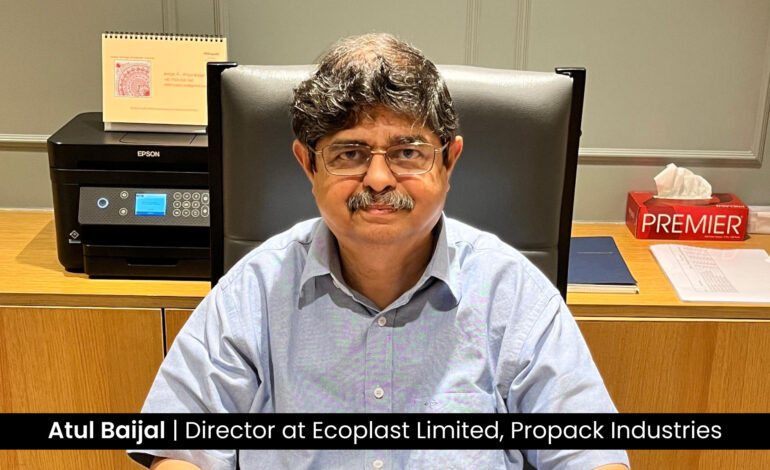
Atul Baijal: From Learning to Leading with Purpose

It began not with ambition, but with curiosity the quiet kind that watches machines closely, asks why a film behaves the way it does, and refuses to stop learning at the end of a shift. Early on, every parameter change, every trial run, and even every customer complaint became a lesson, slowly shaping a mindset rooted in observation, humility, and continuous improvement. Guidance came from many directions: from generous mentors at work, and from a steady, thoughtful voice at home a partner whose clarity and calm often revealed answers long before experience did.

A defining turn came in 1985, when an unexpected opportunity opened the door to the Central Institute of Plastics Engineering & Technology (CIPET). Accepting a Post Graduate Diploma in Plastics Testing & Quality Control was not a calculated career move, but it proved to be the moment that quietly set the course for the next four decades. What followed was a rich and fulfilling journey through the plastics and packaging industry one built on learning, responsibility, and gratitude rather than titles or rewards.

That journey belongs to Atul Baijal, a professional shaped as much by machines and materials as by people and principles. Today, his desire to share knowledge freely is not driven by obligation, but by appreciation for an industry that gave him purpose, for leaders who trusted him, and for a life that taught him that giving back is simply a natural continuation of learning forward.

From shop-floor learning to industry-wide impact

When the Central Institute of Plastics Engineering & Technology (CIPET) offered Atul a seat for a Post Graduate Diploma in Plastics Testing & Quality Control in 1985, he could not have foreseen that it would define the next four decades of his professional life. The programme provided a strong technical grounding in polymer science, testing methodologies and quality systems, while opening doors to India’s rapidly emerging plastics and packaging industry.

In March 1986, during campus interviews at CIPET, he was selected as a Technical Trainee by Cosmo Films Limited, then a young and ambitious BOPP film manufacturer. With limited formal literature available on the BOPP process, the shop floor became his real classroom. He learned to observe machines closely, ask relentless questions and correlate every process parameter with film behaviour an approach that shaped his lifelong habit of treating every shift, trial and customer complaint as a learning opportunity. He joined Cosmo Films in August 1986, coinciding with his 21st birthday, marking his entry into both adulthood and industry. His rapid exposure across functions led to his 18-month training programme being shortened to six months, giving him a holistic view of plant operations.

Within three years, he was entrusted with heading the Quality Control function, a role that strengthened his technical depth, decision-making and communication skills while teaching him to view quality issues as systemic rather than isolated problems.

In 1991, seeking a more customer-facing role, he joined Gujarat Propack Limited through Technical Services. Direct interaction with converters, brand owners and end users deepened his understanding of real-world application challenges. He later took on Quality Assurance responsibilities and became the company’s first Management Representative for ISO 9002 implementation, gaining deep insight into systems thinking and cross-functional integration. His progression continued through roles as Chief Technical Manager and eventually head of Sales Coordination and pan-India sales, where his technical background became a key commercial differentiator.

After a brief stint at Jindal Films, he joined Positive Packaging, leading the metallising division as a profit centre head and driving a near 300% increase in profitability. He later doubled sales in the Flexible Division and went on to head Purchase and Supply Chain, managing group-wide sourcing. Following Huhtamaki’s acquisition of Positive Packaging, he served as Strategic Buying Head for India and Global Buyer for Aluminium Foil, gaining extensive international exposure.

His broad cross-functional experience enabled him to successfully lead greenfield and transformation projects, including setting up a flexible packaging division for TCPL Packaging and later transforming Ecoplast Limited into a speciality films-focused organisation, delivering multi-fold profitability growth.

Today, he leads an organisation focused on Surface Protection Films, Adhesive Films and Speciality Films, delivering customised, high-performance solutions across construction, automotive, electronics and advanced packaging sectors.

Principles shaping a career of trust, learning and long-term success

Looking back, three personal qualities have contributed most to the success he has achieved over the years. The first is hard work, grounded in honesty and sincerity. In an industry where machines operate around the clock and customers have little tolerance for delays, he learned early that there is no substitute for putting in the hours, being available when needed, and taking complete ownership of outcomes.

The second quality is the willingness to learn from everyone and to unlearn when necessary. Some of his most valuable lessons came not from boardrooms, but from operators, helpers, mechanics and junior colleagues who often spotted practical issues and patterns that senior managers could overlook. Equally important was the ability to let go of outdated assumptions, which helped him stay relevant as technologies advanced and markets evolved.

The third defining trait has been a consistent focus on goals. At every stage of his career, he worked with clearly defined short-, medium- and long-term objectives. These goals guided daily decisions, encouraged measurement of progress and demanded honest self-review whenever results did not meet expectations.

Both as an individual and as a professional, one of his core aims has been to create an environment that encourages learning and commitment at all levels, without compromising ethical values. While technical excellence and financial success matter, he has always believed they must be built on integrity. Transparency in dealing with customers, suppliers and colleagues has therefore been non-negotiable. Such a culture may seem slower in the short term, but it fosters deep trust, resilience and long-term sustainability—ensuring that success is not only achieved, but earned and respected.

Resilient through Challenges and Innovation

Today, his professional focus spans three core product segments: Surface Protection Films, Adhesive Films and Speciality Films. Surface Protection Films play a critical role across industries such as construction, automotive, electronics and consumer goods, safeguarding high-value surfaces from damage during manufacturing, transportation and installation. Adhesive Films support demanding applications where bonding performance and consistency are essential, while Speciality Films are engineered for customised, high-performance requirements that go beyond standard packaging solutions.

The most challenging phase of his career came during the Covid-19 pandemic. Like many manufacturing leaders, he faced the difficult task of keeping operations running while prioritising the health and safety of employees. It was a constant balancing act implementing rigorous safety protocols, managing absenteeism, navigating severe supply chain disruptions and still ensuring that customer commitments and financial obligations were met. These months required not only operational agility but also emotional resilience, clear decision-making and transparent communication with teams, customers and suppliers. More than anything, the experience reinforced the importance of empathy, trust and collective responsibility in leadership.

Through every high and low, he has remained guided by a simple but unwavering mantra: never compromise on values, and practise transparency in everything you do. He believes that values are not truly tested when times are smooth, but when pressure is intense during crises, tough negotiations or moments when shortcuts seem tempting. Choosing principle over convenience in such moments may be difficult, but it consistently builds credibility, unity and long-term success, allowing both people and organisations to grow together.

Mentorship, Inspiration, and Giving Back

Atul considers himself fortunate to have worked under exceptional leaders throughout his career. These mentors not only entrusted him with challenging responsibilities but also provided guidance and support during critical transitions. Their belief in his abilities played a pivotal role in shaping both his professional and personal growth. From their examples, Atul learned that true leadership is as much about enabling others as it is about delivering results a principle that continues to influence the way he leads his own teams.

In his personal life, Atul draws immense inspiration from his wife, whose maturity, clarity, and calmness have consistently guided him through key decisions. Whether navigating career changes, taking on new challenges, or managing complex situations, her perspective has helped him look beyond immediate concerns and consider the bigger picture. Having such a grounded and supportive partner has been a blessing that often goes unacknowledged in professional narratives.

Looking ahead, Atul’s aspirations are centered less on titles or positions and more on contribution. He hopes to give back to the plastics and packaging industry, which has provided him a rich and fulfilling career, by sharing his knowledge and experience without expectation. Teaching is a particular area of interest for him; he aspires to deliver lectures at educational institutions focused on plastics and packaging, engage with young students, answer their questions, and inspire them to explore the industry with curiosity, responsibility, and a sense of purpose.

Lifelong Learning, Empowered Teams, and Leadership that Transforms

To aspiring leaders and young professionals, Atul offers two key pieces of advice. First, maintain a clear goal plan short, medium, and long term as goals act as a compass, guiding decisions about which opportunities to pursue, which to decline, and how to prioritise time and energy. Goals also provide a framework for periodic review and course correction. Second, surround yourself with team members who are more qualified and capable than you. Rather than feeling threatened by talent, Atul believes in creating an environment where individuals can work freely, feel a sense of belonging, and know that their contributions truly matter. According to him, building such empowered teams accelerates both personal growth and organisational success.

Over the years, the organisations Atul has been associated with have earned several prestigious accolades, including WorldStar, AsiaStar, and IFCA Awards.

If there is one overarching theme connecting the various chapters of his career from the shop floor of Cosmo Films to leadership roles at Gujarat Propack, Positive Packaging, Huhtamaki, TCPL, and Ecoplast it is the conviction that learning never stops. Technologies evolve, markets shift, and business models face disruption, but the willingness to learn, unlearn, and relearn remains the most valuable asset. When combined with hard work, ethical conduct, clear goals, supportive mentors, and committed teams, this mindset has the power to transform not just careers, but entire organisations and, in its own way, even an industry.


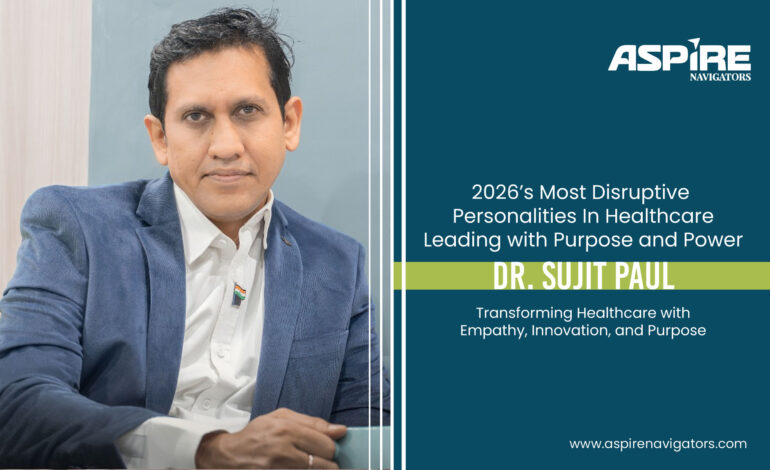
Sujit Paul: Transforming Healthcare with Empathy, Innovation, and Purpose

Some leaders measure success in numbers. Others, like Sujit Paul, measure it in impact. His professional journey spans retail, consumer goods, and global business expansions, but it was healthcare that called to him as the most purpose-driven industry of all a sector where innovation is not simply about technology, but about rethinking systems to deliver greater value to society.

Resilience has been his constant companion, shaped by years of working across diverse industries and geographies, navigating change, and building strength through challenge. Today, as Group CEO of Zota Healthcare Limited, Sujit channels that resilience into transforming perceptions. Under his leadership, generics are no longer viewed with scepticism; instead, they are associated with trust, standardized quality, and informed choice. He has not only elevated the brand but also educated customers, instilling confidence in affordable healthcare solutions.

For Sujit, technology is only a tool. What matters most is how it is used with ethics, transparency, and inclusivity at the forefront. The recognitions he and his team have earned are not endpoints, but milestones reminders that Zota Healthcare is on the right path. His vision is long-term: to create lasting impact in healthcare by aligning innovation with purpose and ensuring that progress uplifts humanity at large.

Transforming Affordability, Trust, and Innovation

Sujit’s professional journey has always been anchored by a single guiding principle: impact. In the early years of his career, he gained wide exposure working across industries such as retail, consumer goods, and global business expansions. Yet, it was healthcare that stood out to him as the most purpose-driven sector one not merely tied to economics but to human dignity, access, and wellbeing.

When he joined Zota Healthcare, Sujit quickly recognized a stark reality: the gap between quality healthcare delivery and affordability in India was alarmingly wide. For many families, branded drugs were so costly that medicines themselves became substitutes for treatment. With more than 55% of healthcare expenditure in India coming from out-of-pocket expenses much of it on medicines the situation left millions vulnerable. This awareness became the foundation for Davaindia, now India’s largest chain of generic medicine retail stores.

Through Davaindia, Sujit set out with a clear mission: to give people access to quality medicines at affordable prices. Generic medicines, medically equivalent to branded ones but often overshadowed by doubts and lack of awareness, became the centrepiece of this transformation. By building trust in a retail-led ecosystem where patients could confidently purchase WHO-GMP certified generics, Zota Healthcare not only disrupted the pharmaceutical market but also empowered millions of Indians to sustain long-term care. For Sujit, the true measure of success lies in these stories families who once had to choose between healthcare and household expenses now able to afford both.

To him, innovation is not merely about technology it is about rethinking systems to deliver greater value. At Zota Healthcare and Davaindia, innovation manifests in three transformative ways:

  1. Harnessing Healthcare Technology – Leveraging AI platforms, telemedicine, and e-pharmacy solutions to extend care beyond physical stores. Patients in remote areas can now consult doctors virtually and order medicines through an app, ensuring last-mile accessibility.
  2. Transforming Retail Strategy – Introducing an organised retail chain model to a fragmented Indian pharmacy sector, much like organised retail transformed FMCG. This approach has redefined perceptions of generics, instilling trust and educating consumers.
  3. Pharmaceutical Accessibility – Simplifying the narrative and educating patients that generics are not “inferior substitutes” but medically equivalent alternatives. Through collaboration with doctors, awareness campaigns, and strategic pricing, Sujit is helping normalize generic medicine usage in India, with ambitions to ripple this change worldwide.

For Sujit Paul, true innovation is about problem-solving at scale when people embrace a solution so seamlessly that it becomes invisible, embedded in their daily lives, and indispensable to their wellbeing. That vision continues to guide his leadership at Zota Healthcare, ensuring that accessibility, affordability, and quality remain at the heart of everything the company builds.

Global Standards in Affordable Medicine

Sujit drives the organisation across three strategic axes that define both its growth and its purpose.

The first is Growth and Accessibility. Under his leadership, Davaindia has become India’s largest generic pharmacy chain, with an ambitious vision of deeper penetration into Tier 2, Tier 3, and rural India regions where affordability remains the biggest barrier to healthcare. Sujit is relentless in ensuring that price never stands between a patient and their treatment.

The second axis is Trust and Awareness Building. He recognises that the greatest challenge in the adoption of generic medicines lies not in efficacy but in perception. To overcome this, he has spearheaded initiatives focused on doctor engagement, patient education, and institutional collaborations, building a movement of trust around generics. By breaking deep-rooted conditioning that equated branded drugs with better quality, Sujit and his team have redefined how millions of people view healthcare access in India.

The third is Sustainability and Global Vision. Sujit believes that Indian healthcare can set global benchmarks in affordability, transparency, and scale. Beyond Indian borders, Zota Healthcare is steadily making its mark in international markets. From sustainable manufacturing and supply chain digitisation to clinical collaborations, he envisions building India into a healthcare hub that provides affordable solutions worldwide.

This transformative journey, however, has not been without its resistance. Sujit’s greatest challenge has been altering perceptions convincing patients and practitioners alike that generic medicines, scientifically certified and WHO-GMP approved, are as effective as their branded counterparts. Scaling up added its own complexities, as healthcare remains highly regulated and operationally demanding. From defining systems to training teams and integrating technology across Davaindia’s expanding network, every step required perseverance and precision.

On a personal level, Sujit’s global career across industries and geographies has made him resilient to change. He admits there were times when the easier, more conventional path seemed tempting. Yet, the conviction to create meaningful impact through affordable healthcare kept him anchored. For Sujit, the mission goes far beyond commerce his vision is of a world where good healthcare is not a privilege, but a universal right.

Impact Beyond Numbers

Sujit remains humbled by the recognition he has received along his professional journey milestones that he views not as personal achievements but as validations of a collective mission. Among them, he was named one of the “100 Top Global Leaders” by AsiaOne for his contributions to healthcare innovation, recognised as one of the “Top 10 CEOs in Healthcare” by CEO Insights magazine, and honoured as “India’s Impactful CEO” by Times Now. To him, these acknowledgments are reflections of the incredible team at Zota Healthcare and Davaindia, serving as reminders that they are moving steadfastly in the right direction.

At the heart of Sujit’s leadership lies a guiding mantra: “Purpose over profit, impact over image.” He believes that while numbers are important, they never tell the whole story. True success, in his eyes, is measured in the number of lives touched and transformed. Profit, he often says, is not the goal but the natural outcome of a deeply affirmed purpose.

Sujit’s inspiration is drawn not from boardrooms or accolades but from ordinary people facing extraordinary circumstances. Meeting patients who struggle to afford even basic medicines yet fight for their dignity fuels his conviction to drive change. On a personal level, his family remains his eternal motivator. Their values of compassion, respect for human dignity, and service to others are deeply etched into his worldview and leadership approach.

Purpose-Driven Phygital Leadership

Sujit believes there is immense potential for the “Phygital Model” to redefine global healthcare accessibility. In this model, trust is anchored by brick-and-mortar pharmacies, while digital platforms provide reach, convenience, and efficiency. For example, a patient in a small town may seek a personal interaction at a Davaindia outlet for certain medicines, while follow-up orders for replenishment can be seamlessly processed online.

This hybrid approach enables:

  • Delivery of truly personalized patient care at scale.
  • Utilization of data and insights to design innovative solutions that align with patient needs and enhance adherence.
  • Expansion of healthcare access in regions with limited physical infrastructure.

Sujit sees this as more than a business concept it represents the future face of healthcare delivery worldwide.

His advice to emerging leaders is clear:

  • Anchor in purpose: Focus on impact rather than success for its own sake; success naturally follows meaningful work.
  • Inculcate resilience: Challenges are inevitable, but they serve as opportunities for growth.
  • Lead with compassion: In healthcare, leadership is a service, not a privilege. True success lies in the positive difference one makes in the lives of others.

Empathy, Responsibility, and Impact

For young professionals and entrepreneurs, Sujit emphasizes the following principles:

  • Start with empathy: Healthcare is not merely an industry; it directly impacts people’s lives. Solutions must be built with the patient at the center.
  • Think long-term: Health transformations take time. Persistence in the field is essential, even when progress is slow.
  • Innovate responsibly: Technology is a tool, and its application must reflect ethics, transparency, and inclusivity.
  • Build partnerships: No single organization can solve healthcare challenges alone. Collaborations with governments, NGOs, doctors, and communities amplify impact.
  • Believe in your ability to effect change: Every action, no matter how small such as making medicines affordable can trigger larger transformations.

Sujit often underscores his mission:

  • “Healthcare is not a privilege; it is a right. Our mission is to make quality medicines accessible and affordable for every household in India.”
  • “True innovation is measured not by technology alone, but by the number of lives it touches and transforms.”
  • “At Davaindia, affordability does not mean compromise; our generics embody trust, quality, and dignity for all.”
  • “Leadership is not about titles; it is about responsibility. When every decision improves lives, that is real success.”