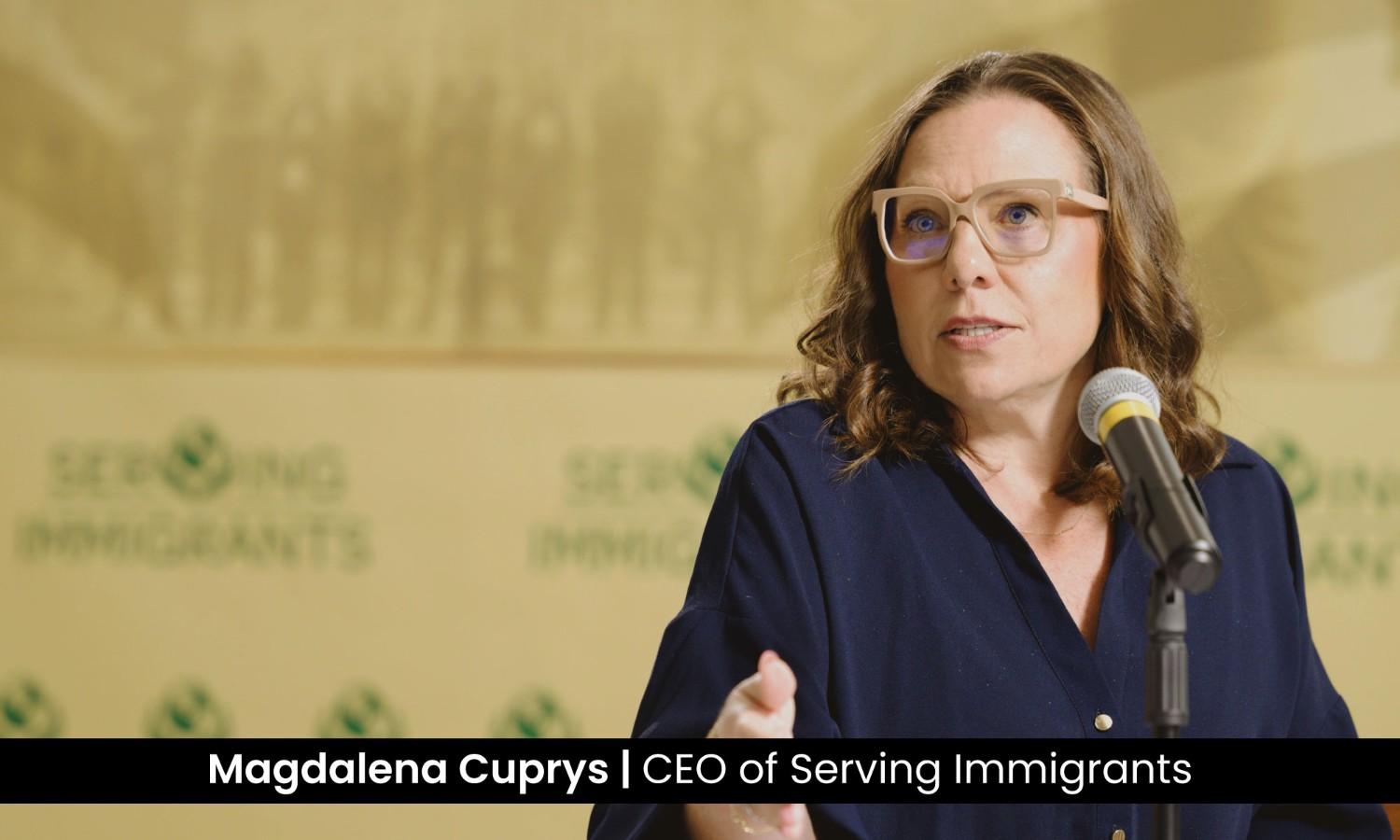
Magdalena Cuprys believes in the transformative power of words and the lasting impact of disciplined action. Early in her career, she witnessed firsthand how organized, proactive, and principled legal teams could change lives. As a student intern at the Northwest Immigrants Rights Project, she worked directly with immigrant communities, seeing not abstract legal cases, but real people navigating some of the most stressful moments of their lives. Those experiences shaped her leadership philosophy: that strategy and expertise matter, but what truly builds a strong organization is the discipline to follow through on commitments every single day.
As CEO of Serving Immigrants, Magdalena ensures that her teams have the frameworks, systems, and culture to deliver reliable, high-quality legal support. She understands that in immigration law, the difference between success and failure often comes down to careful preparation, strategic thinking, and deep legal experience. By combining empathy with expertise, she leads with a vision where every word, every decision, and every action can create meaningful, lasting impact in the lives of those she serves.
Building Impactful Immigration Services Through Responsibility, Efficiency, and Operational Excellence
One of the most formative experiences in Magdalena’s early career was working directly with immigrant communities as a student intern at the Northwest Immigrants Rights Project. That experience gave her an early and profound understanding of the human side of immigration law. These were not abstract legal problems they were families, livelihoods, and futures dependent on the quality and speed of legal work.
From this experience, she learned two principles that continue to guide her leadership: responsibility and efficiency. Responsibility, for Dr. Cuprys, means recognizing that legal strategy carries real-life consequences. When representing clients whose ability to remain in the country depends on her team’s work, delays and errors are unacceptable. This mindset shapes how she structures teams, builds processes, and makes decisions.
Efficiency is the second guiding principle. Immigration law is complex, but complexity should never be an excuse for slow execution. Early exposure to well-organized, disciplined, and proactive legal teams showed her that cases move faster, clients feel more supported, and outcomes improve when operational rigor is applied alongside legal expertise.
These lessons underpin Dr. Cuprys’s leadership philosophy: organizations thrive when legal talent is combined with operational discipline. Legal expertise alone is not enough; systems, accountability, and strategic thinking are essential to growing a firm while maintaining quality.
At Serving Immigrants, she focuses on building robust systems for case management, legal review, and client communication, enabling the legal team to concentrate on strategic work and advocacy. The firm operates with clear performance standards and structured workflows, emphasizing accountability and continuous evaluation to improve efficiency without compromising ethics or quality. For Dr. Cuprys, every operational decision must serve two outcomes: better client results and a stronger organization. If it does not achieve both, it is rethought.
Outcome-Driven Leadership
For Magdalena, an outcome-first mindset shapes every aspect of how services are designed and delivered. In immigration law, clients often seek assistance during some of the most stressful moments of their lives. They are not looking for complexity they need clarity, strategic guidance, and results.
At Serving Immigrants, services are designed by starting with the desired outcome and working backward: What does the client ultimately need? Which legal path provides the strongest solution? What timeline and documentation strategy will best support that goal? This outcome-focused approach also informs team structure, ensuring that every member understands how their role contributes to the final case outcome. When team members see this connection, their work becomes more focused, accountable, and effective.
From the client’s perspective, this approach transforms the experience. Instead of feeling lost in a legal process, clients see a structured path forward. For Dr. Cuprys, strategy is simply discipline applied to long-term goals: keeping the end result in focus makes decisions clearer and more effective.
The most challenging adjustment in her career was stepping back from direct casework to focus on building systems that enable others to succeed. Lawyers are trained to solve problems themselves, but as CEO, her responsibility is to create an environment where talented professionals can perform at their highest level. This requires both trust and structure: clear expectations, strategic direction, and accountability. Leadership, she has learned, is not about controlling every detail it is about ensuring that the right people, processes, and standards are in place so that the organization consistently delivers results.
Outcome-Driven Leadership
For Magdalena, consistency and excellence in legal services stem from a combination of structure and shared values. At Serving Immigrants, clear legal standards, internal review systems, and communication protocols ensure that every case receives the same level of diligence and strategic thinking.
At the same time, immigration law requires nuanced judgment every case is unique, and lawyers must exercise professional discretion. That is why Dr. Cuprys emphasizes culture as much as structure. Her team shares a deep understanding that their work impacts people’s futures, and this collective sense of responsibility naturally drives high standards. Her role is to ensure the frameworks exist so that professionals can apply their expertise effectively and ethically.
Immigration law is an environment of constant change, with evolving regulations, shifting policies, and increasingly complex client needs. To navigate this, Dr. Cuprys prioritizes building systems that allow the organization to adapt quickly. Continuous training, robust internal communication channels, and flexible operational processes ensure the team remains agile without compromising quality.
Equally important is the human dimension of leadership. Dr. Cuprys believes that during uncertain periods, creating stability is critical. Teams perform best when they understand the organization’s direction and feel supported. Leadership, she demonstrates, requires clarity, calm decision-making, and consistent communication, even in the face of change.
Leading with Legal Expertise, Operational Discipline, and Compassion to Transform Immigrant Lives
For Magdalena, carrying responsibility for both legal outcomes and organizational performance brings accountability into sharp focus. Every decision has consequences for clients, employees, and the long-term health of the organization. She believes that trust and accountability go hand in hand: trust empowers professionals to perform confidently, while accountability ensures that standards remain consistently high.
In executive leadership, decisions often require balancing legal strategy, operational resources, and long-term organizational goals. Discipline is essential; every decision must align with the organization’s mission and its responsibility to clients. Clarity is a cornerstone of her approach. Immigration law is complex, but clients should never feel overwhelmed. Dr. Cuprys emphasizes translating complexity into understandable strategy, providing transparency about processes, risks, and potential outcomes.
Empathy is equally critical. Many clients are navigating life-changing decisions under significant stress, and balancing legal accuracy with human understanding is central to her philosophy. Clear, respectful, and honest communication fosters trust naturally.
Dr. Cuprys views legal experience as the foundation for responsible leadership. Immigration law is not just a service industry it is a specialized legal discipline directly affecting people’s rights and futures. Leaders who understand these complexities make better strategic decisions regarding case strategy, team structure, and service design, while also building credibility with clients. From a business perspective, legal expertise enables identification of opportunities to deliver real value. It is this combination of deep legal knowledge, strategic thinking, and disciplined execution that drives sustainable growth under her leadership.
Empathy to Transform Immigration Law and Lives
For Magdalena, one of the most overlooked yet critical qualities in legal leadership is operational discipline. While legal expertise is essential, long-term success depends on systems, consistency, and accountability. Organizations grow when processes are clear, expectations are defined, and teams understand how their work contributes to the overall mission. Operational discipline may not always be visible, but it enables mission-driven organizations to scale while maintaining quality.
Dr. Cuprys believes that the combination of strong legal knowledge, strategic thinking, and disciplined execution is what creates lasting impact. In immigration law, strategy and expertise matter, but what truly builds a strong organization is the discipline to follow through on commitments every day. Clients rely on the firm during some of the most critical moments of their lives, and leaders must create systems and teams capable of delivering reliable, high-quality work consistently.
Immigration law is often misunderstood as merely completing forms or following a standard process. In reality, it is highly strategic legal work. Every case demands analysis, planning, and careful documentation. Success often comes down to legal strategy, preparation, and experience.
A defining influence in Dr. Cuprys’s career was her early work with immigrant advocacy organizations while still in law school. Seeing firsthand how legal work could directly change the trajectory of someone’s life reinforced her commitment to immigration law and shaped the sense of responsibility she carries into every case and leadership decision today. With an academic background in political science and Latin American studies, she might have pursued a career in international policy or diplomacy, but immigration law offered a unique intersection of law, government, and global mobility areas she has dedicated her career to navigating and improving.