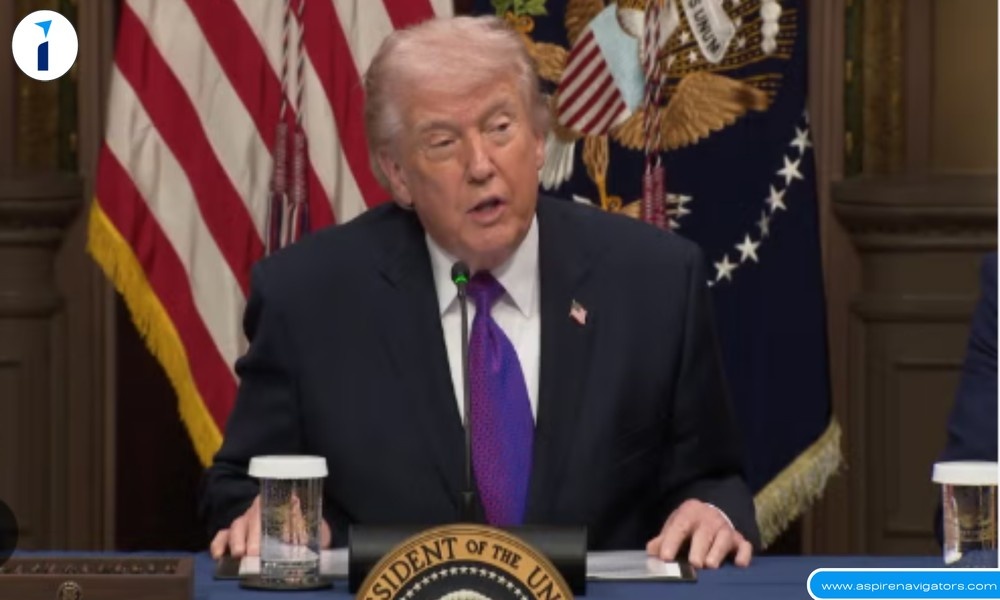
Donald Trump, the former president, has been in the news once more, this time trying to minimize the economic effects of the ongoing dispute with Iran. Trump’s remarks have provoked discussion among economists, political analysts, and specialists in international relations as Middle East tensions continue to impact world markets. Comprehending his methodology illuminates not only his political approach but also the popular perception of world events in the United States.
Trump’s initiatives coincide with news cycles dominated by worries about oil prices, supply chain disruptions, and geopolitical danger. Trump continues to stress stability and downplay fear, despite the fact that many experts feel that the US-Iran war might have serious economic repercussions.
Trump’s Perspectives on the Iran War
Trump has often attempted to reassure Americans over the state of the Iran war in recent interviews and public remarks. He asserts that trade routes are robust, economic institutions are durable, and the dispute won’t worsen into a larger crisis that would cause U.S. markets to become unstable.
His rhetoric may also have an impact on Trump’s support rating, which has historically changed in reaction to foreign policy developments, according to political watchers. Trump seems to be attempting to preserve political capital while establishing himself as a powerful figure in matters of national security by stressing control and downplaying potential risks.
Coverage of the Iran War and Economic Issues
The dangers of protracted conflict have been emphasized in international media coverage. Analysts caution that even minor confrontations have the potential to disrupt supply lines, raise oil prices, and create market instability. However, Trump’s speech frequently deviates from this conventional reporting by emphasizing continuity and resiliency.
This strategy poses issues for political pundits and economists alike: How much of the public is swayed by news of the Iran War versus Trump’s messaging? In the event that hostilities intensify, how viable is this narrative?
What Experts Are Observing in the US-Iran War
Observers of the US-Iran conflict highlight a number of crucial points:
- Energy markets: Global gasoline prices may be impacted by any disruptions in the oil supply.
- Trade routes: International trade and shipping may be impacted by Gulf tensions.
- Spending on defense: Increasing military preparedness may have an impact on the budget.
Trump continues to portray the fight as manageable in spite of these worries, frequently connecting his remarks to his political tactics and immigration policies in larger conversations about national security and American interests overseas.
Public Views and the Media’s Function
Although political messaging can affect public opinion, coverage under the FCC Iran conflict criteria guarantees that media reporting maintains accuracy and conformity. Trump may be trying to control the narrative and sway voter opinion by downplaying economic dangers, especially in swing states or areas where energy prices are a concern.
In the meantime, queries like “is the war in Iran over?” continue to make headlines in the media, expressing both public unease and persistent doubt. There is a dynamic conflict in public discourse as a result of Trump’s emphasis on stability contrasting dramatically with reportage that highlights hazards.
Important Lessons
- Trump’s rhetoric emphasizes market stability while downplaying the impact of the Iran War on the economy.
- Analysts caution that the Middle East conflict may have an effect on international trade, energy markets, and trade routes.
- Both mainstream media coverage of the Iran War and political personalities like Trump influence public opinion.
- The conversation around the US-Iran war is still shaped by the interaction of media, political strategy, and economic considerations.
Trump’s strategy demonstrates how politicians might try to sway public opinion and market confidence in the face of persistent global unpredictability.
Despite economic concerns, Trump presents the Iran conflict as manageable.
Trump’s attempts to minimize the economic effects of the US-Iran confrontation demonstrate how politics, the media, and public opinion are intertwined. In order to soothe the people and preserve his political power, Trump places a strong emphasis on stability and resilience, despite analysts’ warnings that persistent tensions could have an impact on international markets, commerce, and oil prices. Even in the face of ambiguity over the state of the Iran War, his message highlights how leaders may influence voter sentiment and economic confidence by crafting narratives during international crises.
Read Our Latest interview with Jill Hudgel